Quest’anno, per la prima volta ho avuto l’occasione di partecipare ad un air show negli Stati Uniti; più volte mi sono chiesto come potesse essere l’esperienza di partecipare ad un air show americano, non solamente dal punto di vista dei velivoli partecipanti allo show, ma anche dal punto di vista organizzativo.
Ci tengo a ringraziare l’organizzazione, in particolare Lauren De Marco per la su disponibilità e per l’accoglienza la mattina dell’evento presso l’area Media.
Il Pikes Peak Regional Airshow si svolge ogni anno presso l’aeroporto municipale della città di Colorado Springs in Colorado ed è uno show “giovane” in quanto la prima edizione si è svolta nel 2019 ed è ora giunto quest’anno alla sua sesta edizione. L’aeroporto di Colorado Springs , è sia pubblico che militare ed ospita la Peterson Space Force Base che si trova sul lato nord della pista 13/31 ed è la sede del
North American Aerospace Defense Command (NORAD) e del 21st Space Wing della Space Force.
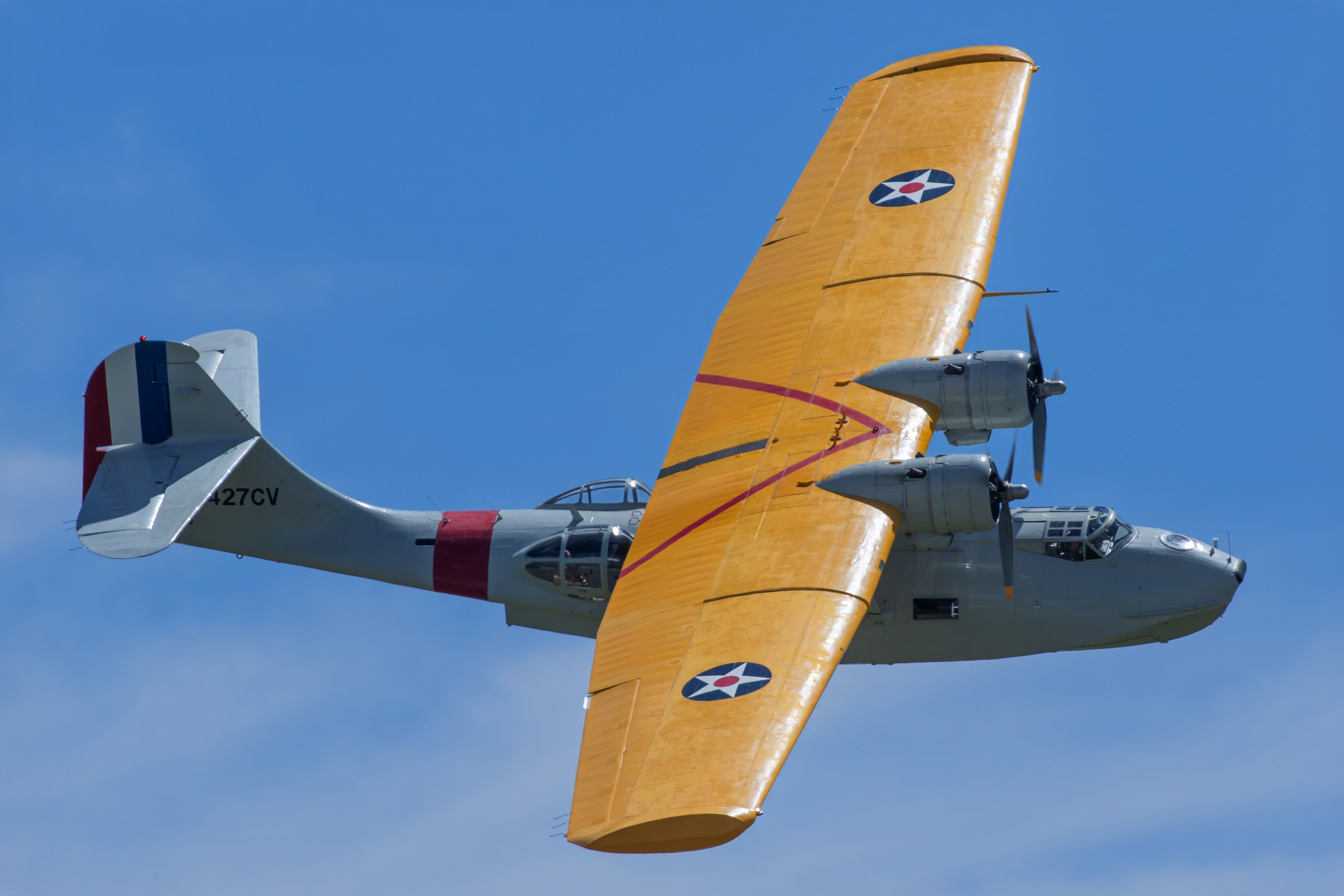
La line up dello show è molto promettente con una serie di esibizioni piuttosto rare per noi europei, basti pensare alla presenza di molti “Warbirds” della WWII come F-3, F-4 Corsair, il PBY-5A Catalina, A-5 Skyraider, TBM Avenger, SBS Dauntless, FM-2 Wildcat, F7F Tigercat, P-38 Lighting, P-47 Thunderbolt, P-51 Mustang e B-25J Mitchell.
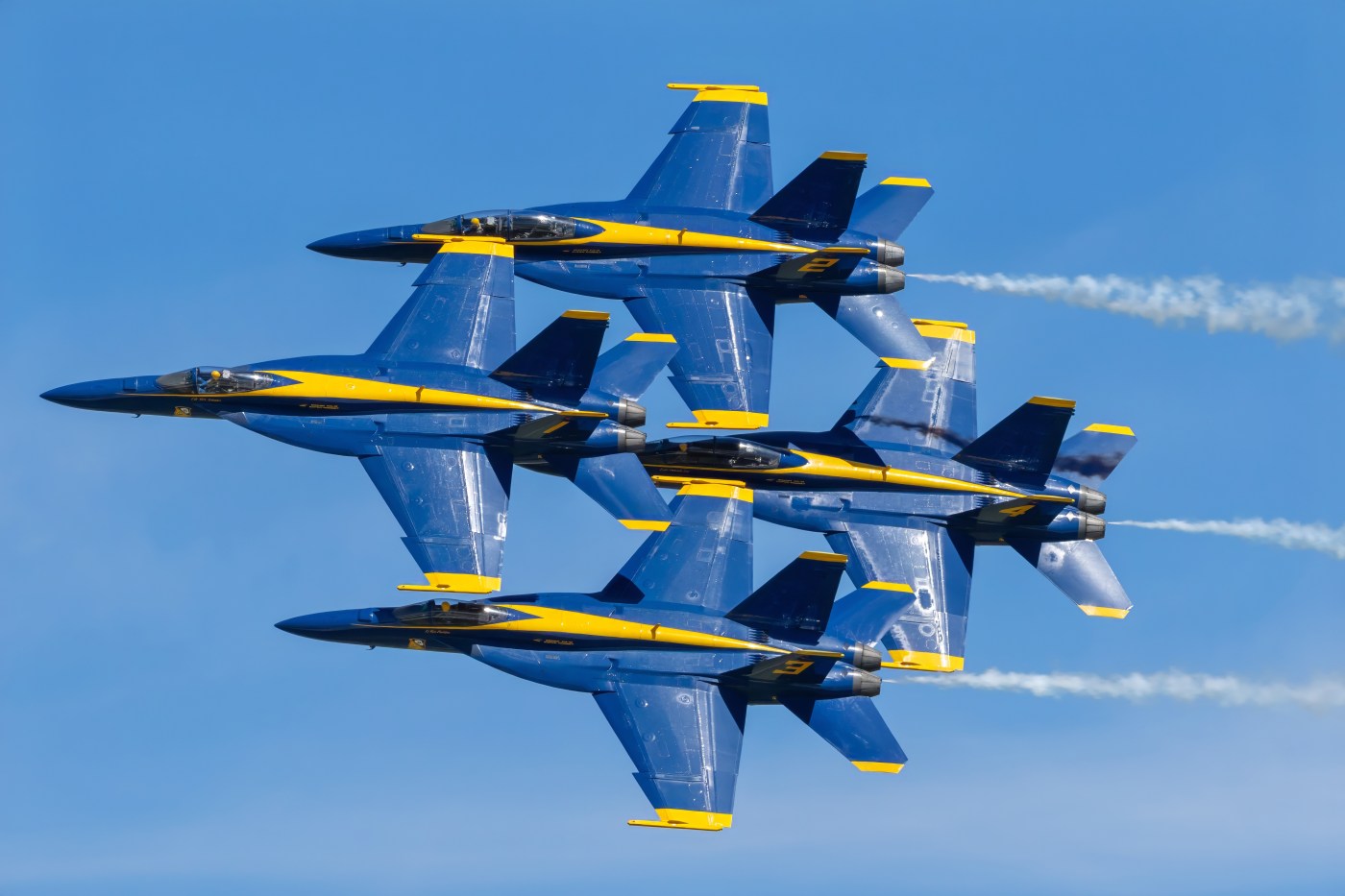
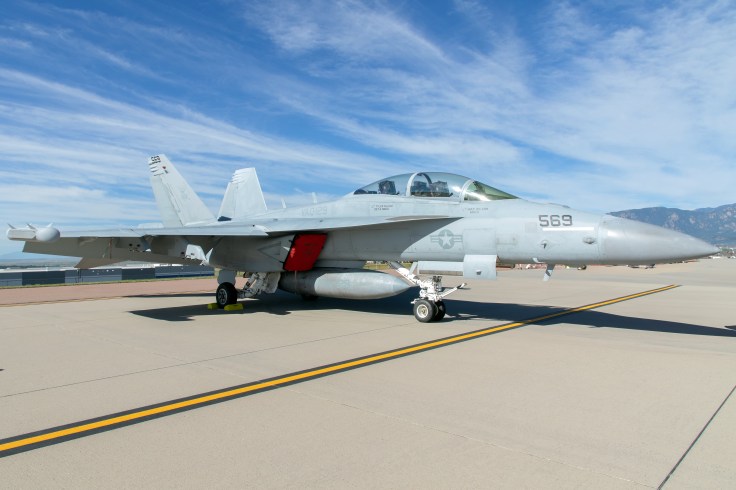
Arrivando invece all’era più moderna, altri ospiti presenti all’evento, l’F-22 Demo team, la US NAVY con una coppia di EA-18 Growler e per la prima volta nella storia del Pikes Peak Regional Airshow, hanno preso parte come main eventer con i loro F/A-18 Super Hornet, i Blue Angels.

Dopo l’apertura delle porte, ci siamo diretti subito vero l’area centrale dove noi appassionati dobbiamo sempre fare molta attenzione perchè si possono trovare magliette, cappellini e patch molto interessanti, infatti ogni gruppo di volo era presente con il proprio stand e vendeva il proprio merchandising.
Subito dopo ci siamo diretti verso la display line, dove erano parcheggiati tutti i velivoli che avrebbero preso parte allo show, la rampa è stata aperta al pubblico per circa 1 ora e mezza ed era possibile avvicinarsi agli aerei per scattare qualche fotografia.
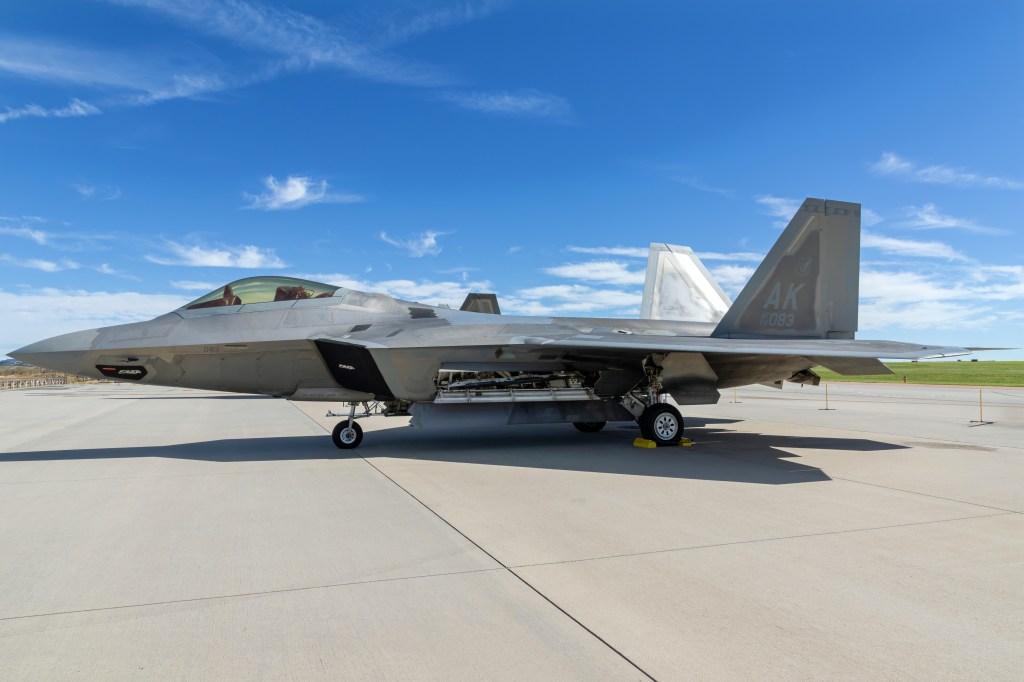
Ben disposto l’F-22 Demo Team ed il Capitano Samuel “RaZZ” Larson, davvero molto disponibili con il pubblico per fotografie e sempre pronti a rispondere ad ogni quesito e curiosità degli appassionati.
Verso le ore 10 la la rampa è stata chiusa al pubblico e siamo rientrati verso l’area centrale dove si può restare per seguire l’airshow, noi abbiamo deciso di trovare un po di ombra sotto l’ala di un C-130.
alle ore 11 era tutto pronto per la cerimonia d’apertura con il national anthem, un momento molto particolare ed emozionante, dove ogni americano presente, ha portato la mano al petto durante il canto dell’inno nazionale. All’air show erano presenti molte famiglie ed è davvero lodevole e degna di nota la passione ed il rispetto che nutre il popolo americano verso la propria nazione e verso le proprie forze armate.
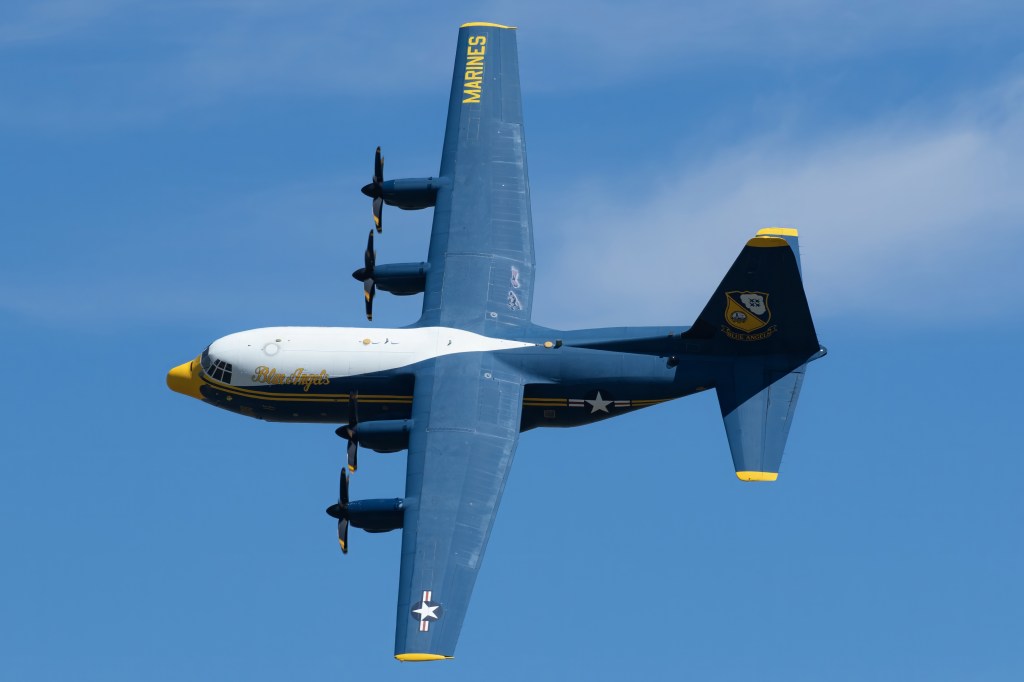
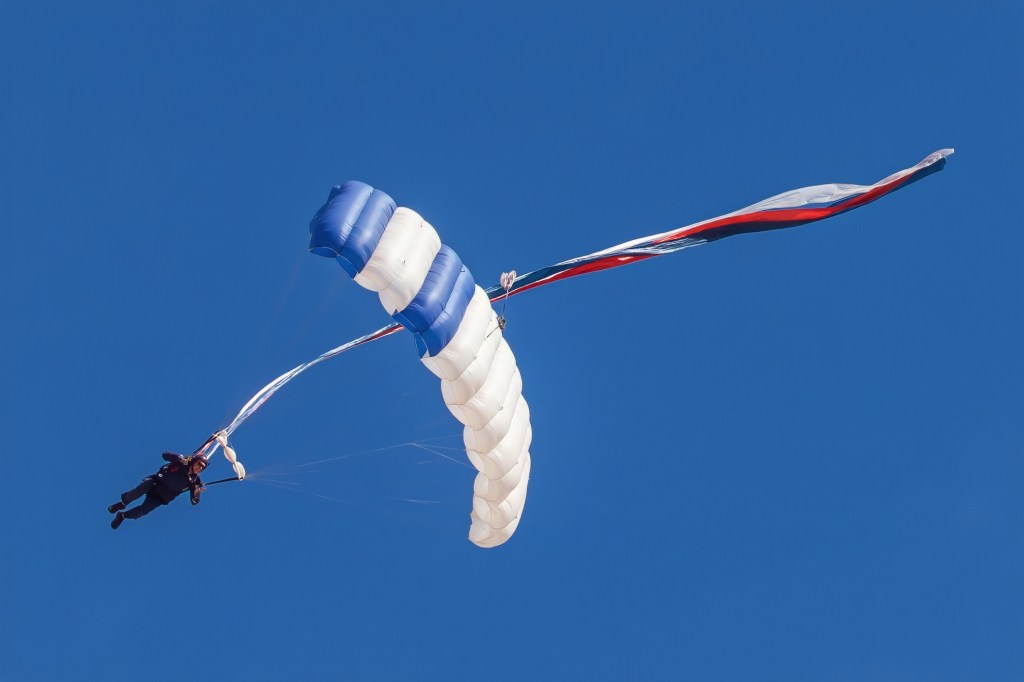
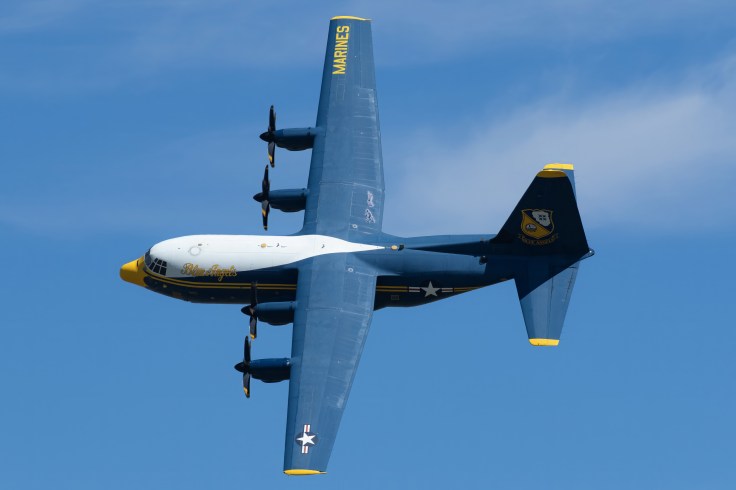
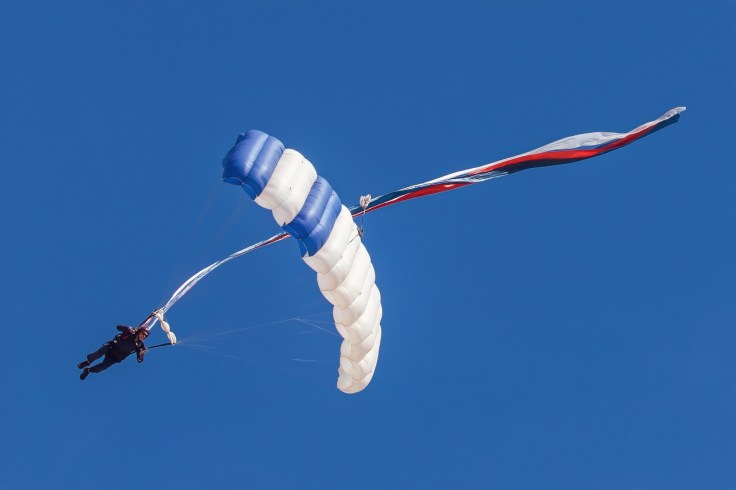
Il primo aereo a decollare è Fat Albert, il C-130J della US Navy e dei Blue Angels con a bordo i Wings of Blue, il team di paracadutisti dell’USAF che dopo essersi lanciati dall’Hercules, hanno dato il via ufficialmente al Pikes Peak Airshow 2024.
Una volta sistemati i paracaduti e liberata la via di rullaggio abbiamo iniziato a sentire la melodia dei motori radiali dei bombardieri storici dell’USAF era infatti il momento della Bomber Parade dove hanno preso il volo tutti insieme i bombardieri americani che hanno preso parte alla WWII.
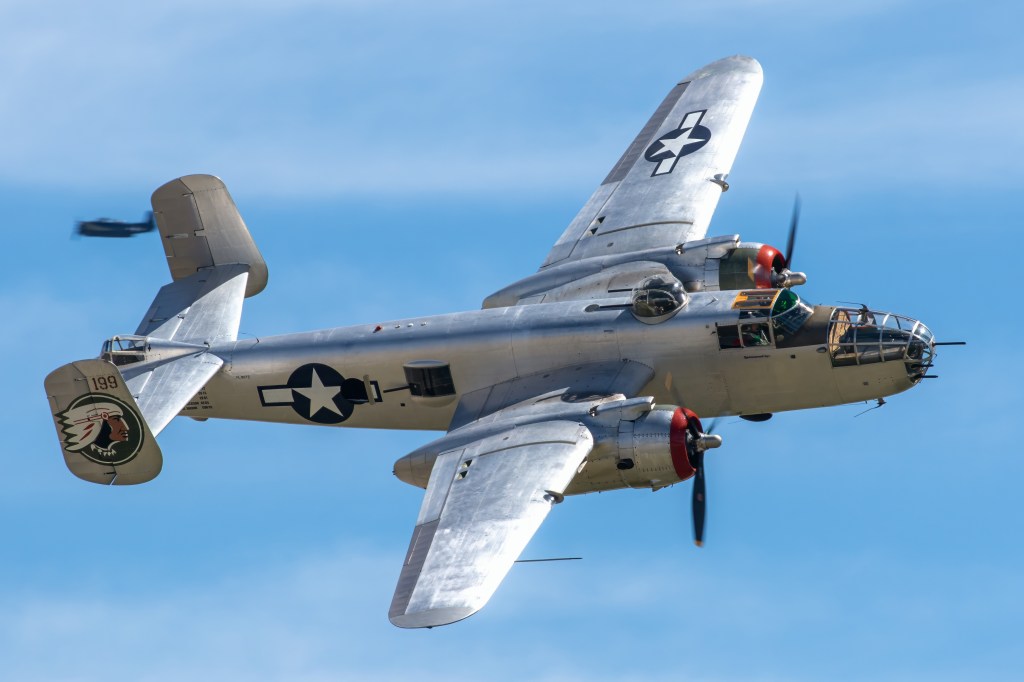
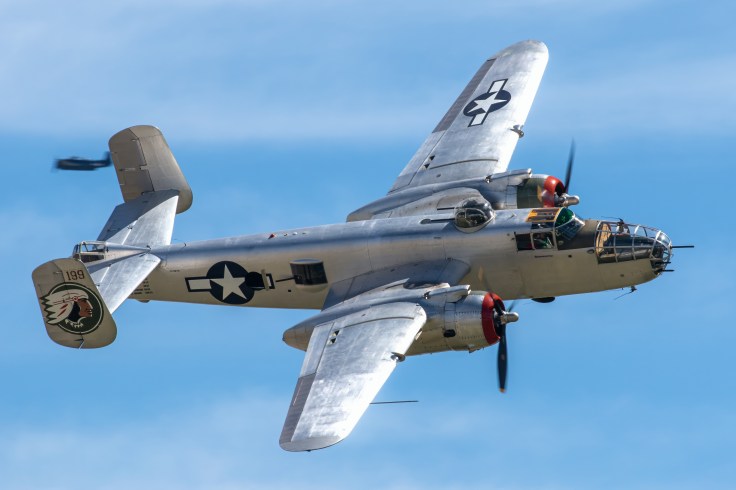
Affascinante vedere volare tutto il gruppo composto da 1 B-25J, 2 TBM-3E Avengers, 1 PBY CATALINA, 1 SBD-4 ed 1 AD-5/A-1E Skyraider. Sicuramente il più famoso è il B-25J, prodotto in più di 10.000 esemplari, diventato celebre grazie al film Pearl Harbour, venne utilizzato durante la missione Doolittle, per i raid su Tokyo e Honshu, il 18 Aprile 1942 dopo l’attacco alle Hawaii da parte del Giappone.
Il TMB-3e Avengers presenti allo show erano entrambi costruiti dalla General Motors, ecco il perchè della designazione TMB, i modelli prodotti dalla Grumman erano invece designati con la sigla TBF.
L’Avenger era un aerosilurante imbarcato, entrato in servizio nel 1942 ed utilizzati per la prima volta durante la battaglia delle Midway, restando in utilizzo per parecchio tempo anche dopo la fine della WWII.

Dopo la bomber parade era arrivato il momento del volo acrobatico, era infatti presente quest’anno al Pikes Peak RA con il Free Man Airshow, Bob Freeman ed il suo Extra 300SX.
Il velivolo acrobatico nella versione SX ha la fusoliera d’acciaio, mentre ali e coda sono in fibra di carbonio, il motore a sei cilindri sviluppa 315 cv, ed il peso dell’aereo è ridotto di circa 9o kg. Il peso inferiore ed il momento d’inerzia ridotto anch’esso del 20% intorno all’asse alare hanno permesso a Bob di effettuare manovre aeree incredibili durante l’esibizione.
Conclusosi il Free Man Airshow, ho finalmente potuto assistere al Franklin’s Flying Circus messo in scena da Ben Whabnoski, un personaggio inscenato dall’esperto pilota Kyle Franklin.
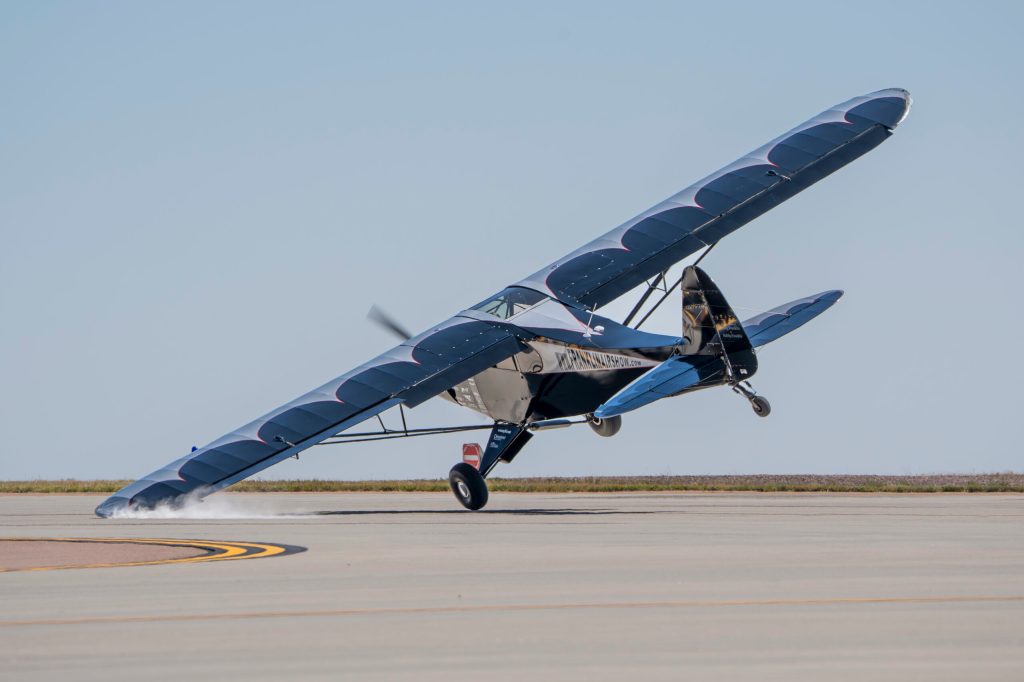
Penso che molti di voi avranno sicuramente visto almeno una volta su YouTube o Facebook le sue acrobazie dove Kyle una volta vestiti i panni di Ben Whabnoski, appare come un uomo ubriaco che si impossessa di un Piper PA-18A decollando in modo strambo dalla pista.
Lo show sembra che possa finire nel peggiore dei modi, con il Piper che potrebbe schiantarsi al suolo da un momento all’altro, in realtà sono tutte manovre controllate e ben riuscite realizzate dalle mani esperte di Kyle Franklin che hanno reso l’esibizione davvero divertente ma allo stesso tempo incredibile.
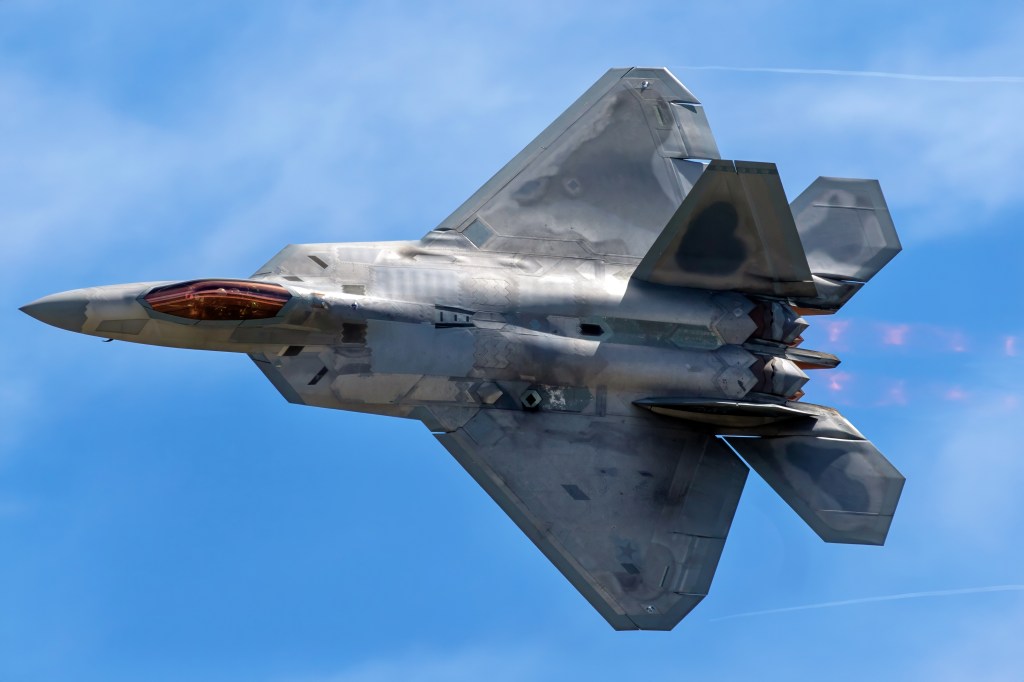
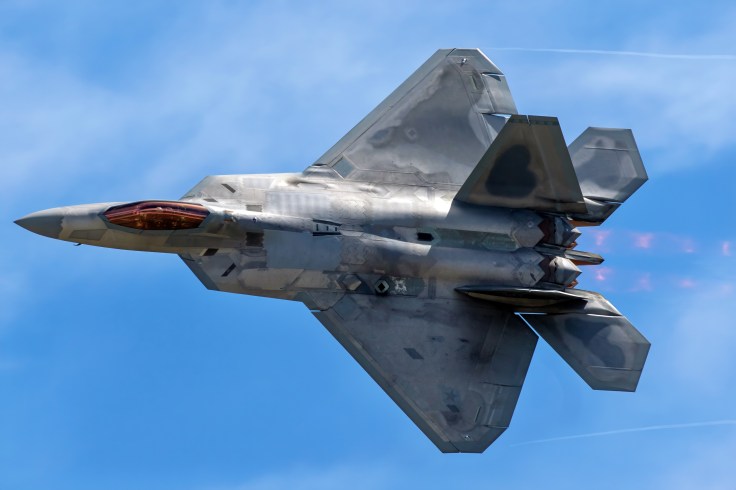
Dopo una serie di esibizioni a suon di eliche, è finalmente anche il turno dei post bruciatori e dell’F-22 Raptor pilotato dal maggiore Samuel Larson, comandante dal 2022 dell’F-22 Demo Team di base a Langley in Virginia.
Il maggiore Larson è un pilota di caccia esperto con oltre 850 ore di volo sull’F-22 e molteplici missioni in Medio Oriente e nella regione indo-pacifica. Il compito dell’F-22 Raptor Demo Team è dimostrare la supremazia aerea americana e ispirare la prossima generazione di piloti e manutentori.
Il Pikes Peak Airshow è molto importante per Larson in quanto dopo il liceo, il maggiore ha frequentato la United States Air Force Academy proprio qui a Colorado Springs in Colorado.
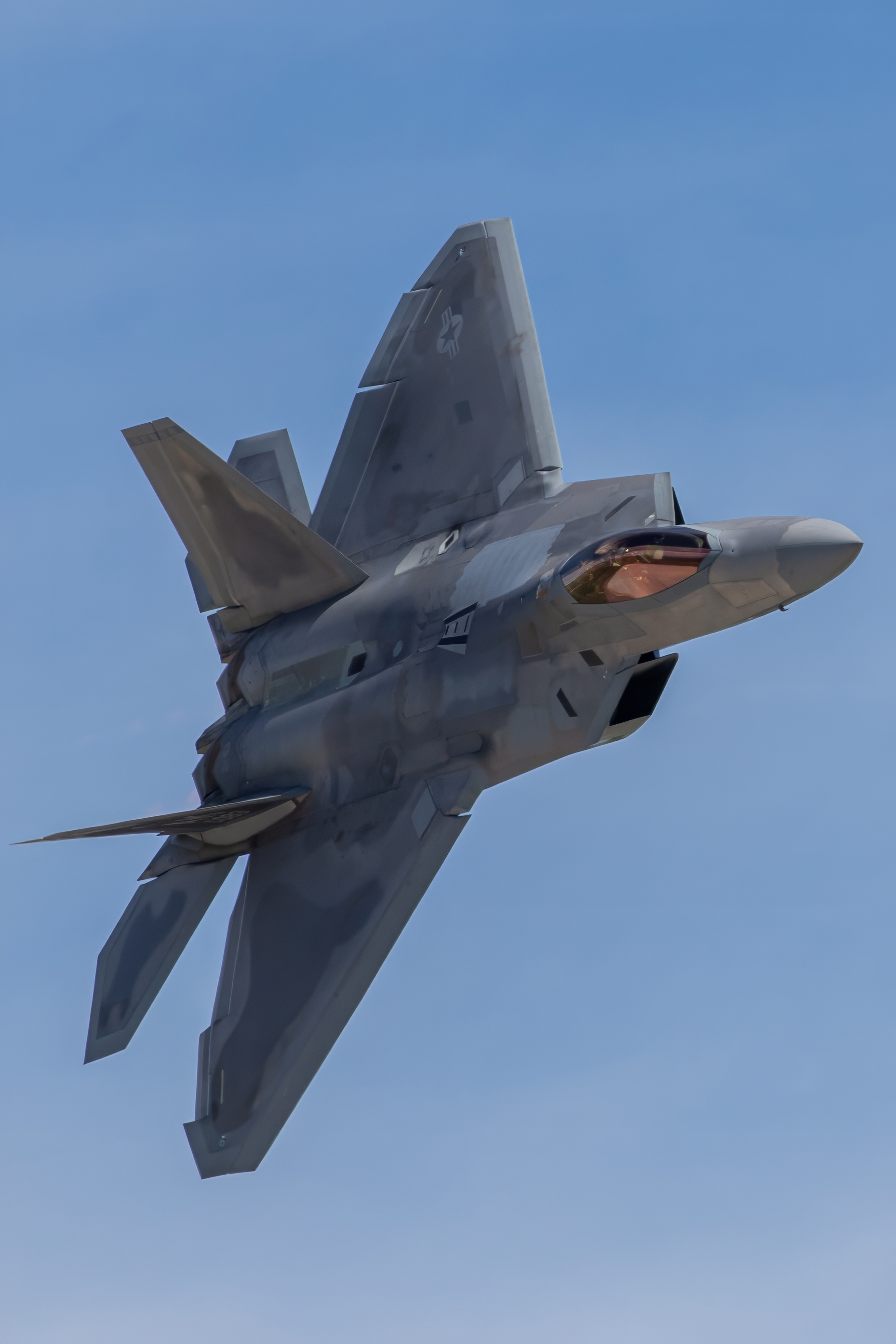
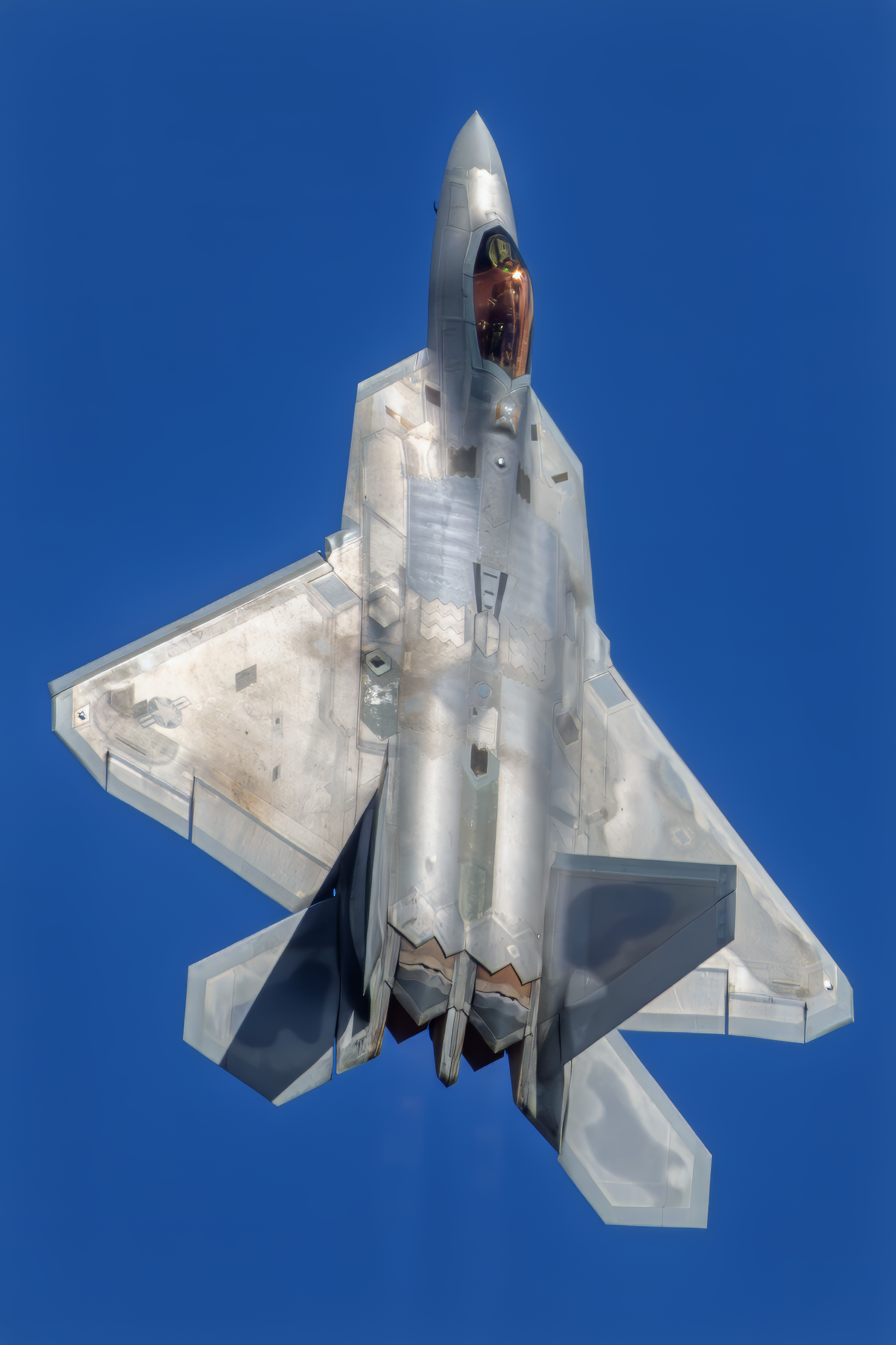
Dopo il classico e sempre spettacolare decollo verticale ed una serie di manovre che hanno messo in risalto la grande maneggevolezza del Raptor sia a basse che ad alte velocità, l’F-22 si è congiunto con un P-38 Lighting per una serie di passaggi commemorativi durante l’Heritage Flight.
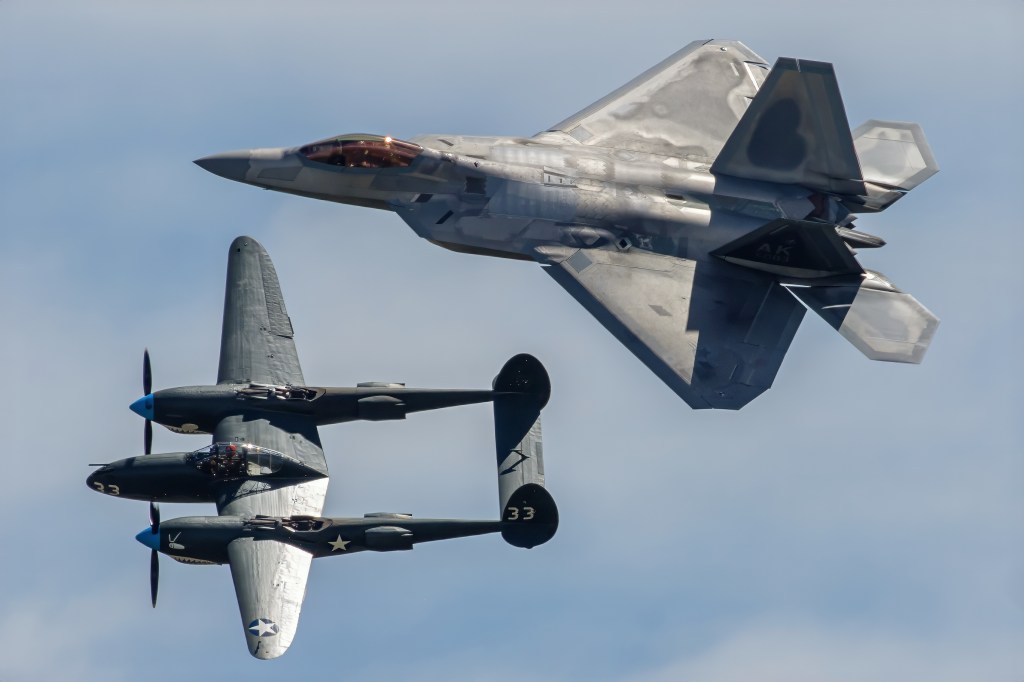
Queste esibizioni presentano i moderni aerei in volano insieme ad aerei della Seconda Guerra Mondiale, della Corea e del Vietnam in una dimostrazione della storia della potenza aerea americana e fungono da memoriale per gli uomini e le donne che hanno prestato o che prestano servizio nell’aeronautica militare statunitense.
Il P-38 in volo allo show è conosciuto come “White 33” per il grande numero 33 bianco dipinto sulla punta e sulla coda dell’aereo ed ha commemorato il Colonnello Francis R. “Frank” Royal, pilota del P-38 “White 33” e comandante di squadriglia durante la WWII, scomparso nel 2016 all’età di 101 anni.
Questo esemplare è uno dei 28 spedito dagli Stati Uniti in Australia nell’estate del ’42 in preparazione allo scontro contro il Giappone, dove la vigilia di Capodanno dello stesso anno, il 39th fighter squadron ingaggiò il primo scontro aereo contro le forze aeree giapponesi nel Pacifico.
Dopo l’esibizione dell’F-22 e del P-38, è arrivato il momento dell’esibizione dei rappresentanti di casa del 302nd Airlift Wing, basati proprio qui a Colorado Springs alla Peterson Air Force Base.
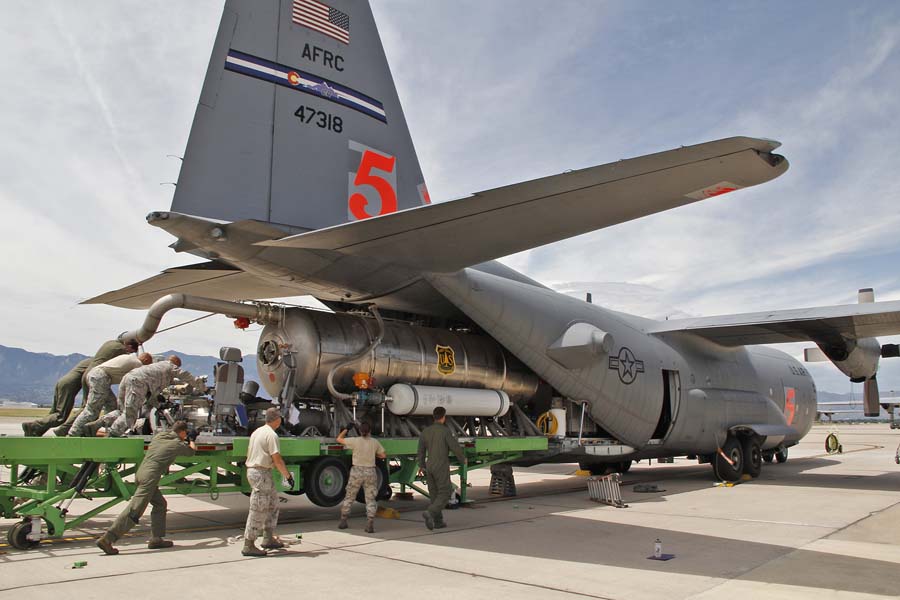
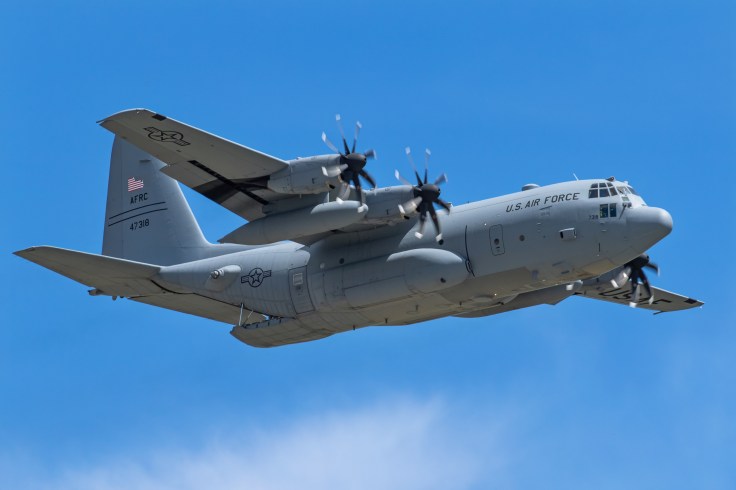
Il 302nd è uno stormo da trasporto dell’Air Force Reserve Command, inquadrato nella Twenty-Second Air Force, oltre alle normali funzioni di trasporto e lancio, è l’unico reparto della Air Force Reserve Command dedicato alle operazioni anti-incendio, attraverso un sistema modulare aerotrasportato dello U.S. Forest Service detto MAFFS.

Il MAFFS è un’unità autonoma utilizzata per la lotta antincendio aerea che può essere caricata sia sul Lockheed C-130 Hercules che sull’Embraer C-390, consentendo all’aereo di essere utilizzato come aereo cisterna contro gli incendi boschivi.
Ciò consente all’US Forest Service di utilizzare aerei militari dell’Air National Guard e dell’Air Force Reserve per fungere da risorsa di backup d’emergenza per la flotta di aerei cisterna.
Le unità MAFFS sono in grado di caricare acqua o ritardante al fuoco e può caricare fino a 3000 galloni, equivalenti a 11.500 litri, che possono essere scaricati in solo 5 secondi.
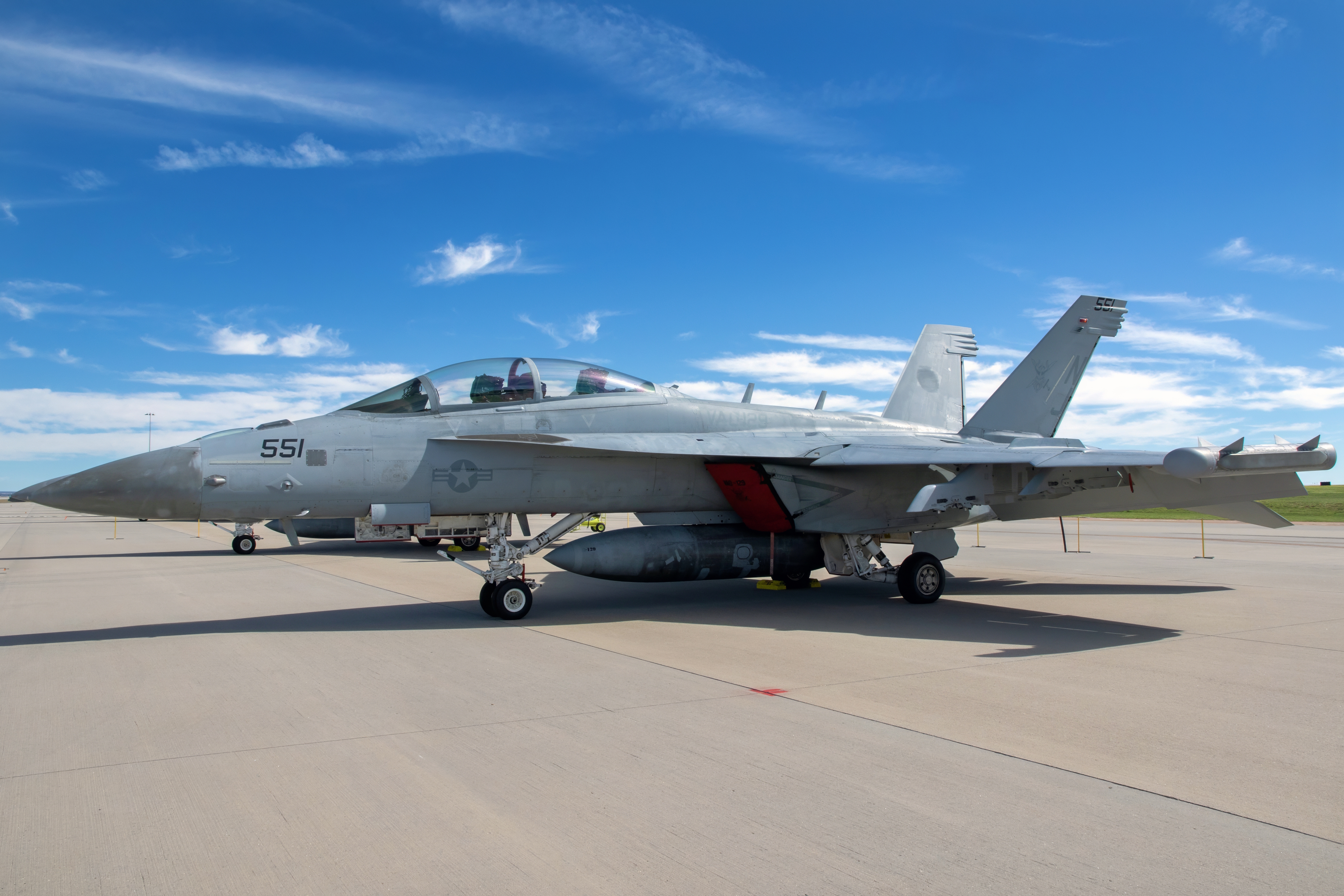
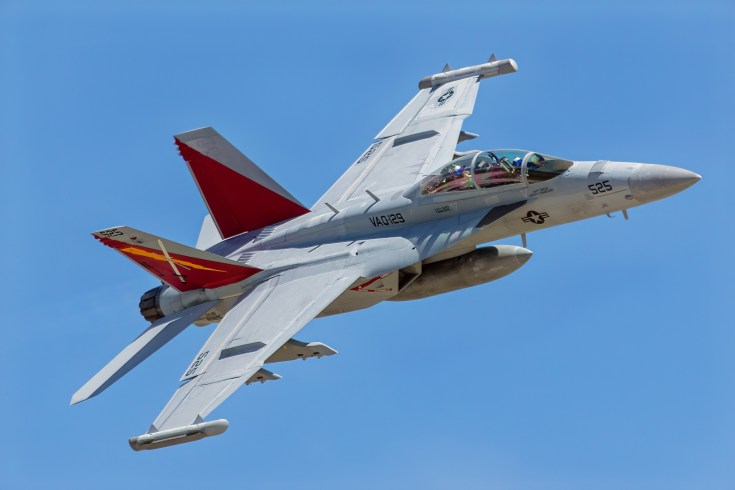
Torniamo ora alle esibizioni dei fighter jet con la Marina degli Stati Uniti ed il suo EA-18G Growler Demo Team. Il reparto è basato presso la NAS Whidbey Island nello stato di Washington ed il team è composto da equipaggi e velivoli dell’Electronic Attack Squadron 129 (VAQ-129), noto anche come “Vikings”, che è il Fleet Replacement Squadron (FRS) che si occupa dell’addestramento di tutti gli aviatori della marina che voleranno con l’EA-18G Growler.
Il Growler Demo Team si esibisce in air show in tutti gli Stati Uniti come parte dell’US Navy Legacy Flight Team; i velivoli mettono in mostra la più avanzata piattaforma di attacco elettronico aviotrasportato (AEA) degli Stati Uniti, durante l’air show inoltre effettuano diversi passaggi con aerei “legacy”, quindi non più in produzione, in modo simile all’US Air Force Heritage Flight.
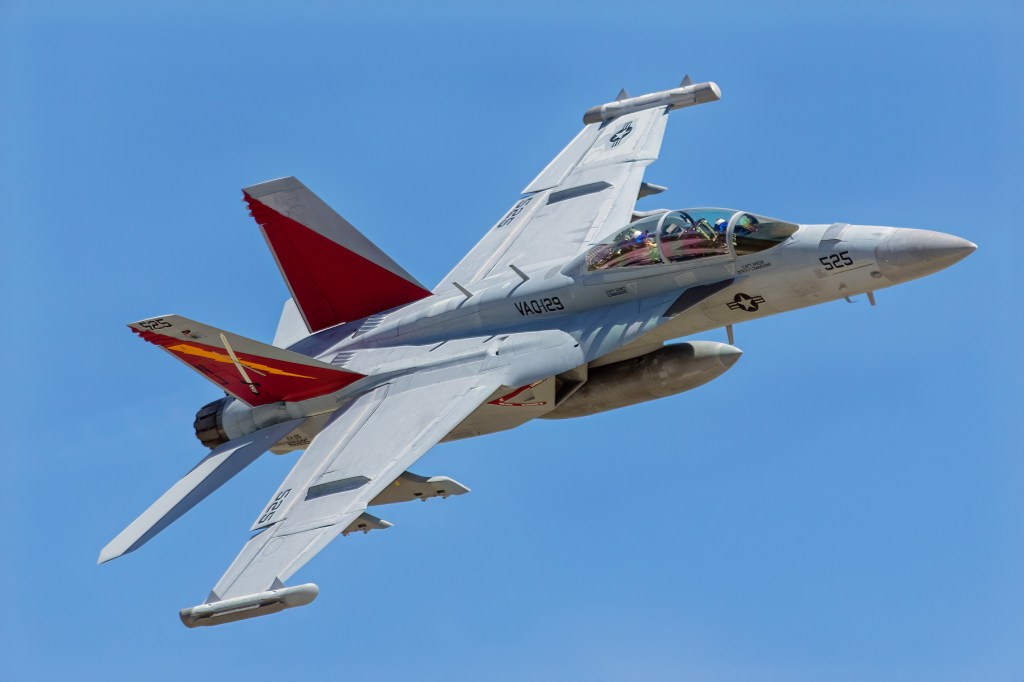
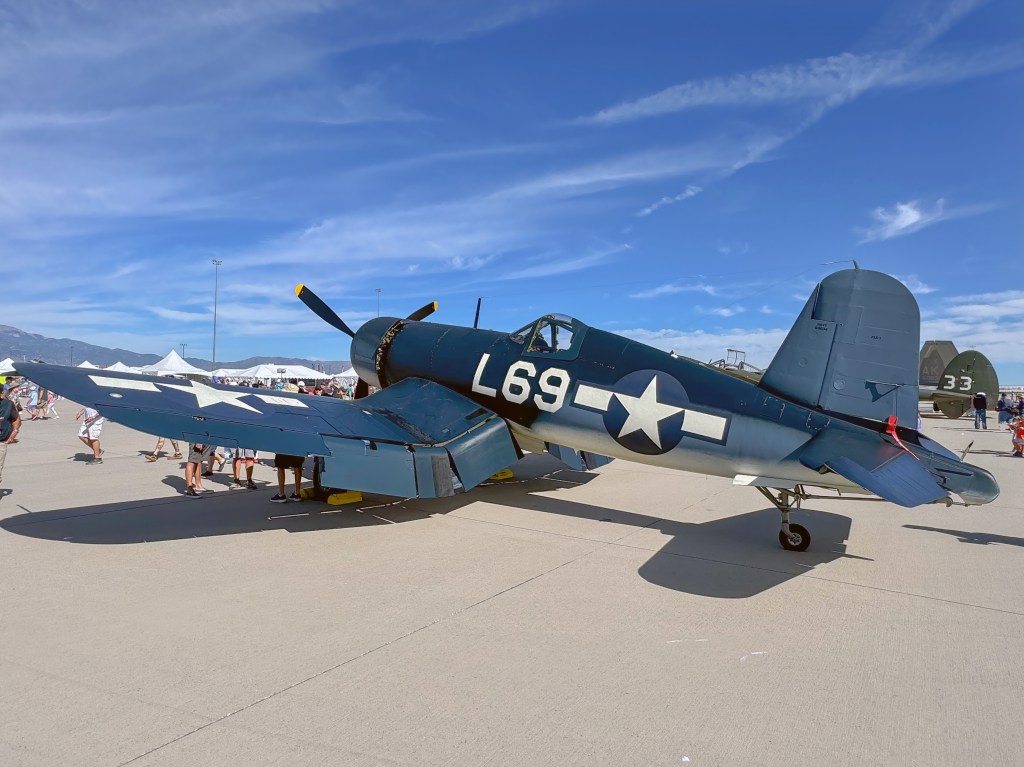
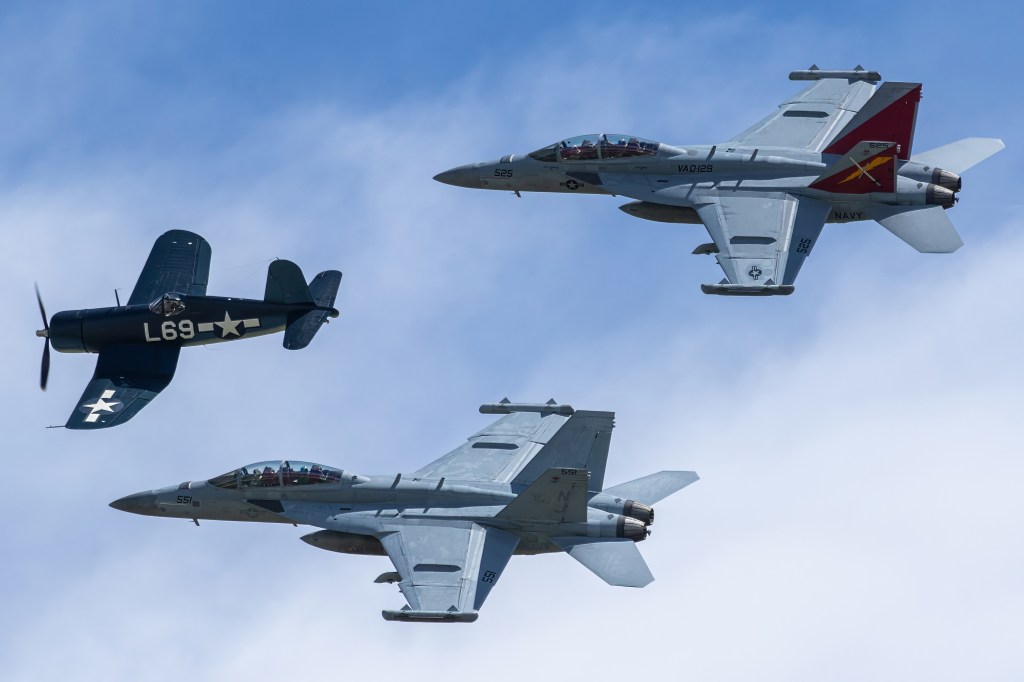
Al Pikes Peak Reagional Airshow abbiamo potuto osservare le incredibili manovre effettuate dal demo team composto da 2 EA-18G Growler, per quanto riguarda invece la parte di show dell’US Navy Legacy Flight, il team ha volato a fianco di un F3A-1 Corsair utilizzato dalla US Navy nella WWII.
Questo esemplare di Corsair è stato prodotto dalla Brewster, ricordiamo che il Corsair era prodotto da Chance-Vought, la marina dopo aver aumentato gli ordini si trovò obbligata a commissionare l’aeroplano anche alla Brewster ed a Goodyear, in quanto la catena di montaggio dei Corsair era già a pieno regime. La sigla per gli esemplari prodotti dalla Goodyear era FG, mentre gli esemplari prodotti da Brewster con F3A-1
Brewster costruì un totale di 735 aerei, questo ad oggi è l’unico esemplare superstite nonostante l’F3A-1 si danneggiò nel 1944, venne poi recuperato negli anni ’90 e tornò a volare nel 2018.
Iniziamo ora ad arrivare verso la parte finale dell’air show, siamo giunti all’evento prima dei Blue Angels, è il momento della “Fighter Parade” sono tornati infatti a farsi sentire i motori radiali, questa volta però non dei bombardieri, ma dei gloriosi caccia della WWII, velivoli che non hanno bisogno di presentazioni, come il P-47, P-51, FM-2, F7F’S, NA-50 E F7F Tigercat.
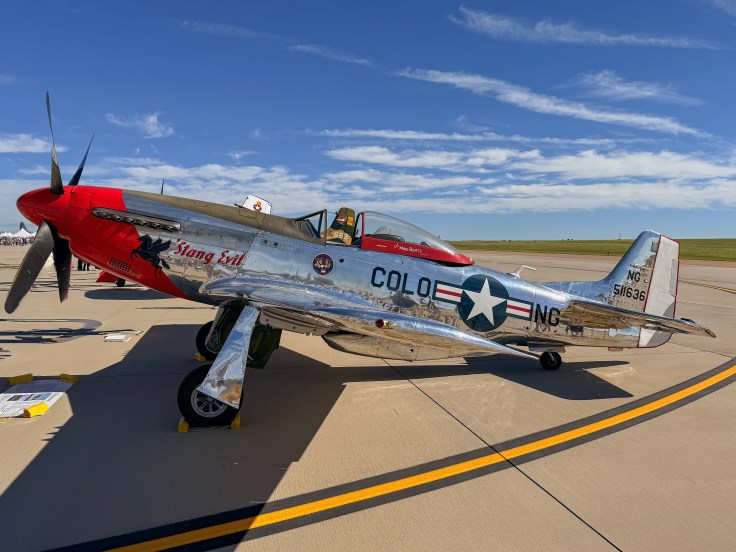
Sicuramente l’icona dei caccia americani della seconda guerra mondiale è il P-51Mustang, considerato il miglior aereo con motori a pistoni della WWII. L’aereo aiutò i bombardieri a bombardare la Germania scortandoli all’obbiettivo, proteggendoli dagli attacchi degli aerei della Luftwaffe, soprattutto nelle missioni diurne.
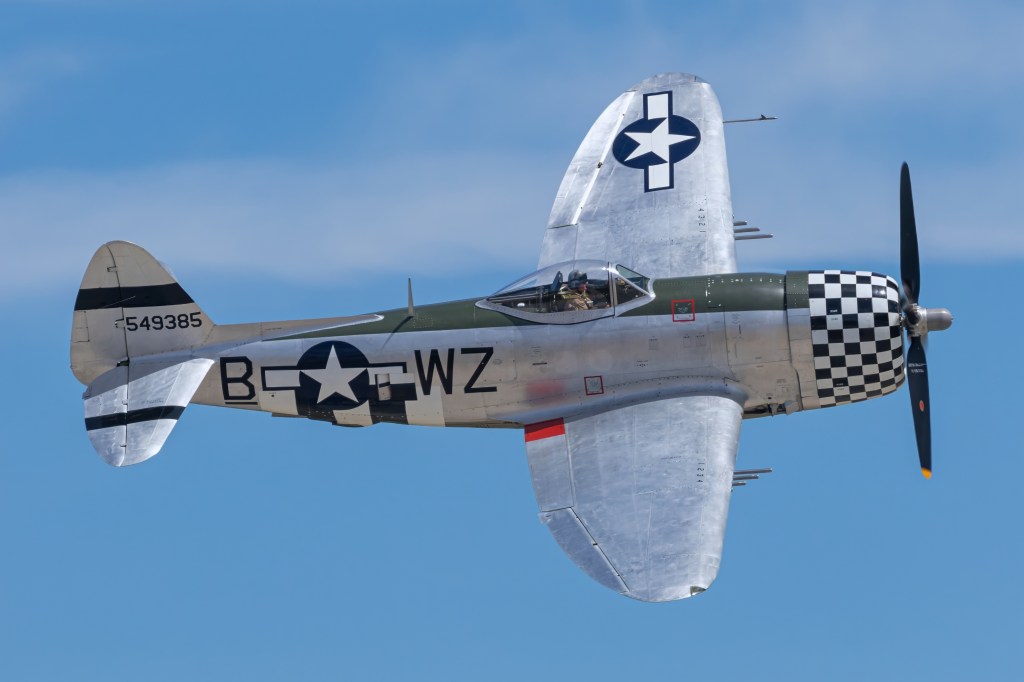
Per quanto riguarda invece il P-47, soprannominato “JUG” dato che la forma della fusoliera ricordava molto quella delle bottiglie di Whisky contrabbandate durante gli anni del proibizionismo, secondo altre fonti questa era invece l’abbreviazione di Juggernaut (termine inglese che indica una forza inarrestabile).
Il P-47D è stata la versione maggiormente prodotta con 12.558 unità su di un totale di 15.000 P-47 prodotti, l’esemplare che ha volato all’airshow è anche essposto al National Museum of WWII Aviation.
La fighter Parade si è conclusa con l’esibizione del Grumman F7F-3N Tigercat che effettuò il suo primo volo nel 1943, lo US Marine Corps ordinò 500 esemplari nel ruolo di “close air support” ai Marines durante gli sbarchi nelle isole del Pacifico.
I due Tigercats presenti allo show fanno parte dei 7 rimasti in volo attualmente ed hanno seriali consecutivi, il che significa che sono stati prodotti uno consecutivo all’altro.
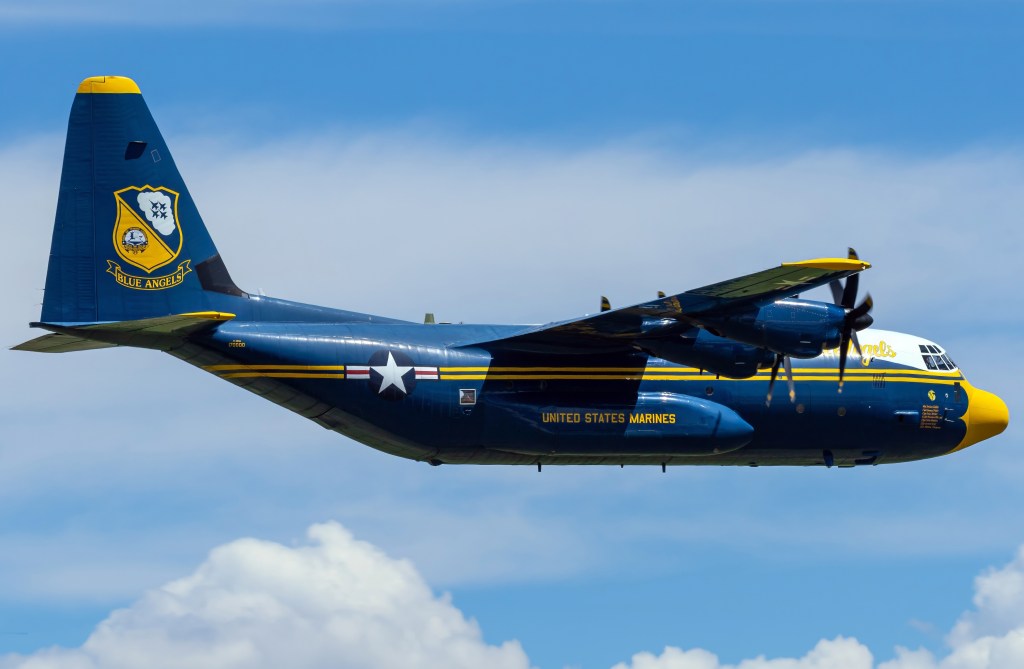
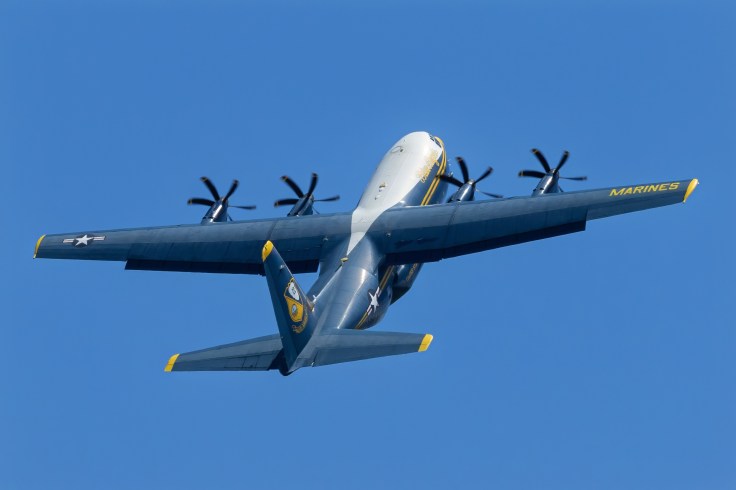
Dopo l’atterraggio del Tigercat, ecco decollare un’altra volta “Fat Albert”, il il Super Hercules dei Marines Corps che si è preso tutta la pista per prendere velocità per poi andare quasi in verticale ed arrampicarsi in alto verso il cielo.
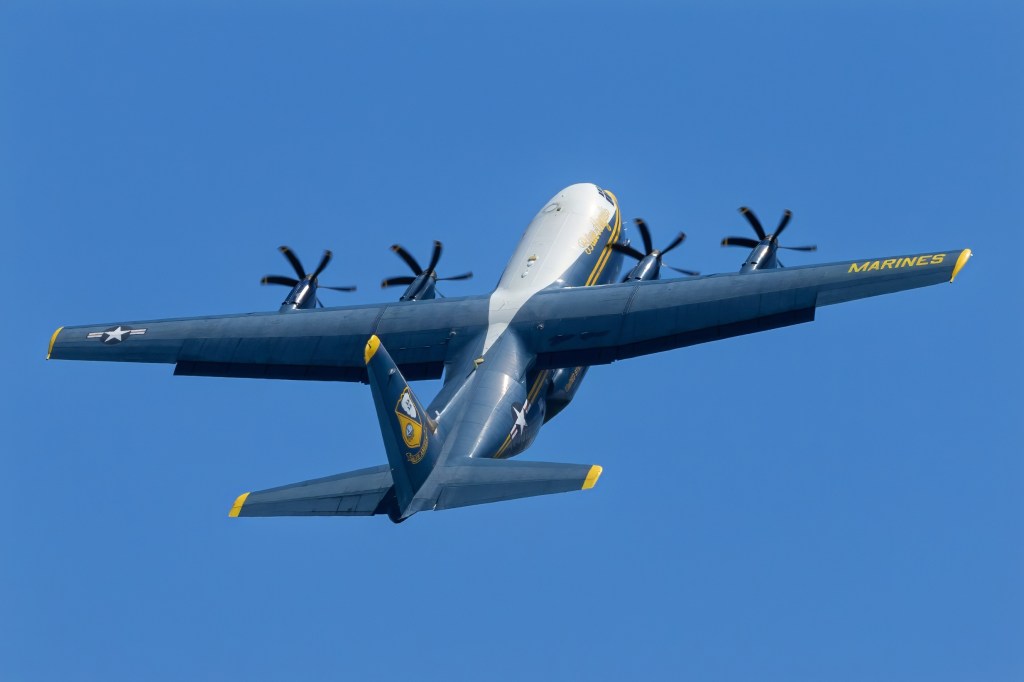
“Fat Albert”è un Lockheed Martin C-130J Super Hercules e fa da supporto al team dei Blue Angels dal 1970. Il ruolo principale nel team è di trasportare i Blue Angels ed il loro equipaggiamento agli airshow.
Può trasportare 60 persone e 35.000 pounds di equipaggiamento, Fat Albert fa inoltre parte dell’esibizione effettuando manovre acrobatiche circa 15 minuti prima dell’esibizione dei Blue Angels.
Ma ora eccoci finalmente al grande evento, l’esibizione dei Blue Angels per la prima volta al Pikes Peak Regional Airshow.
L’obiettivo del team è quello di mettere in mostra la professionalità della Marina degli Stati Uniti e del Corpo dei Marines ed ispirare giovani uomini e donne ad intraprendere una carriera nell’aviazione navale o nell’esercito.
Il 2024 segna il 78° anno di servizio dei Blue Angels, attivi dal 1946, è la seconda più antica tra le pattuglie acrobatiche, secondi solo alla francese Patrouille de France, il team ha sede nella base di Pensacola in Florida.
I piloti solitamente fanno parte del team per due o tre anni, ed i requisiti base per farne parte sono: essere in servizio attivo nel corpo dei Marines o della US Navy, essere qualificato per operare su di una portaerei, avere un minimo di 1250 ore di volo attivo, avere una raccomandazione dal proprio ufficiale comandante ed essere preparato per un intenso programma di training e airshow.
Il comandante è Alexander P. Armatas, con il Num 1 sulla coda è il flight leader del gruppo, da sottolineare il Num.3 “Left Wing” della formazione, il tenente Wesley Perkins che è nato a Pordenone, in quanto il padre era d’istanza in Italia.
L’8 novembre 1986, in occasione dei quarant’anni della loro attività, i Blue Angels presentarono al pubblico il nuovo F/A-18 Hornet, aereo con il quale nel 1992 effettuarono il loro primo tour europeo della durata di 30 giorni, esibendosi in Svezia, Finlandia, Russia, Romania, Bulgaria, Italia, Regno Unito e Spagna.
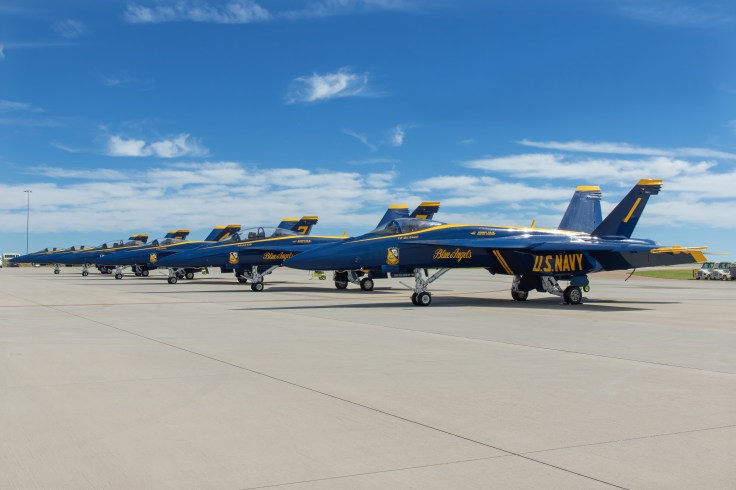
Entusiasmante la cerimonia di avvio del programma d’esibizione dovei piloti arrivano ai propri aerei in gruppo ed inizia tutta la fase di preparazione ed avvio dei motori.
La formazione è composta da 6 aerei e troviamo la figura del Lead Solo, le manovre e le figure eseguite dalla formazione sono veramente spettacolari, soprattutto perchè eseguite con dei caccia F/A-18E/F Super Hornet.
Pensate che la distanza più vicina che gli aerei possono raggiungere l’uno dall’altro durante la manovra Diamond 360 è di 46 centimetri , mentre a livello di quota operativa, la maggiore altitudine è durante il vertical roll, eseguito dall’Opposing Solo (fino a 15.000 piedi) mentre la quota minore viene raggiunta durante lo Sneak Pass, (fino a 50 piedi) manovra eseguita eseguito dal Lead Solo.
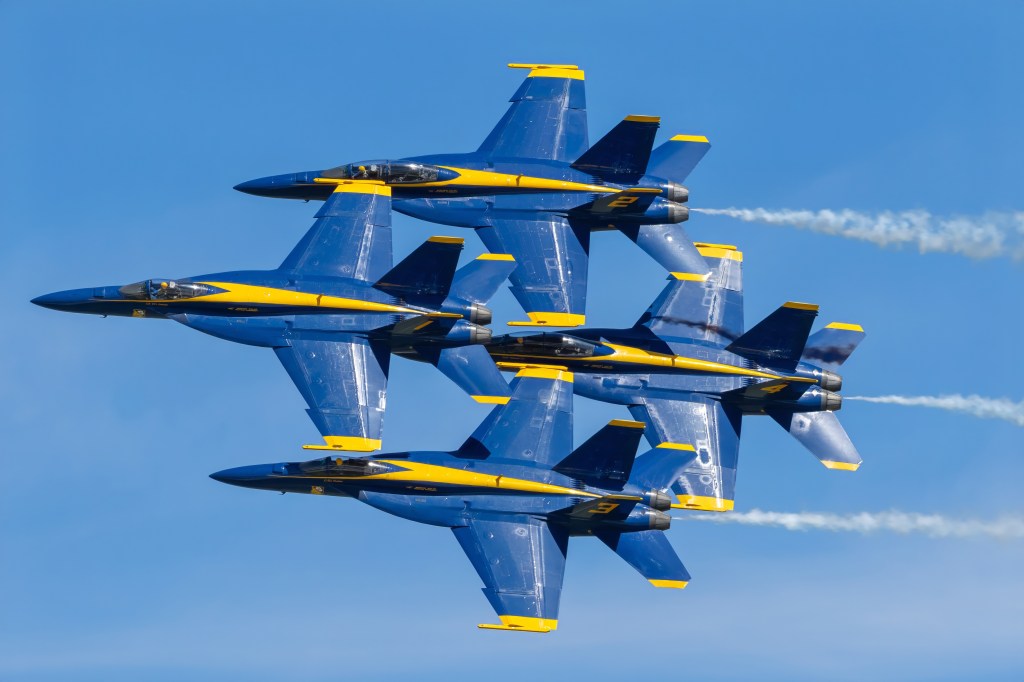
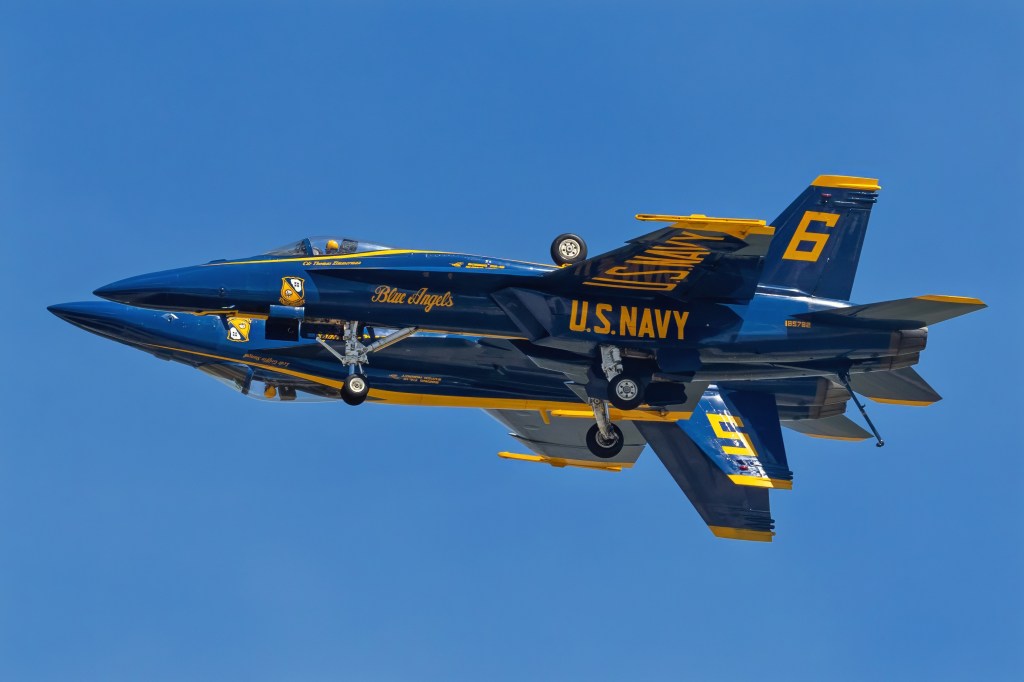
Manovra “FORTUS”
L’esibizione dei Blue Angels è stata davvero incredibile, con gli F-18 che spesso, durante la fase di ricongiungimento arrivavano a sorpresa a tutta velocità alle spalle del pubblico.
Le manovre sono state impeccabili e durante l’esecuzione di alcune figure hanno dato veramente l’idea delle piccole distanze tra i super hornet, molto bello verso il finale dell’esibizione, la manovra simile alla “bomba” delle Frecce Tricolori, con vari incroci tra gli F-18 verso il centro della display line.
L’autore desidera ringraziare l’ufficio stampa del Pikes Peak Regional Airshow, in particolare Lauren De Marco, per la su disponibilità e per l’accoglienza il giorno dell’evento.
Foto e Testo ©Bani Luca
ENGLISH VERSION
This year, I had the opportunity to attend an air show in the United States for the first time; several times I wondered what the experience of attending an American air show might be like, not only from the point of view of the aircraft participating in the show, but also from the organizational point of view.
I would like to thank the organization, especially Lauren De Marco for her helpfulness and for welcoming me on the morning of the event at the Media area.
The Pikes Peak Regional Airshow is held annually at the City of Colorado Springs Municipal Airport in Colorado and is a “young” show in that the first edition was held in 2019 and is now in its sixth year. The airport in Colorado Springs , is both public and military and is home to Peterson Space Force Base which is located on the north side of runway 13/31 and is home to the
North American Aerospace Defense Command (NORAD) and the Space Force’s 21st Space Wing.
The line up of the show is very promising with a number of displays that are quite rare for us Europeans, just think of the presence of many WWII “Warbirds” such as F-3, F-4 Corsair, the PBY-5A Catalina, A-5 Skyraider, TBM Avenger, SBS Dauntless, FM-2 Wildcat, F7F Tigercat, P-38 Lighting, P-47 Thunderbolt, P-51 Mustang and B-25J Mitchell.
Coming instead to the modern era, other guests attending the event, the F-22 Demo team, the US NAVY with a pair of EA-18 Growlers, and for the first time in the history of the Pikes Peak Regional Airshow, took part as main eventers with their F/A-18 Super Hornet, the Blue Angels.
After the doors opened, we headed immediately true the central area where we enthusiasts always have to pay close attention because you can find very interesting T-shirts, caps and patches, in fact each flight group was present with their own booth and selling their merchandise.
Immediately afterwards we headed to the display line, where all the aircraft that would take part in the show were parked, the ramp was open to the public for about 1 1/2 hours and it was possible to get close to the aircraft to take some pictures.
Well arranged was the F-22 Demo Team and Captain Samuel “RaZZ” Larson, really very helpful with the public for photographs and always ready to answer any questions and curiosity of the enthusiasts.
Around 10 a.m. the ramp was closed to the public and we returned to the central area where one can stay to watch the airshow, we decided to find some shade under the wing of a C-130.
At 11 a.m. everything was ready for the opening ceremony with the national anthem, a very special and emotional moment, where every American present, brought their hand to their chest during the singing of the national anthem. Many families were present at the air show, and it is truly commendable and noteworthy the passion and respect that the American people have for their nation and their armed forces.
The first plane to take off was Fat Albert, the U.S. Navy and Blue Angels’ C-130J carrying the Wings of Blue, the USAF parachute team that after jumping from the Hercules, officially kicked off the Pikes Peak Airshow 2024.
Once the parachutes were set up and the taxiway cleared we began to hear the melody of the radial engines of the USAF’s historic bombers it was indeed time for the Bomber Parade where American bombers that took part in WWII all took flight together.
Fascinating to see flying the whole group consisting of 1 B-25J, 2 TBM-3E Avengers, 1 PBY CATALINA, 1 SBD-4 and 1 AD-5/A-1E Skyraider. Certainly the most famous is the B-25J, produced in more than 10,000 examples, became famous thanks to the movie Pearl Harbor, was used during the Doolittle mission, for raids on Tokyo and Honshu, on April 18, 1942 after Japan attacked Hawaii.
The TMB-3and Avengers featured in the show were both built by General Motors, hence the reason for the TMB designation; the models produced by Grumman were designated TBF instead.
The Avenger was an embarked torpedo bomber that entered service in 1942 and was first used during the Battle of the Midway, remaining in use for quite some time after the end of WWII.
After the bomber parade it was time for aerobatic flight, in fact it was present at this year’s Pikes Peak RA with the Free Man Airshow, Bob Freeman and his Extra 300SX.
The aerobatic aircraft in the SX version has a steel fuselage, while the wings and tail are made of carbon fiber, the six-cylinder engine develops 315 hp, and the weight of the aircraft is reduced by about 9o kg. The lower weight and the moment of inertia also reduced by 20 percent around the wing axis allowed Bob to perform incredible aerial maneuvers during the show.
As the Free Man Airshow concluded, I was finally able to witness Franklin’s Flying Circus put on by Ben Whabnoski, a character staged by experienced pilot Kyle Franklin.
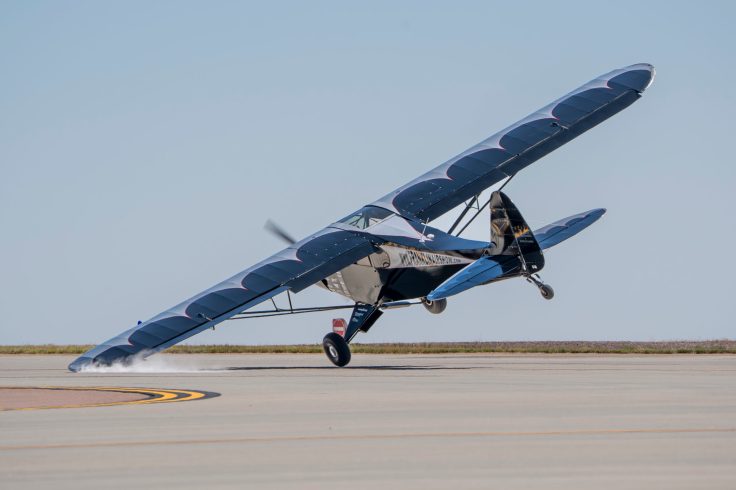
I think many of you have surely seen his stunts at least once on YouTube or Facebook where Kyle once dressed as Ben Whabnoski, appears as a drunken man who takes over a Piper PA-18A taking off in a freakish manner from the runway.
The show looks like it could end in the worst possible way, with the Piper possibly crashing to the ground at any moment, in reality these are all controlled and well-executed maneuvers performed by Kyle Franklin’s expert hands that made the performance truly entertaining but at the same time incredible.
After a series of propeller-driven displays, it is finally also the turn of the afterburners and the F-22 Raptor flown by Major Samuel Larson, commander since 2022 of the F-22 Demo Team based at Langley, Virginia.
Major Larson is an experienced fighter pilot with over 850 flight hours on the F-22 and multiple missions in the Middle East and Indo-Pacific region. The F-22 Raptor Demo Team’s task is to demonstrate American air supremacy and inspire the next generation of pilots and maintainers.
The Pikes Peak Airshow is very important to Larson as after high school, the major attended the United States Air Force Academy right here in Colorado Springs, Colorado.
After the classic and always spectacular vertical takeoff and a series of maneuvers that highlighted the Raptor’s great handling at both low and high speeds, the F-22 joined forces with a P-38 Lighting for a series of commemorative passes during Heritage Flight.
These displays feature modern aircraft in flight along with aircraft from World War II, Korea and Vietnam in a demonstration of the history of American air power and serve as a memorial to the men and women who have served or are serving in the U.S. Air Force.
The P-38 flying at the show is known as the “White 33” because of the large white number 33 painted on the nose and tail of the aircraft and commemorated Colonel Francis R. “Frank” Royal, a P-38 “White 33” pilot and squadron commander during WWII who passed away in 2016 at the age of 101.
This example is one of 28 shipped by the U.S. to Australia in the summer of ’42 in preparation for the clash against Japan, where on New Year’s Eve that year, the 39th fighter squadron engaged in the first air engagement against Japanese air forces in the Pacific.
After the display of the F-22 and P-38, it was time for the display of the home representatives of the 302nd Airlift Wing, based right here in Colorado Springs at Peterson Air Force Base.

The 302nd is an Air Force Reserve Command transport wing, framed in the Twenty-Second Air Force, in addition to its normal transport and launch functions, is the only Air Force Reserve Command unit dedicated to firefighting operations, through a U.S. Forest Service airborne modular system called MAFFS.
The MAFFS is a self-contained unit used for aerial firefighting that can be loaded onto either the Lockheed C-130 Hercules or the Embraer C-390, allowing the aircraft to be used as a tanker aircraft against forest fires.
This allows the U.S. Forest Service to use Air National Guard and Air Force Reserve military aircraft to serve as an emergency backup resource for the tanker aircraft fleet.
MAFFS units are capable of loading water or fire retardant and can load up to 3,000 gallons, equivalent to 11,500 liters, which can be unloaded in as little as 5 seconds.
We now return to fighter jet displays with the U.S. Navy and its EA-18G Growler Demo Team. The unit is based at NAS Whidbey Island in Washington state and the team consists of crews and aircraft from Electronic Attack Squadron 129 (VAQ-129), also known as the “Vikings,” which is the Fleet Replacement Squadron (FRS) that is responsible for training all Navy aviators who will fly the EA-18G Growler.
The Growler Demo Team performs air shows throughout the U.S. as part of the U.S. Navy Legacy Flight Team; the aircraft showcase the most advanced airborne electronic attack (AEA) platform in the U.S. During the air show they also make several passes with “legacy” aircraft, thus no longer in production, in a manner similar to the U.S. Air Force Heritage Flight.

At the Pikes Peak Reagional Airshow we were able to observe the incredible maneuvers performed by the demo team consisting of 2 EA-18G Growlers, however, as for the US Navy Legacy Flight part of the show, the team flew alongside an F3A-1 Corsair used by the US Navy in WWII.
This Corsair example was produced by Brewster, recall that the Corsair was produced by Chance-Vought, the Navy after increasing orders found itself obliged to commission the airplane also from Brewster and Goodyear, as the Corsair assembly line was already at full capacity. The designation for the Goodyear-produced examples was FG, while the examples produced by Brewster with F3A-1
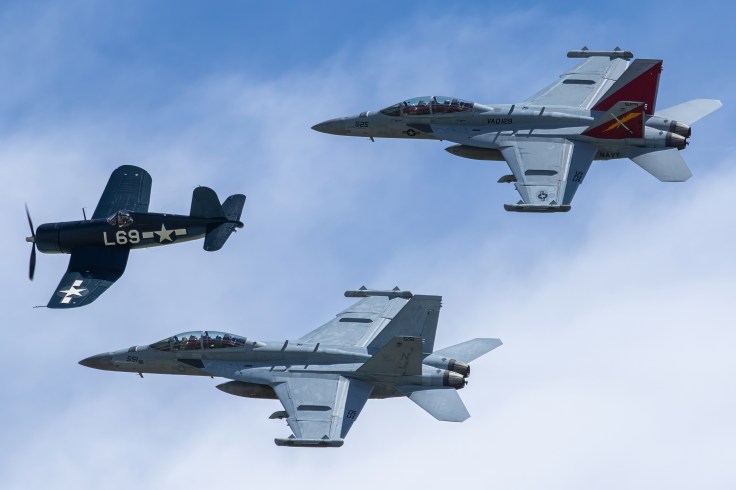
Brewster built a total of 735 aircraft, this to date is the only surviving example despite the fact that the F3A-1 was damaged in 1944, was later recovered in the 1990s and returned to flight in 2018.
We are now beginning to get towards the final part of the air show, we have come to the event before the Blue Angels, it is time for the “Fighter Parade” in fact the radial engines are back, this time however not of bombers, but of the glorious WWII fighters, aircraft that need no introduction, such as the P-47, P-51, FM-2, F7F’S, NA-50 AND F7F Tigercat.
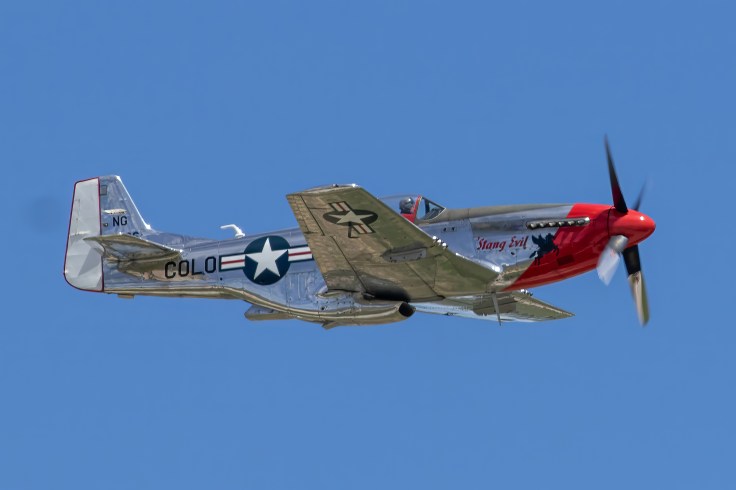
Certainly the icon of American WWII fighters is the P-51Mustang, considered the best piston-engine aircraft of WWII. The plane helped bombers bomb Germany by escorting them to the target, protecting them from attacks by Luftwaffe aircraft, especially on daylight missions.
As for the P-47, on the other hand, nicknamed “JUG” since the shape of the fuselage was very reminiscent of that of the Whisky bottles smuggled during the Prohibition years, according to other sources this was instead an abbreviation for Juggernaut (an English term for unstoppable force).
The P-47D was the most-produced version with 12,558 units out of a total of 15,000 P-47s produced, the example that flew at the airshow is also essposed at the National Museum of WWII Aviation.
The Fighter Parade concluded with a display of the Grumman F7F-3N Tigercat that made its first flight in 1943, the U.S. Marine Corps ordered 500 examples in the role of “close air support” to the Marines during landings on Pacific islands.

After the Tigercat landing, here is “Fat Albert,” the Marine Corps Super Hercules taking off once again, taking the whole runway to pick up speed and then going almost vertical and climbing high into the sky.
“Fat Albert “is a Lockheed Martin C-130J Super Hercules and has been supporting the Blue Angels team since 1970. The main role in the team is to transport the Blue Angels and their equipment to airshows.
It can carry 60 people and 35,000 pounds of equipment, Fat Albert is also part of the performance by performing aerobatic maneuvers about 15 minutes before the Blue Angels’ performance.
But now here we finally come to the big event, the Blue Angels’ performance for the first time at the Pikes Peak Regional Airshow.
The team’s goal is to showcase the professionalism of the U.S. Navy and Marine Corps and inspire young men and women to pursue careers in naval aviation or the military.
The year 2024 marks the 78th year of service for the Blue Angels, active since 1946, it is the second oldest of the aerobatic patrols, second only to France’s Patrouille de France, the team is based at the Pensacola base in Florida.
Pilots usually serve on the team for two to three years, and the basic requirements for membership are: to be on active duty in the Marine Corps or U.S. Navy, to be qualified to operate on an aircraft carrier, to have a minimum of 1250 active flight hours, to have a recommendation from one’s commanding officer, and to be prepared for an intensive training and airshow program.
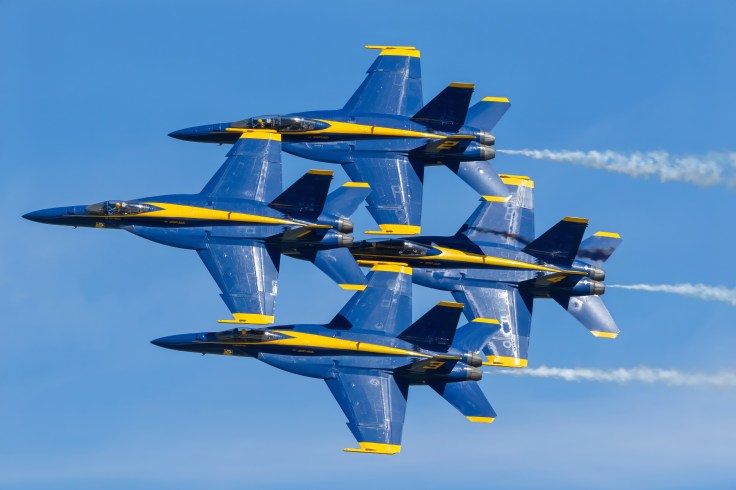
The commanding officer is Alexander P. Armatas, with Num 1 on his tail is the flight leader of the group, of note is the Num.3 “Left Wing” of the formation, Lt. Wesley Perkins who was born in Pordenone, as his father was stationed in Italy.
On Nov. 8, 1986, to mark their 40th anniversary, the Blue Angels presented to the public their new F/A-18 Hornet, an aircraft with which they made their first 30-day European tour in 1992, performing in Sweden, Finland, Russia, Romania, Bulgaria, Italy, the United Kingdom and Spain.
Enthusiastically, the opening ceremony of the performance program where the pilots arrive at their planes in groups and the whole preparation and engine start-up phase begins.

The formation consists of 6 aircraft and we find the Lead Solo figure, the maneuvers and figures performed by the formation are truly spectacular, especially because they are performed with F/A-18E/F Super Hornet fighters.
Consider that the closest distance the aircraft can reach from each other during the Diamond 360 maneuver is 46 centimeters , while at the operational altitude level, the highest altitude is during the vertical roll, performed by the Opposing Solo (up to 15,000 feet) while the lowest altitude is reached during the Sneak Pass, (up to 50 feet) maneuver performed by the Lead Solo.
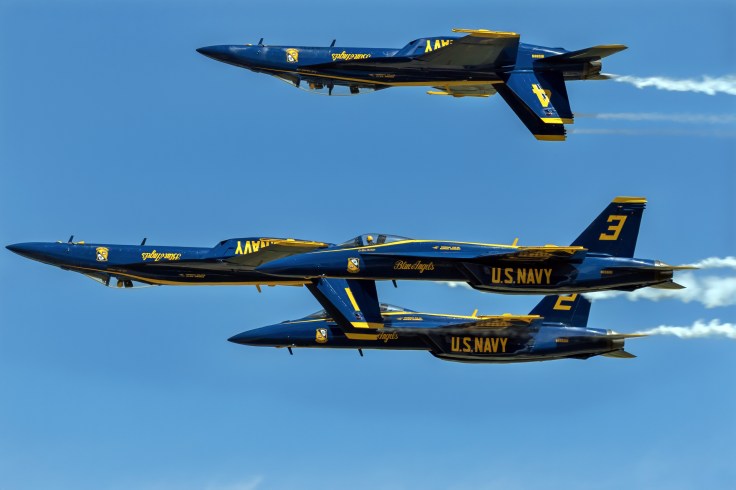
The performance of the Blue Angels was truly incredible, with the F-18s often, during the reconnection phase coming in surprise full speed behind the audience.
The maneuvers were flawless and during the execution of some figures they really gave the idea of the small distances between the super hornets, very nice towards the end of the performance, the maneuver similar to the “bomb” of the Tricolour Arrows, with several crossings between the F-18s towards the center of the display line.
The author would like to thank the press office of the Pikes Peak Regional Airshow, especially Lauren De Marco, for their helpfulness and hospitality on the day of the event.
Photos and Text ©Bani Luca
 QRA Aviation - Military Aviation Magazine
Lascia un commento