

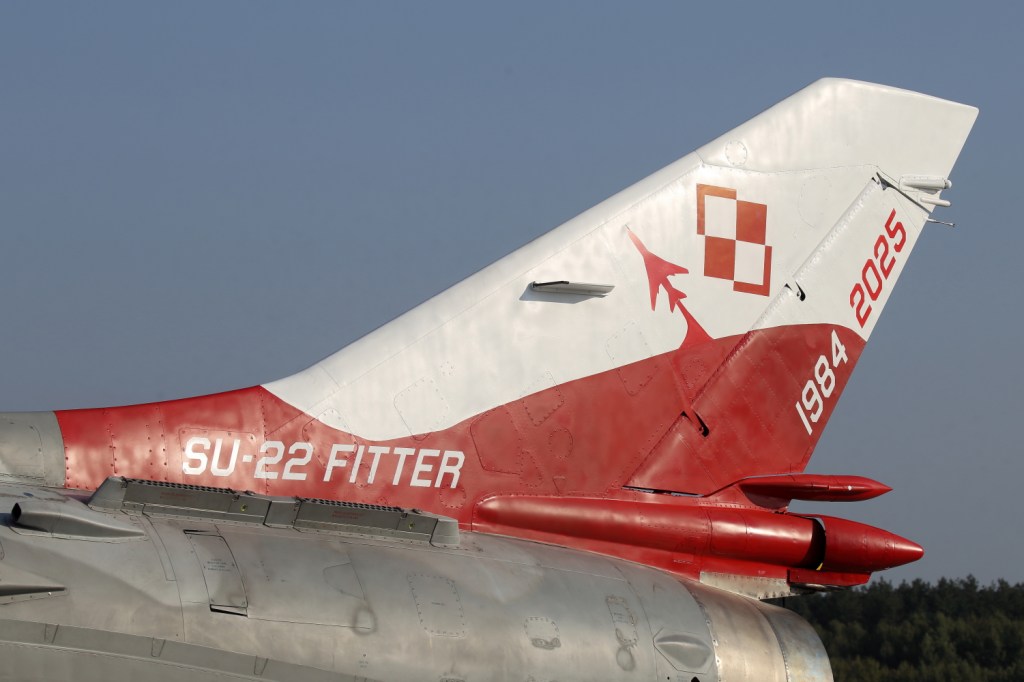
ll 10 Settembre 2025, presso la base aerea di Miroslawiec in Polonia, ha avuto luogo l’ultima esibizione dei caccia-bombardieri di fabbricazione sovietica Su-22 Fitter.
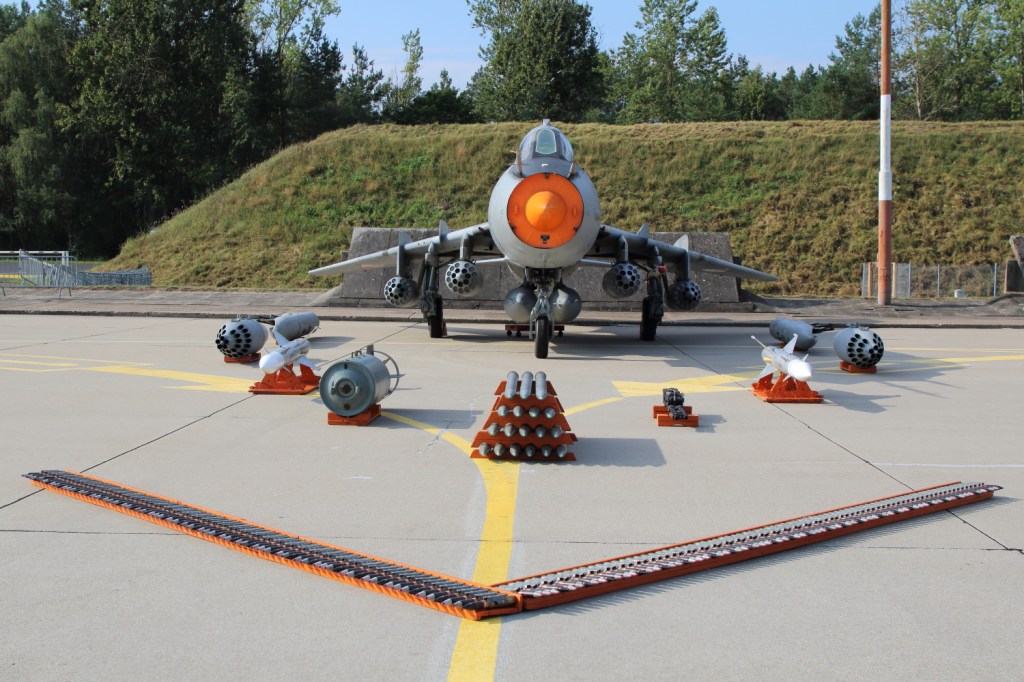

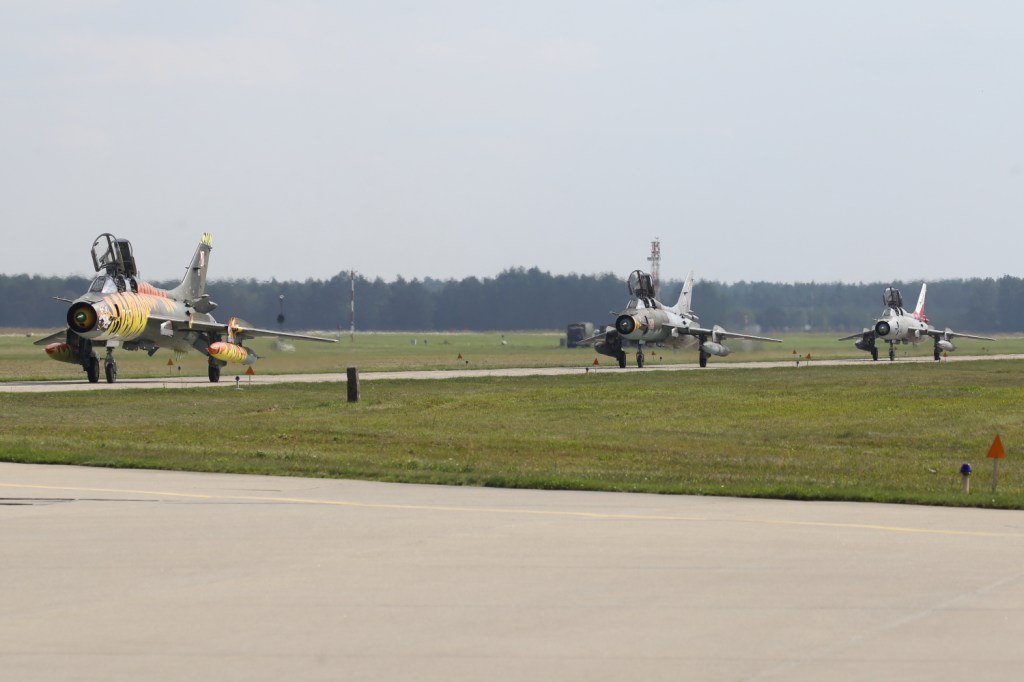
Il Su-22 Fitter è un aereo da attacco a terra e ricognizione sviluppato dalla Sukhoi e prodotto principalmente in Russia. È stato progettato per svolgere una vasta gamma di missioni, tra cui supporto aereo ravvicinato, attacco a obiettivi terrestri e ricognizione. Il suo design si basa sul Sukhoi Su-17, ma è stato ulteriormente evoluto per migliorare capacità di carico e versatilità.
Ruolo e Funzioni del Su-22
Il Su-22, conosciuto anche come “Fitter” nella nomenclatura NATO, è stato adottato da diversi paesi europei quali, oltre ovviamente alla Russia, Germania Est, Cecoslovacchia, Ungheria e Bulgaria e per l’appunto la Polonia.
In particolare, l’aeronautica polacca ha utilizzato il Su-22 in vari ruoli:
- Attacco a Terra: È stato il principale strumento per l’attacco a terra nelle forze aeree polacche. Equipaggiato con una vasta gamma di armamenti (missili, bombe e razzi); il Su-22 è in grado di colpire obiettivi tattici, come veicoli, fortificazioni e strutture nemiche.
- Ricognizione: L’aereo è anche utilizzato per missioni di ricognizione, grazie alla possibilità di montare equipaggiamenti specializzati per la raccolta di informazioni visive e elettroniche.
- Interdizione e Supporto Aereo Ravvicinato (CAS): Il Su-22 è stato impiegato in missioni di interdizione per fermare o danneggiare forze nemiche prima che arrivino in contatto con le forze amiche, e nel supporto aereo ravvicinato per assistere le truppe a terra in combattimenti intensi.
- Addestramento: Oltre al suo impiego operativo, il Su-22 è stato usato anche per addestrare i piloti in scenari di attacco a terra, gestione di carichi bellici e operazioni di ricognizione.
Caratteristiche principali:
- Velocità massima: Circa 1.150 km/h.
- Autonomia: Fino a 1.200 km, variabile a seconda del carico utile.
- Armamento: Può trasportare una vasta gamma di armi, incluse bombe fino a 3.000 kg, missili aria-terra e razzi. Andando nello specifico il Fitter è dotato di due mitragliatori NR- 30 da 80 colpi, missili aria superficie H 25ML a guida laser, missili R-60, lancia razzi UB-32A, missili non guidati aria superficie S-24 e S-25, ed il pod SPPU-22-01 che può ospitare il mitragliatore a due canne fisse GSh-23L da 260 colpi da 23mm.
- Motore: Un motore turbojet Tumanskij R-29BS-300, che consente un buon bilanciamento tra prestazioni e capacità di carico.
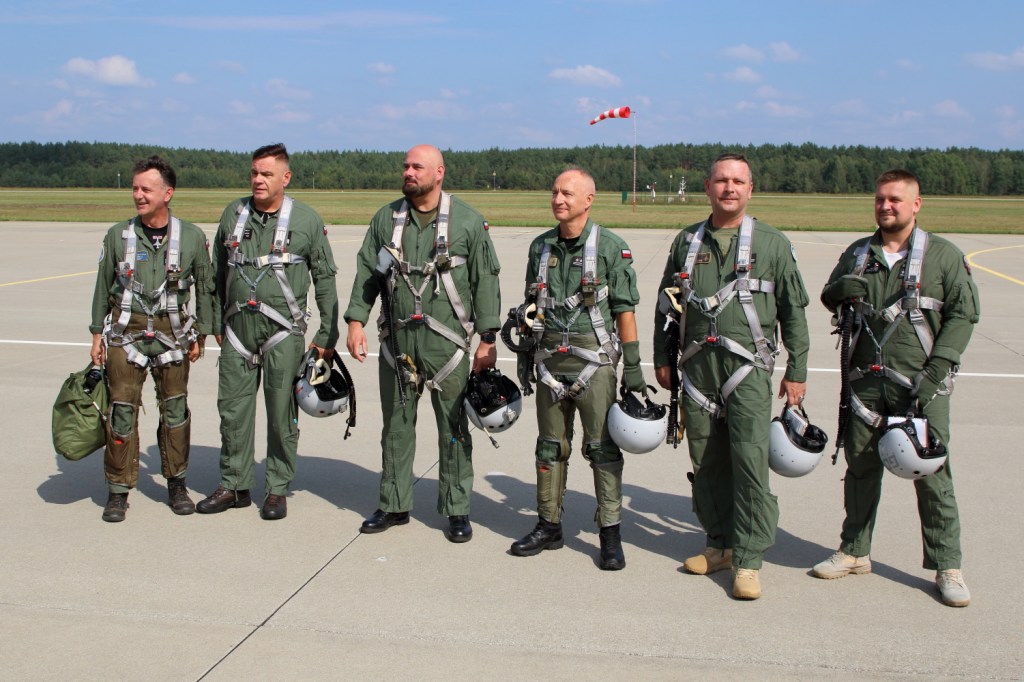

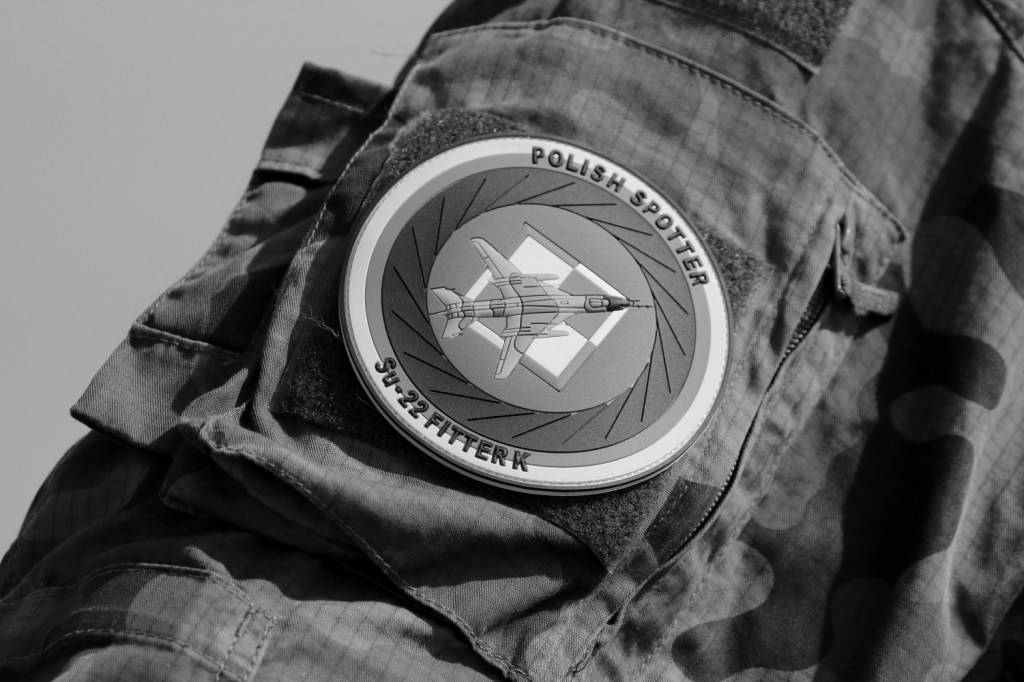
Dal 1984 al 1988 l’aeronautica polacca ha ricevuto un totale di 90 Su-22M4 monoposto e 20 Su-22UM3K biposto, suddivisi su quattro basi, Pila, Powidz, Miroslawiec e Swidwin.
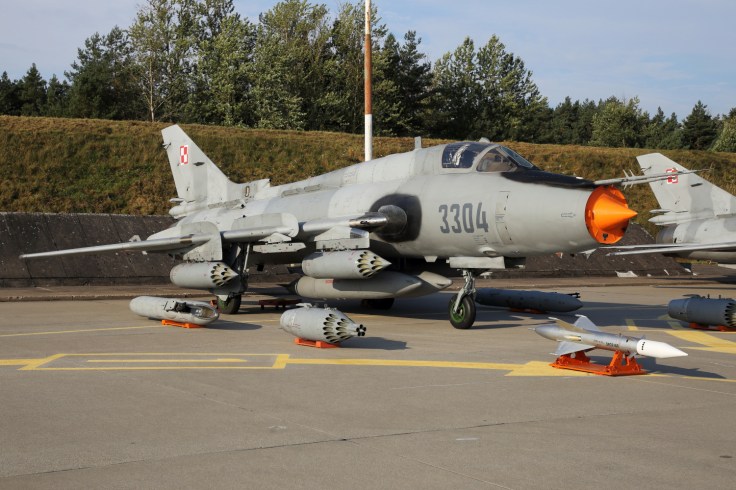
ll Su-22 è stato uno dei principali aerei da attacco dell’aeronautica polacca per diversi decenni.
Dopo la fine della Guerra Fredda ed il passaggio della Polonia sotto influenza occidentale, i Su-22 polacchi sono stati modernizzati con nuovi sistemi di avionica, radar e armamenti per restare competitivi; nonostante questi aggiornamenti, il Su-22 cominciava a divenire obsoleto. L’ottimo lavoro dei tecnici di Swidwin ha permesso un prolungamento dell’operatività della flotta di Su-22 Fitter, ma nemmeno questa modernizzazione ha reso il Fitter completamente compatibile con le specifiche di interoperabilità richieste dalla NATO. L’aereo ha continuato comunque ad essere utilizzato nelle operazioni militari NATO fino alla sostituzione prevista con aerei più moderni, come il F-16 Fighting Falcon ed F-35A Lightning II.
In questi ultimi anni, con il ridursi della flotta, Swidwin è rimasta l’ultima base operativa di Su-22 Fitter, sede della 21 BLT (Baza Lotnictwa Tacktycznego), composta dalla 8 ELT (Escadra Lotnictwa Tacktycznego) e 40 ELT, entrambe equipaggiate con Su-22M4 monoposto e UM3K biposto. Di recente Swidwin è stata chiusa per i lavori di ammodernamento in vista dell’arrivo del suo futuro sostituto, l’F-35 Lightning II, previsto in consegna nel primo semestre del 2026, spostando poco più a sud a Miroslawiec gli ultimi Fitter volanti in attesa, purtroppo, della loro radiazione.
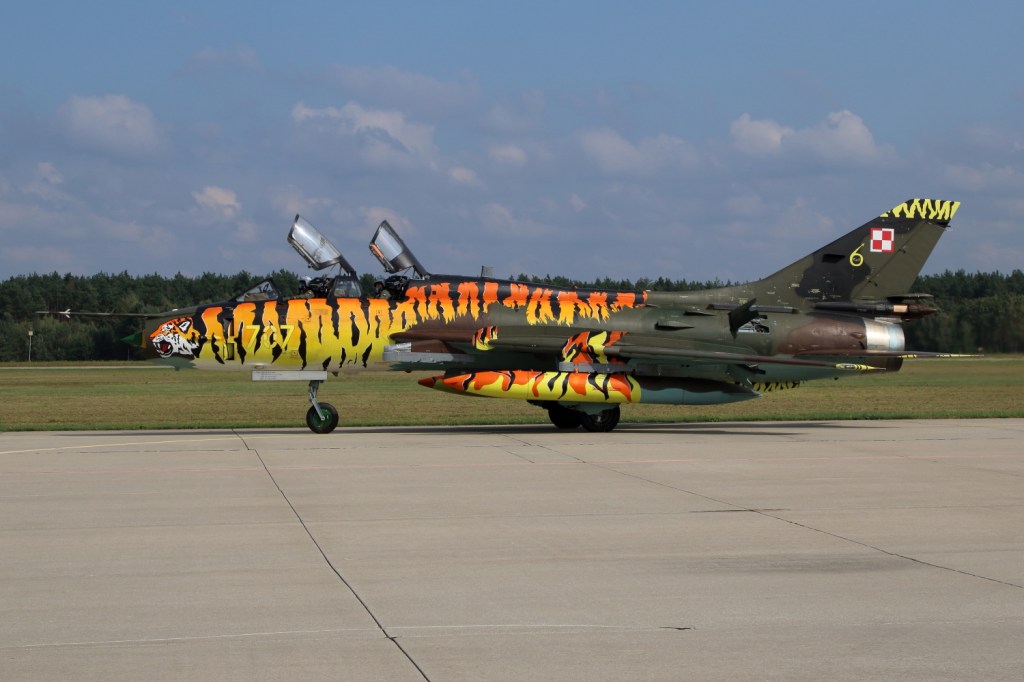
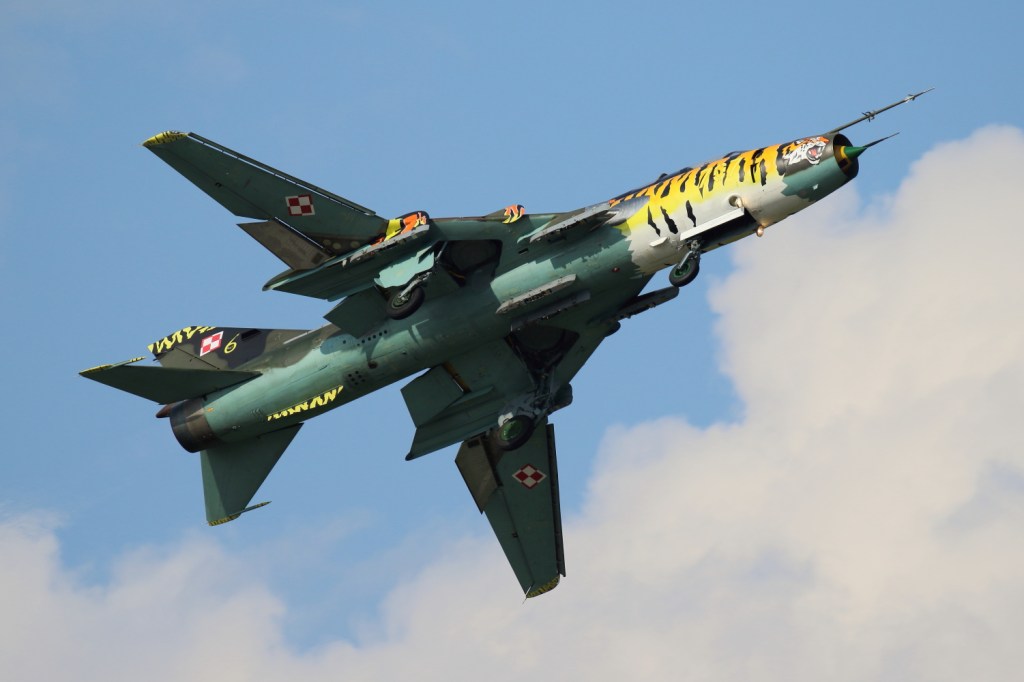
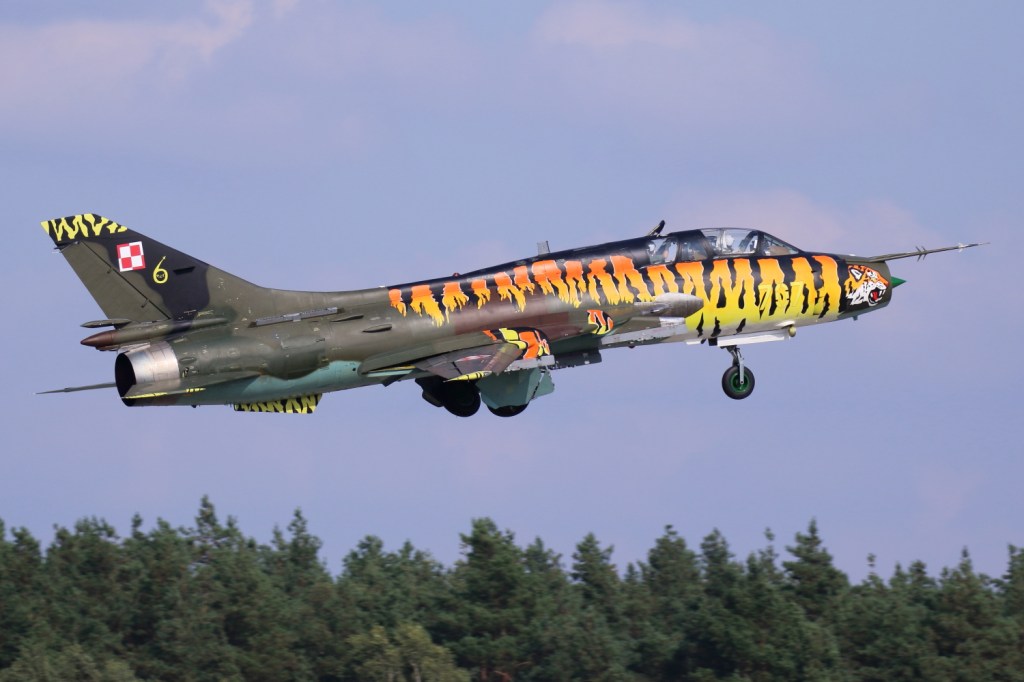
La Polonia ha ufficialmente ordinato gli F-35A Lightning II nel 2020 come parte della sua strategia per modernizzare e rafforzare le proprie forze aeree. La consegna dei primi esemplari di F-35 è stata programmata per il 2024. Tuttavia, in base agli sviluppi recenti e a seguito di ritardi di produzione per via dell’aggiornamento software, i primi due F-35 dovrebbero essere consegnati alla Polonia non prima del 2026.
Testo e foto di ©Omar Rigamonti
ENGLISH VERSION
On September 10, 2025, the last display of Soviet-made Su-22 Fitter fighter-bombers took place at the Miroslawiec air base in Poland.
The Su-22 Fitter is a ground attack and reconnaissance aircraft developed by Sukhoi and manufactured mainly in Russia. It was designed to perform a wide range of missions, including close air support, ground attack, and reconnaissance. Its design is based on the Sukhoi Su-17, but has been further developed to improve load capacity and versatility.
Role and Functions of the Su-22
The Su-22, also known as the “Fitter” in NATO nomenclature, was adopted by several European countries, including, of course, Russia, East Germany, Czechoslovakia, Hungary, Bulgaria, and Poland.
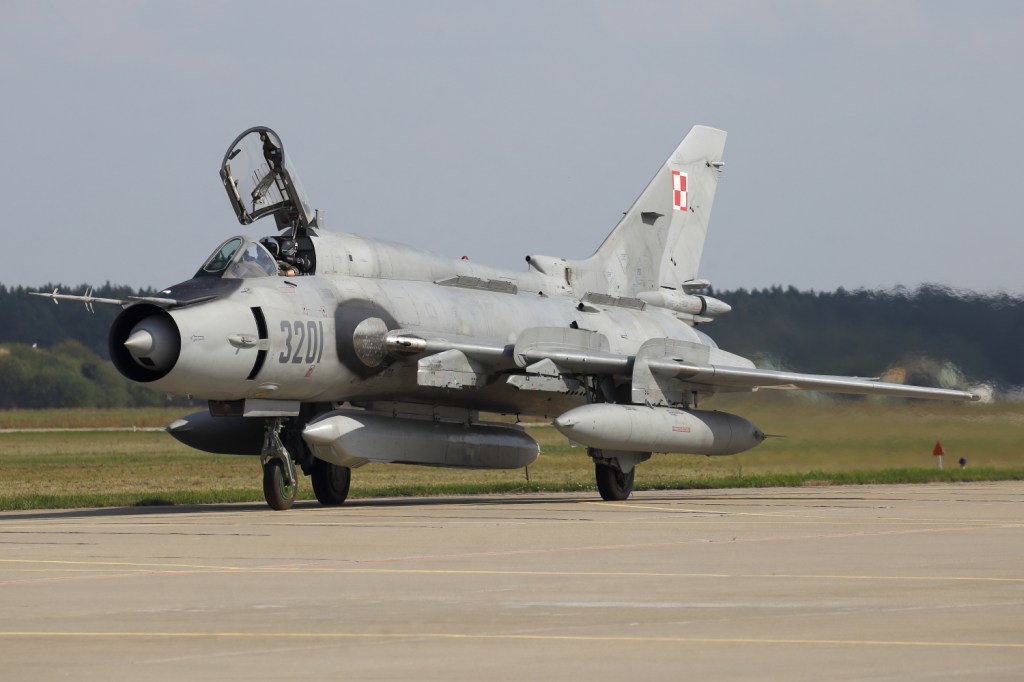

In particular, the Polish Air Force has used the Su-22 in various roles:
Ground Attack: It has been the main ground attack aircraft in the Polish Air Force. Equipped with a wide range of weapons (missiles, bombs, and rockets), the Su-22 is capable of striking tactical targets such as vehicles, fortifications, and enemy structures.
Reconnaissance: The aircraft is also used for reconnaissance missions, thanks to the possibility of mounting specialized equipment for gathering visual and electronic intelligence.
Interdiction and Close Air Support (CAS): The Su-22 has been used in interdiction missions to stop or damage enemy forces before they come into contact with friendly forces, and in close air support to assist ground troops in intense combat.
Training: In addition to its operational use, the Su-22 has also been used to train pilots in ground attack scenarios, weapons handling, and reconnaissance operations.
Main characteristics:
Maximum speed: Approximately 1,150 km/h.
Range: Up to 1,200 km, variable depending on payload.
Armament: It can carry a wide range of weapons, including bombs up to 3,000 kg, air-to-surface missiles, and rockets. Specifically, the Fitter is equipped with two NR-30 machine guns with 80 rounds, H 25ML laser-guided air-to-surface missiles, R-60 missiles, UB-32A rocket launchers, S-24 and S-25 unguided air-to-surface missiles, and the SPPU-22-01 pod, which can accommodate the GSh-23L twin-barrel fixed machine gun with 260 rounds of 23mm ammunition.
Engine: One Tumanskij R-29BS-300 turbojet engine, providing a good balance between performance and load capacity.
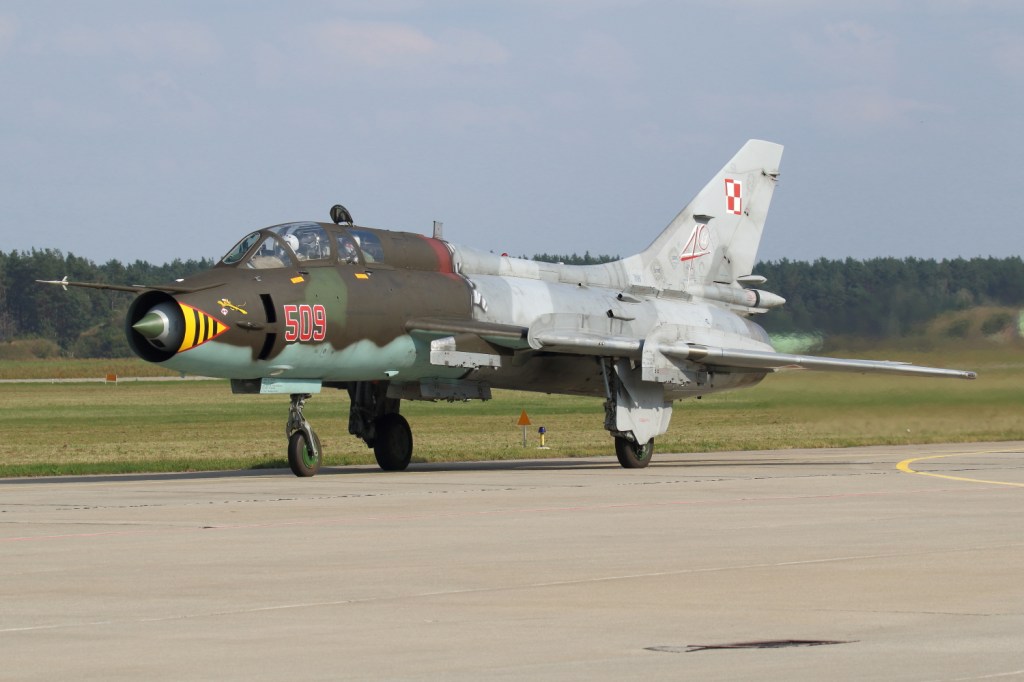
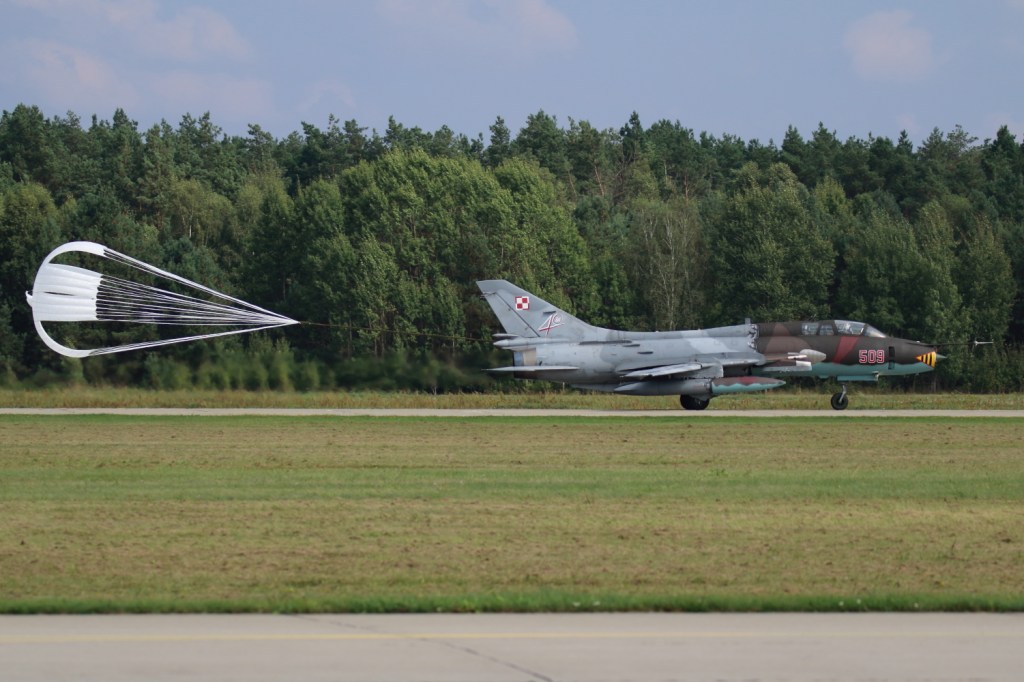
From 1984 to 1988, the Polish Air Force received a total of 90 single-seat Su-22M4s and 20 two-seat Su-22UM3Ks, divided between four bases: Pila, Powidz, Miroslawiec, and Swidwin.
The Su-22 was one of the Polish Air Force’s main attack aircraft for several decades.
After the end of the Cold War and Poland’s transition to the West, the Polish Su-22s were modernized with new avionics, radar, and weapon systems to remain competitive; despite these upgrades, the Su-22 was beginning to become obsolete. The excellent work of Swidwin’s technicians allowed the Su-22 Fitter fleet to remain operational for longer, but even this modernization did not make the Fitter fully compatible with NATO’s interoperability specifications. However, the aircraft continued to be used in NATO military operations until its planned replacement with more modern aircraft, such as the F-16 Fighting Falcon and F-35A Lightning II.
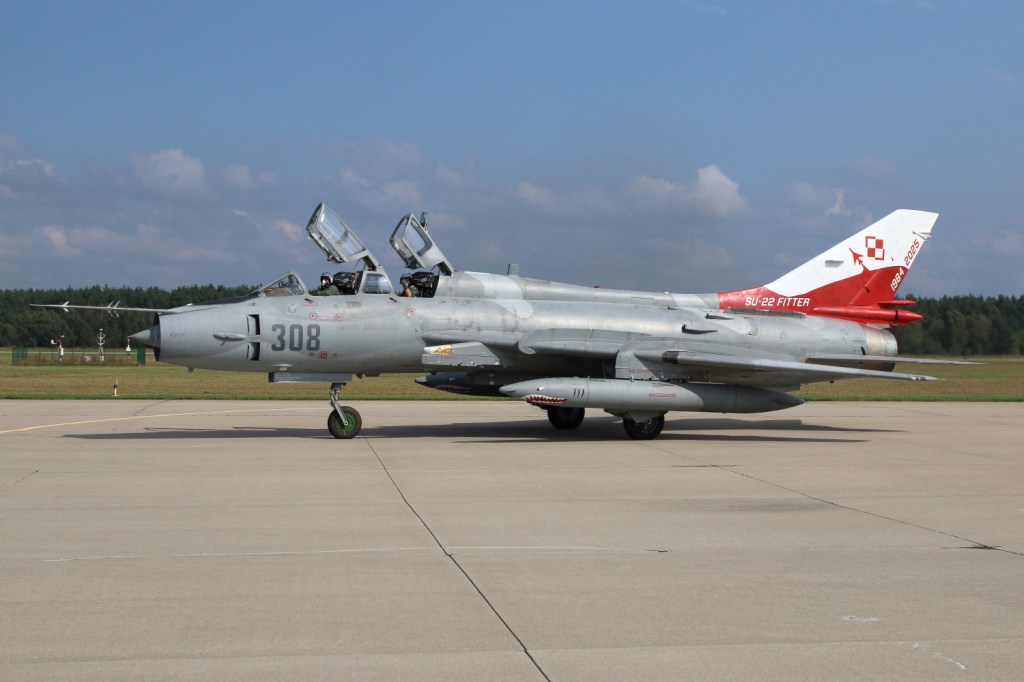
In recent years, with the reduction of the fleet, Swidwin has remained the last operational base for the Su-22 Fitter, home to the 21 BLT (Baza Lotnictwa Tacktycznego), composed of the 8 ELT (Escadra Lotnictwa Tacktycznego) and 40 ELT, both equipped with single-seat Su-22M4s and two-seat UM3Ks. Swidwin was recently closed for modernization work in anticipation of the arrival of its future replacement, the F-35 Lightning II, scheduled for delivery in the first half of 2026, moving the last flying Fitters a little further south to Miroslawiec, where they are unfortunately awaiting decommissioning.
Poland officially ordered the F-35A Lightning II in 2020 as part of its strategy to modernize and strengthen its air force. Delivery of the first F-35s was scheduled for 2024. However, based on recent developments and following production delays due to software upgrades, the first two F-35s are not expected to be delivered to Poland until 2026 at the earliest.
Text and photos by ©Omar Rigamonti
Video Edit by malbork.pl
 QRA Aviation - Military Aviation Magazine
Lascia un commento