
Ci sono aeromobili che rappresentano un passo evolutivo nella loro categoria, e ce ne sono altri che ridefiniscono la categoria stessa. Il Pilatus PC-21 appartiene alla seconda famiglia. Non perché sia il più veloce, né perché sia il più sofisticato in senso assoluto. Ma perché ha dimostrato qualcosa che fino alla fine degli anni Novanta sembrava tecnicamente impossibile: che un aereo a turboprop potesse formare un pilota da caccia completo, capace di passare direttamente all’F/A-18 Hornet senza mai toccare un jet trainer intermedio.
L’aeronautica militare svizzera, la Luftwaffe (nelle sue denominazioni interne Schweizer Luftwaffe o Force Aérienne Suisse), è stata la prima cliente e il principale laboratorio di questa rivoluzione. La storia del PC-21 in servizio svizzero è, in questo senso, anche la storia di una scommessa vinta — con le sue premesse, le sue incertezze e i suoi risultati concreti.
Le origini: perché la Svizzera aveva bisogno di un nuovo addestratore
Per capire il ruolo del PC-21, occorre partire da dove era arrivata la formazione piloti svizzera alla fine degli anni Novanta, e da quali problemi stava affrontando.
Nel 1987, alla ricerca di un aeromobile per fornire addestramento a getto ai propri piloti e in sostituzione del Vampire T55, la Flugwaffe svizzera aveva valutato l’Alpha Jet franco-tedesco e il BAe Hawk britannico. Al momento della nostra ricerca, i piloti svizzeri effettuavano l’addestramento iniziale sul Pilatus PC-7 a Mogadino, nel Canton Ticino, per poi passare all’addestramento avanzato sull’Hawk a Sion, nel Cantone Vallese, prima dell’assegnazione ai reparti.
Il Hawk entrò effettivamente in servizio con la Pilotenschule, ma l’esperienza non fu del tutto soddisfacente. L’aeronautica svizzera aveva ritirato i propri BAe Hawk e utilizzava i Northrop F-5 biposto per le manovre ad alta energia e per le attività che superavano il profilo di impiego del PC-7. Il problema era strutturale: con l’arrivo dell’F/A-18 Hornet in servizio dal 1996, il percorso addestrativo tradizionale — PC-7, poi jet trainer, poi Hornet — mostrava i suoi limiti. Il Tiger II non era all’altezza delle necessità, e fu presa una decisione radicale: il jet trainer poteva essere sostituito da un velivolo a elica. La soluzione fu il PC-21, il quale, grazie alla sua avionica sofisticata, abilitava un livello di istruzione superiore a quello possibile sull’F-5.
Con l’introduzione del PC-21 alla Pilotenschule di Emmen, il Fliegerstaffel 16 — che dopo il ritiro degli Hawk aveva temporaneamente colmato il vuoto con gli F-5F — fu sciolto nel 2007.
Il programma: da progetto privato a standard mondiale
Pilatus Aircraft, con sede a Stans nel Canton Nidvaldo, non è nuova alle sfide impegnative. Già il PC-7 e il PC-9 avevano consolidato la reputazione aziendale nel segmento degli addestratori militari. Ma il PC-21 era un salto di ordine diverso.
Il programma PC-21 fu avviato formalmente nel gennaio 1999 come iniziativa privata di Pilatus, con l’obiettivo di creare un addestratore in grado di gestire la maggior parte dell’addestramento su velivoli a getto, offrendo significativi risparmi ai clienti. Il primo prototipo fu presentato a Stans il 30 aprile 2002 e compì il suo primo volo il 1° luglio 2002.
Lo sviluppo non fu privo di difficoltà: nel gennaio 2005 il secondo velivolo di prova fu distrutto in un incidente, che costò la vita al pilota. Il primo prototipo fu brevemente messo a terra, poi tornò in volo senza condizionamenti. Il programma continuò, con il primo esemplare di preserie che effettuò il primo volo nell’agosto 2005 e un secondo che si unì al programma di test nel 2006. La certificazione VFR fu ottenuta nel dicembre 2004, quella IFR completa nel dicembre 2006.
La Svizzera acquisì il sistema JEPAS (Jet Pilot Training System) per 115 milioni di franchi svizzeri nell’ambito del programma di armamento 2006. Sei PC-21 furono inizialmente consegnati e introdotti in servizio due anni dopo.
Le prime consegne avvennero nel maggio 2008 e la Classe Piloti 04 — la prima a formarsi sul nuovo aeromobile — iniziò l’addestramento nel luglio 2008. La Svizzera fu così il primo operatore militare del PC-21 al mondo, aprendo la strada a quella che sarebbe diventata una lunga lista di clienti internazionali.
Il velivolo: caratteristiche tecniche
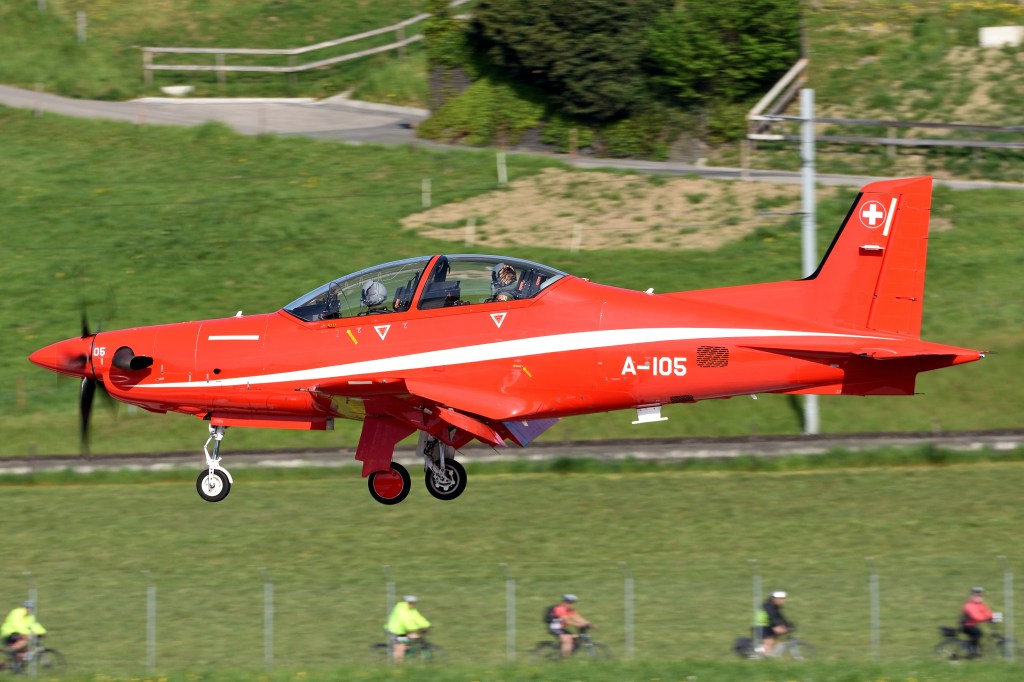
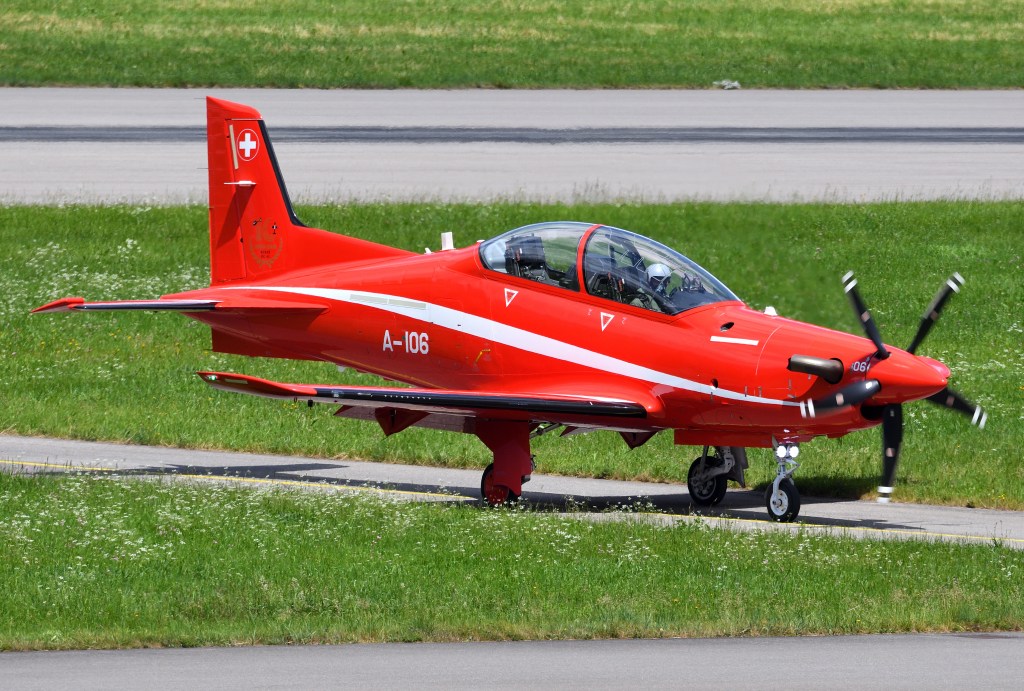
Il PC-21 è un monomotore a turboprop in configurazione tandem biposto con cabina pressurizzata, progettato per coprire l’intero arco addestrativo dalla conversione tecnica fino al Fighter Lead-In Training (FLIT), cioè la fase immediatamente precedente all’immissione sul velivolo da combattimento operativo.
Propulsione. L’aeromobile è motorizzato con un turboprop Pratt & Whitney Canada PT6A-68B da 1.200 kW (1.600 shp) che aziona un’elica a cinque pale in grafite Hartzell E8991 KX. Il propulsore è equipaggiato con un sistema digitale di gestione della potenza che eroga piena potenza a velocità superiori ai 360 km/h, conferendo al velivolo una risposta simile a quella di un turboreattore. Il risultato pratico è che al di sopra di quella soglia l’allievo percepisce una correlazione tra potenza e risposta aerodinamica analoga a quella che troverà sul caccia. Sotto quella soglia, la gestione è deliberatamente più morbida, a favore della sicurezza nelle fasi di bassa velocità.
Prestazioni. La velocità massima è di 370 nodi indicati (685 km/h), la quota di servizio è di 25.000 piedi (7.620 m) e la velocità di salita massima al livello del mare raggiunge i 4.000 piedi al minuto (circa 1.220 m/min). Il limite strutturale è di +8/-4 g, valore che replica fedelmente le condizioni di manovra dei caccia moderni.
Ala e struttura. Il PC-21 adotta un’ala a tre longheroni ad elevata efficienza, con alettoni idraulici supportati da spoiler e compensazione automatica dell’imbardata, che consente ratei di rollio di tipo caccia.
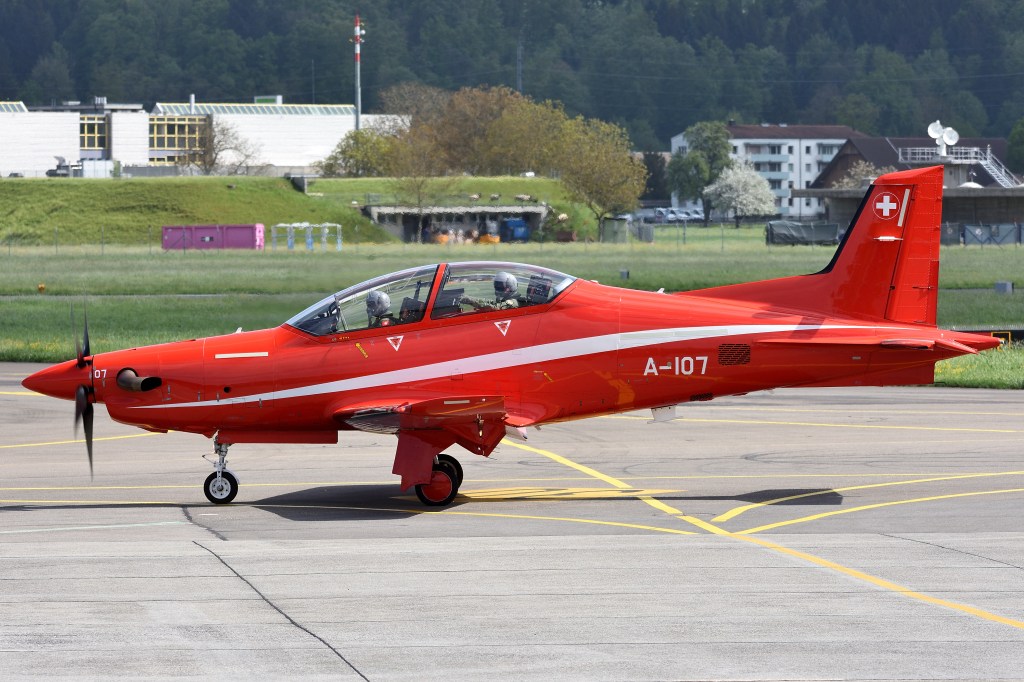
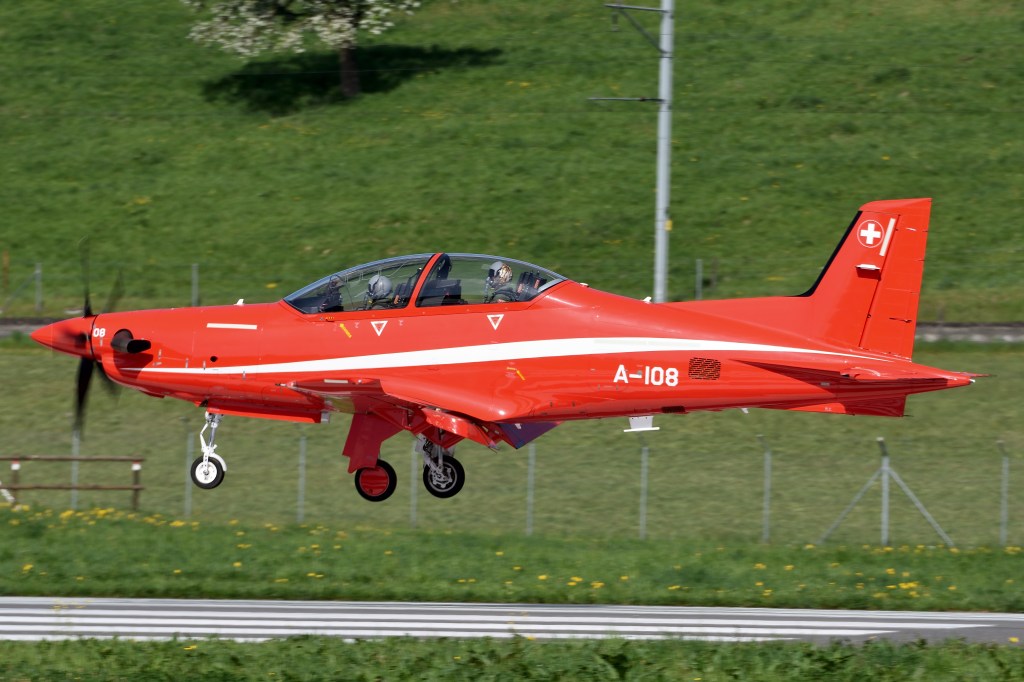
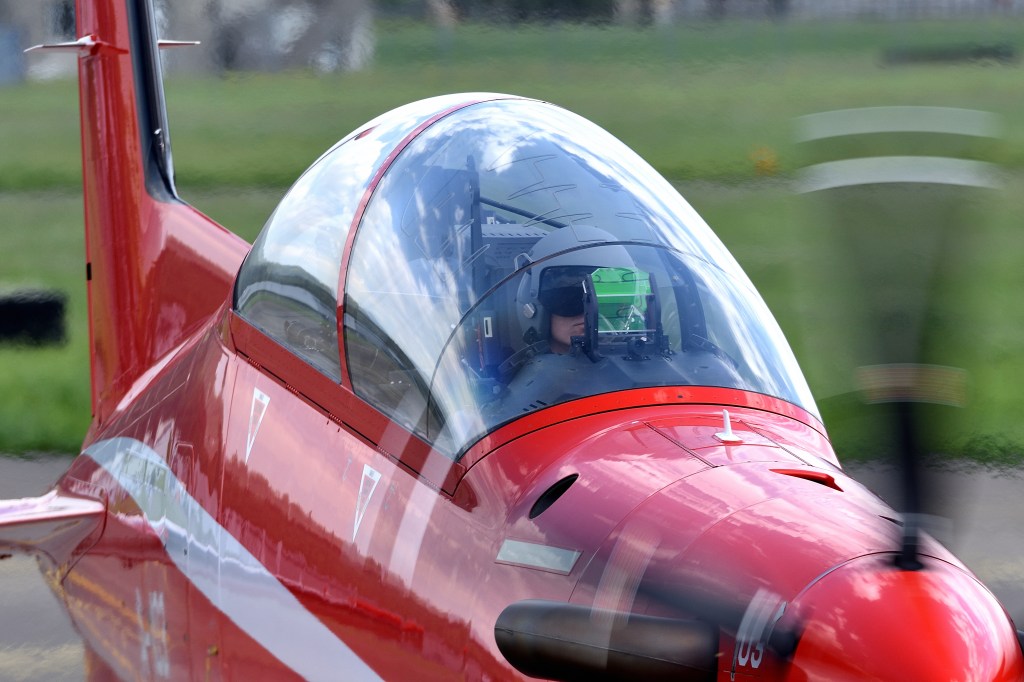
Abitacolo. Il cockpit digitale è equipaggiato con display testa-alta (HUD), pannello di controllo frontale, sistema HOTAS (Hands-On Throttle and Stick) e tre display multifunzione. I due posti — istruttore e allievo — possono essere completamente disaccoppiati, consentendo all’istruttore l’accesso a modalità di addestramento e dati non disponibili al pilota in formazione.
Sistema di simulazione integrata. È forse la componente più innovativa del PC-21. Il sistema avionico può essere modificato per adattarsi alla fase di addestramento del pilota. L’avionica simula i sistemi di missione dei velivoli di prima linea, inclusi il puntamento delle armi e il rilascio simulato di munizionamento anche in assenza di armamento vero. In pratica, il PC-21 può emulare il comportamento di radar, sistemi d’arma e sensori di aeromobili specifici — permettendo all’allievo di familiarizzarsi con procedure tattiche complesse prima ancora di salire su un aereo da combattimento. L’addestramento per la conversione operativa include l’uso di visori notturni, intercettazione radar di base e il rilascio simulato di armi di precisione.
Sedili eiettabili. Il PC-21 è dotato di sedili Martin Baker Mk CH16C a zero-zero, operativi dalla velocità massima operativa fino a velocità nulla e da qualsiasi quota fino al suolo. Entrambi i sedili sono dotati di ossigeno di emergenza integrato.
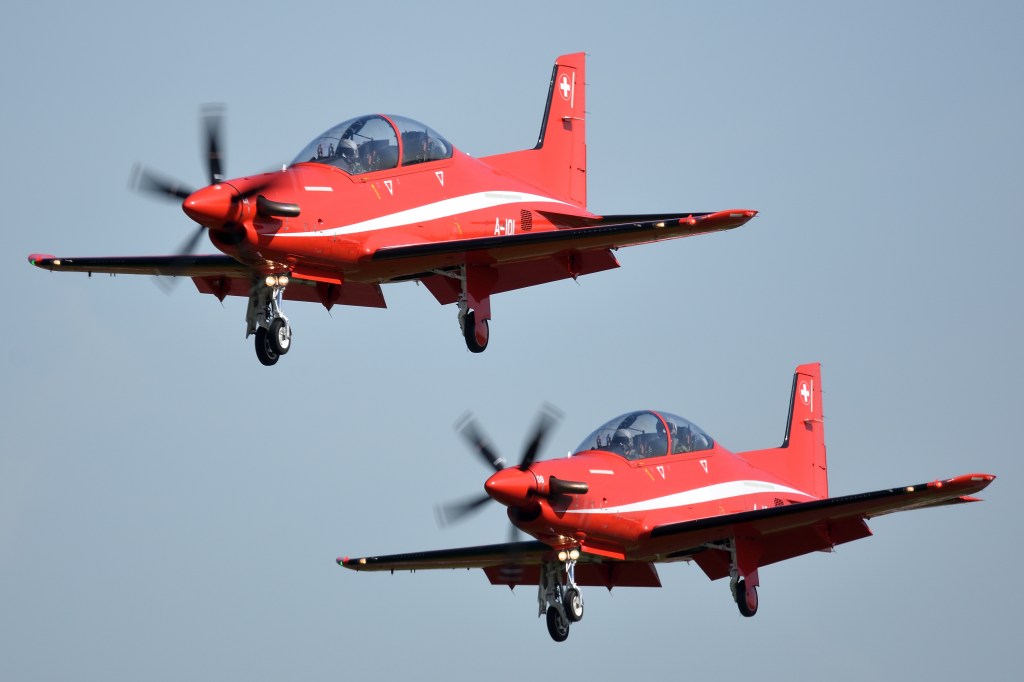
Il sistema JEPAS: struttura e filosofia dell’addestramento svizzero
Il programma svizzero non si limita all’aeromobile fisico. Si chiama JEPAS — Jet Pilot Training System — e comprende l’aeromobile, un simulatore a terra, un sistema di pianificazione e debriefing delle missioni (Mission Planning and Debriefing System) e un pacchetto di supporto tecnico gestito direttamente da Pilatus con un team permanente ad Emmen.
Un team di ingegneri di supporto sul campo e un rappresentante tecnico si occupa degli aeromobili e accompagna l’accademia nelle missioni di addestramento in Svizzera e all’estero. Il campo di attività comprende manutenzione programmata e non programmata, monitoraggio delle scadenze, integrazione di modifiche e gestione logistica dei pezzi di ricambio. La vicinanza geografica dello stabilimento Pilatus a Stans — a meno di venti minuti di volo da Emmen — garantisce tempi di reazione rapidi in caso di necessità.
La selezione e il percorso completo. Normalmente 350 candidati vengono valutati ogni anno e circa 250 partecipano al corso SPHAIR. Dopo diverse fasi di valutazione, una media di 12 candidati avvia l’addestramento nelle Forze Aeree.
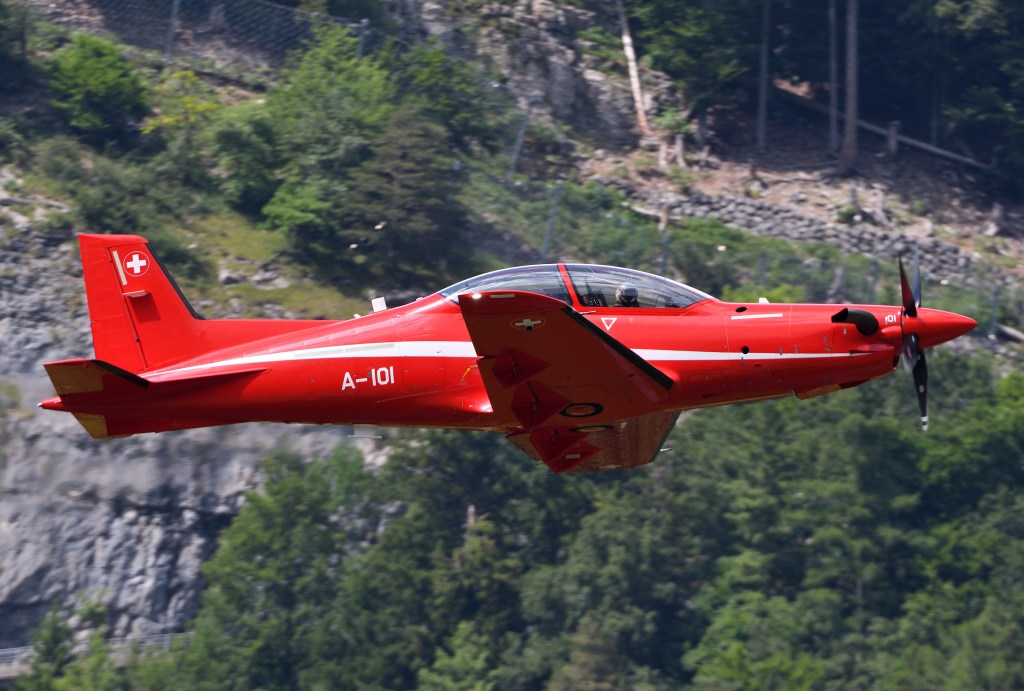
Il percorso completo si articola come segue:
1. PC-7 — Fase di selezione e addestramento di base (circa 8 mesi). Dopo otto mesi di addestramento di base sul PC-7, gli studenti accedono a un corso di 13 mesi per il conseguimento della licenza di pilota di linea (ATPL), erogato dalla scuola Lufthansa Aviation Training ma appositamente adattato per le esigenze militari. È una scelta non scontata: formare i piloti militari anche con una qualifica ATPL consente di avere aviatori con una solida base procedurale IFR e di gestione CRM prima ancora di entrare nelle fasi specificamente militari dell’addestramento.
2. Ri-qualifica PC-7 e ingresso nel sistema militare. Dopo il corso ATPL i piloti si riqualificano sul PC-7 e rientrano nel sistema addestrativo militare prima di accedere al corso PC-21.
3. PC-21 — Fase avanzata (circa 45 settimane, un anno). È il cuore del percorso. Durante questa fase gli allievi piloti affrontano la conversione tecnica, l’addestramento strumentale IFR, il volo in formazione, la navigazione, l’attacco aria-suolo, il pattugliamento aereo e la guerra aerea. Il ciclo addestrativo completo prevede 210 missioni per ogni allievo prima della qualifica finale. Le materie includono operazioni notturne e l’insieme delle discipline porta a circa 620 ore di studio per ogni allievo — escludendo le 200 ore volate su velivoli civili durante la fase ATPL. Nel complesso, circa 100 settimane di attività su tipi militari vengono accumulate prima della qualifica.
4. Corso di conversione all’F/A-18 (circa 10 mesi). I piloti qualificati sul PC-21 accedono direttamente alla conversione sull’Hornet. I piloti di elicotteri proseguono invece verso l’EC635 dopo la riqualifica sul PC-7.
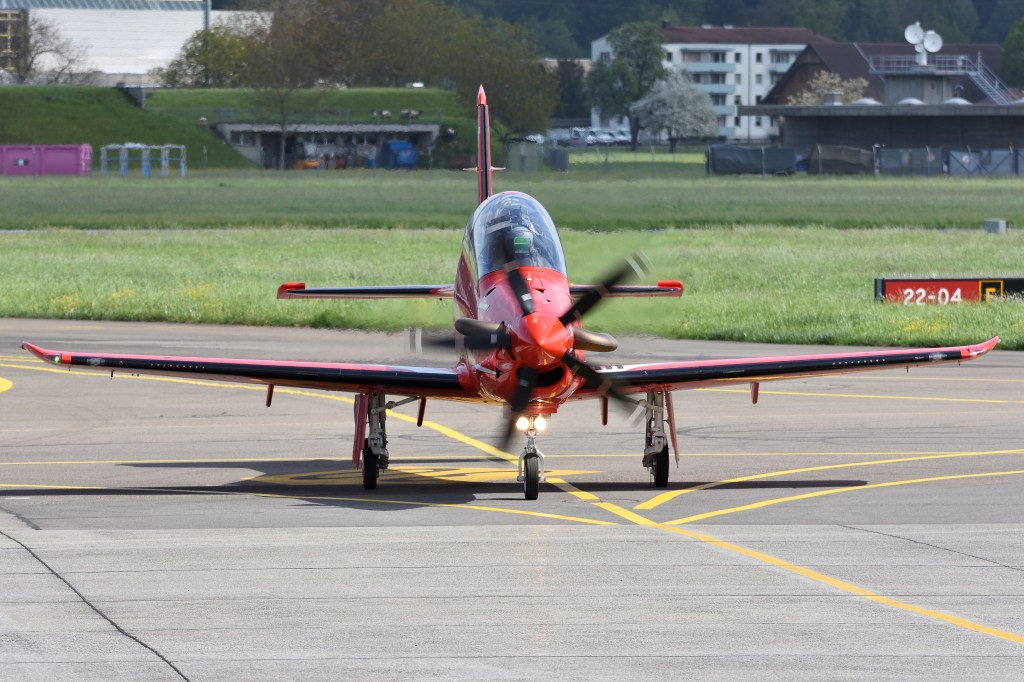
La scelta radicale: eliminare il jet trainer
Il punto più controverso — e intellettualmente più interessante — del sistema JEPAS è la decisione di eliminare completamente il jet trainer dalla pipeline addestrativa. Non ridurlo, non affiancarlo: eliminarlo.
Con il suo nuovo addestramento a jet JEPAS PC-21, l’Aeronautica Svizzera ha aperto nuove strade convertendo i piloti direttamente dal PC-21 al Boeing F/A-18 Hornet. Si tratta di un’innovazione unica al mondo. Negli anni Novanta, l’obiettivo dell’addestramento era la conversione sull’Hawker Hunter o sull’F-5 Tiger II; il percorso progressivo prevedeva PC-7, poi F-5, poi F/A-18. Ma il jet trainer doveva soddisfare le specifiche dell’aeromobile che sarebbe stato pilotato successivamente — requisito che il Tiger II non riusciva a soddisfare.
La decisione non fu priva di scetticismo. Alcune voci interne alla Pilotenschule ritenevano che il salto tra PC-21 e F/A-18 fosse eccessivo, e che i piloti in formazione arrivassero alla fase di conversione sull’Hornet con una preparazione insufficiente per le fasi di manovra ad alta energia. Col tempo, i risultati operativi hanno risposto a queste obiezioni. Dal passaggio a questo programma, quasi 40 allievi hanno completato la conversione diretta dal PC-21 all’F/A-18 — e il dato è ritenuto significativo dagli istruttori stessi.
La ragione tecnica per cui il PC-21 rende possibile questa transizione diretta sta nella natura del suo sistema avionico. Il layout dei display e dei sistemi replica fedelmente ciò che i piloti troveranno nei caccia di ultima generazione. Questo permette di familiarizzarsi con un ambiente avionico all’avanguardia fin dal primo giorno di addestramento. Un pilota che ha completato il corso PC-21 conosce già le procedure di gestione di un cockpit glass, i concetti tattici di base, la geometria delle formazioni e i profili di attacco. La velocità e la potenza bruta vengono dopo — e l’Hornet biposto si incarica di fornirle.
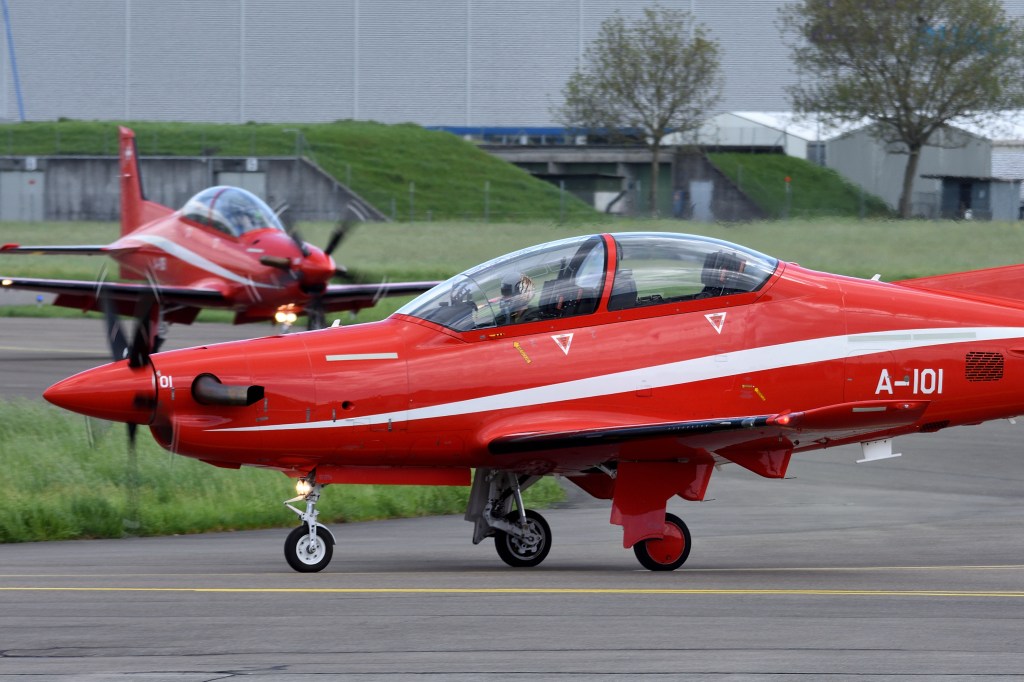
La flotta e la sua evoluzione
Le prime sei consegne risalgono al maggio 2008. Nel settembre 2018 le Forze Aeree Svizzere hanno celebrato i dieci anni del sistema JEPAS alla base di Emmen. Nel dicembre 2010 la Svizzera ha ordinato due ulteriori PC-21 per 30 milioni di franchi svizzeri, contratto che includeva servizi logistici, ingegneristici e la fornitura di un sistema di debriefing aggiuntivo. Le consegne avvennero nel 2012, portando la flotta a un totale di otto esemplari.
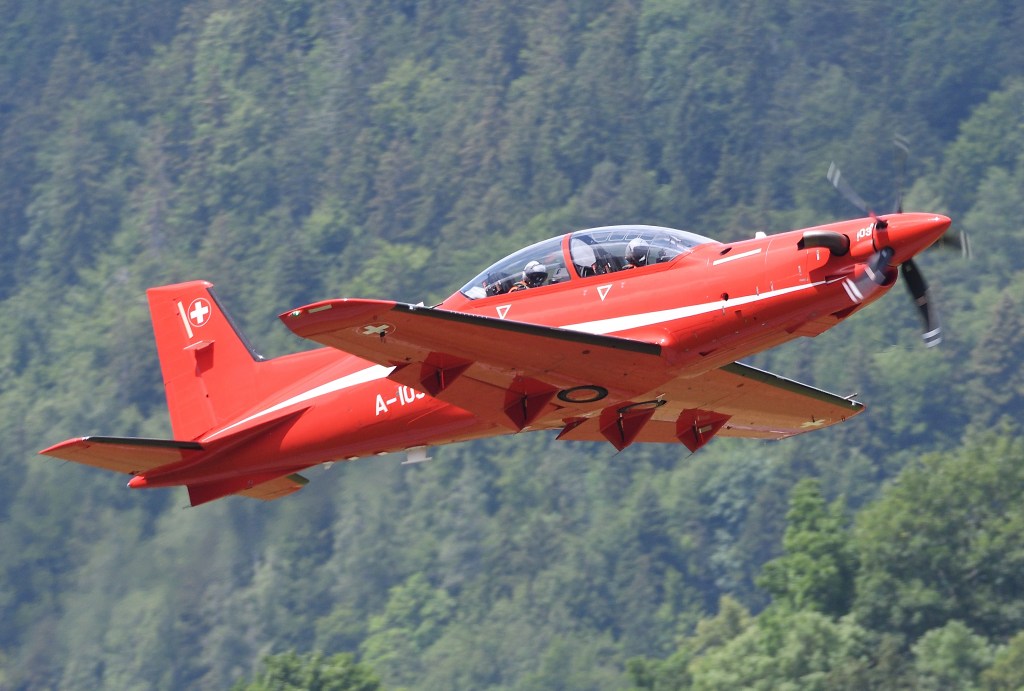
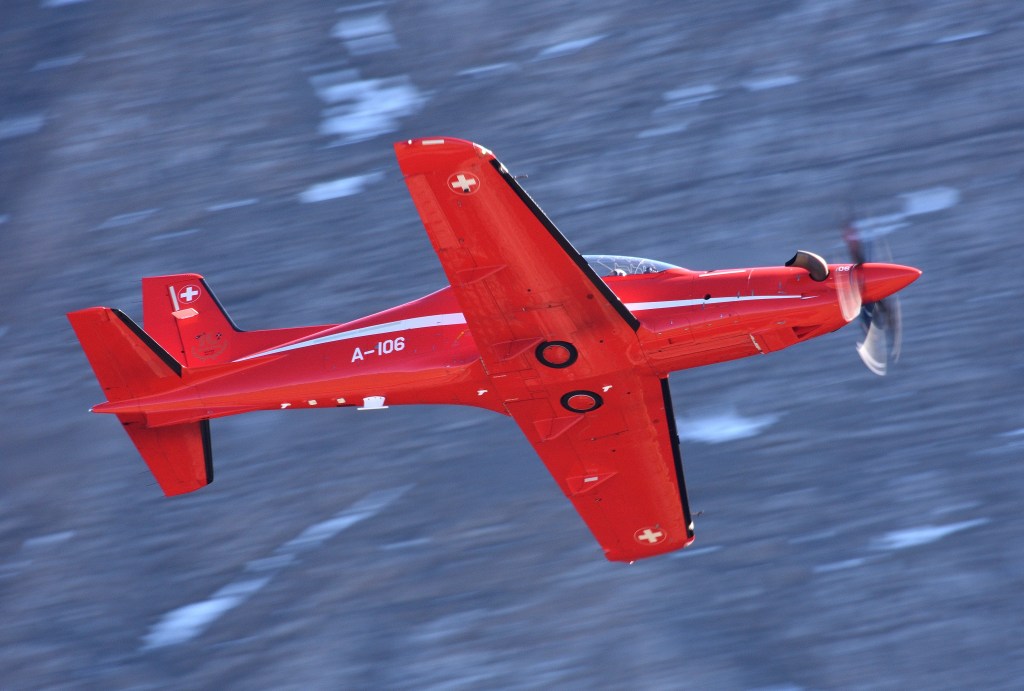
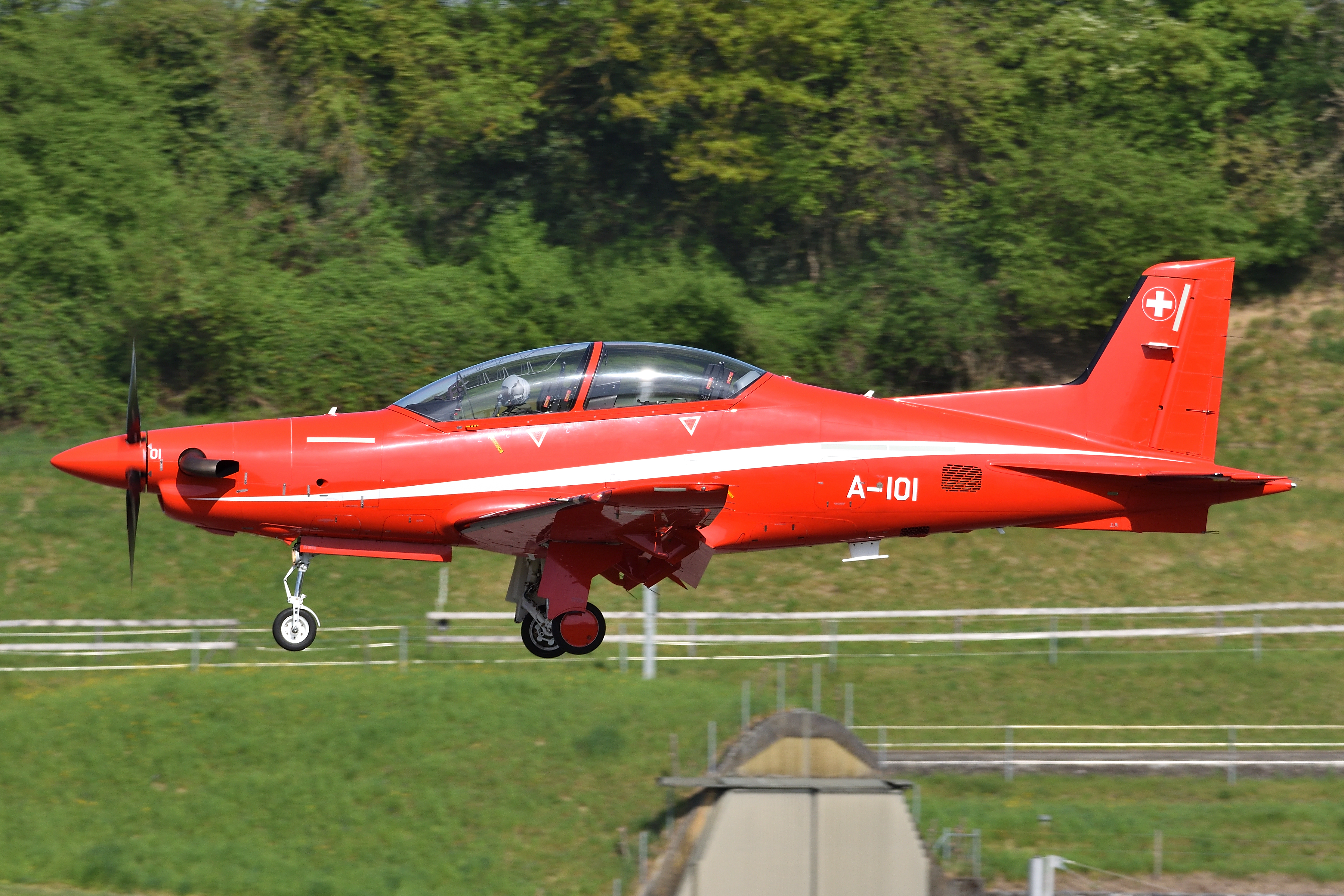
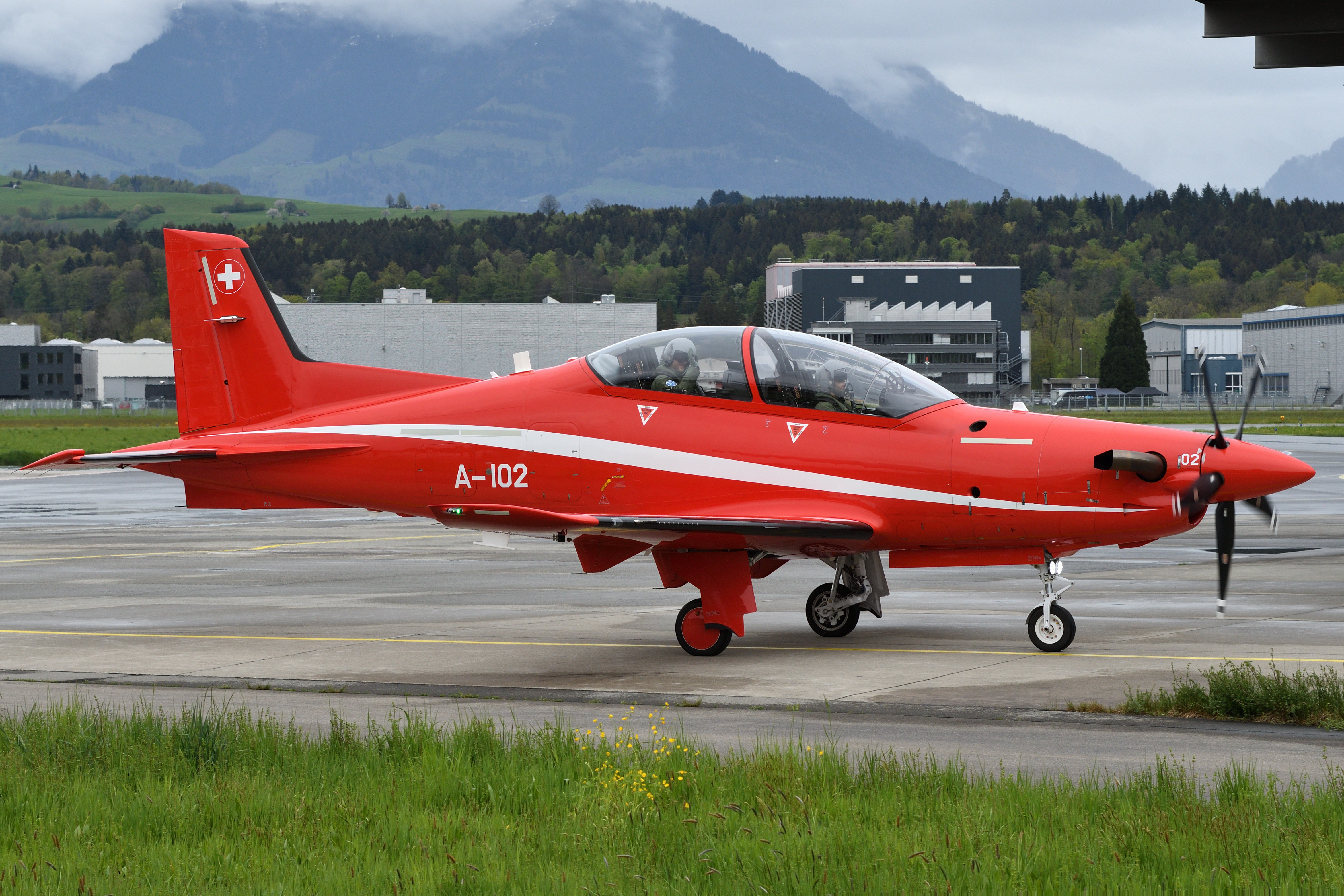
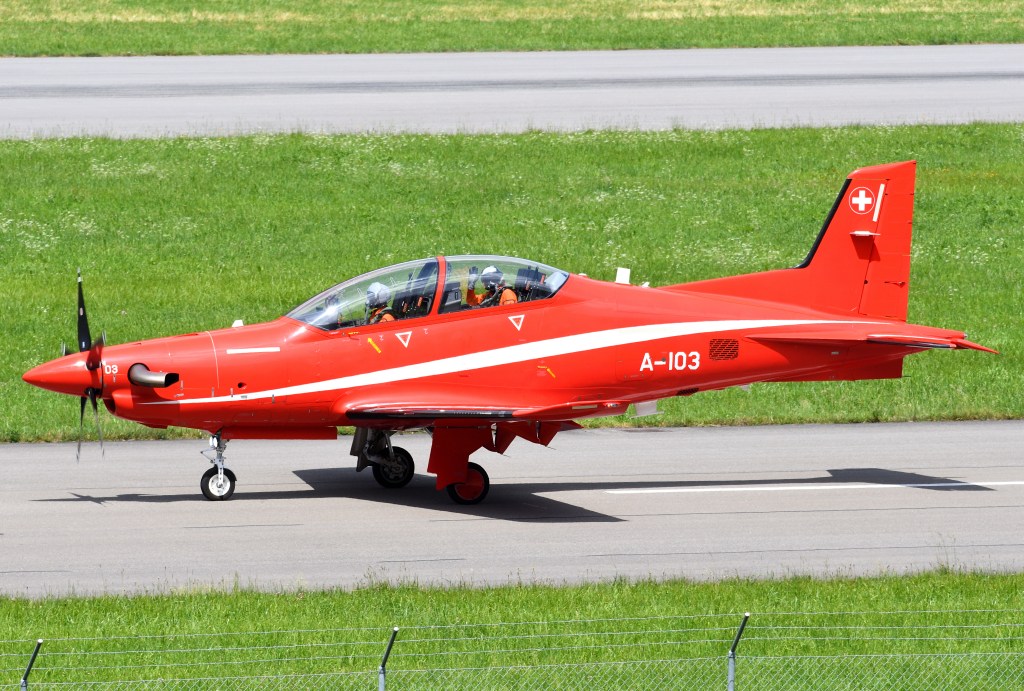
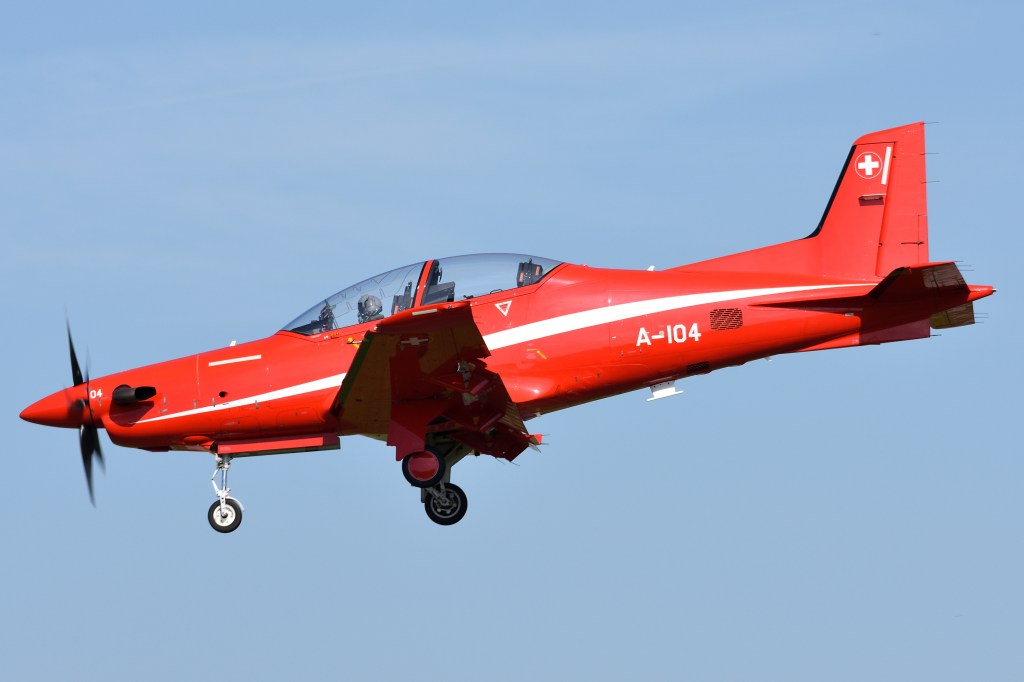
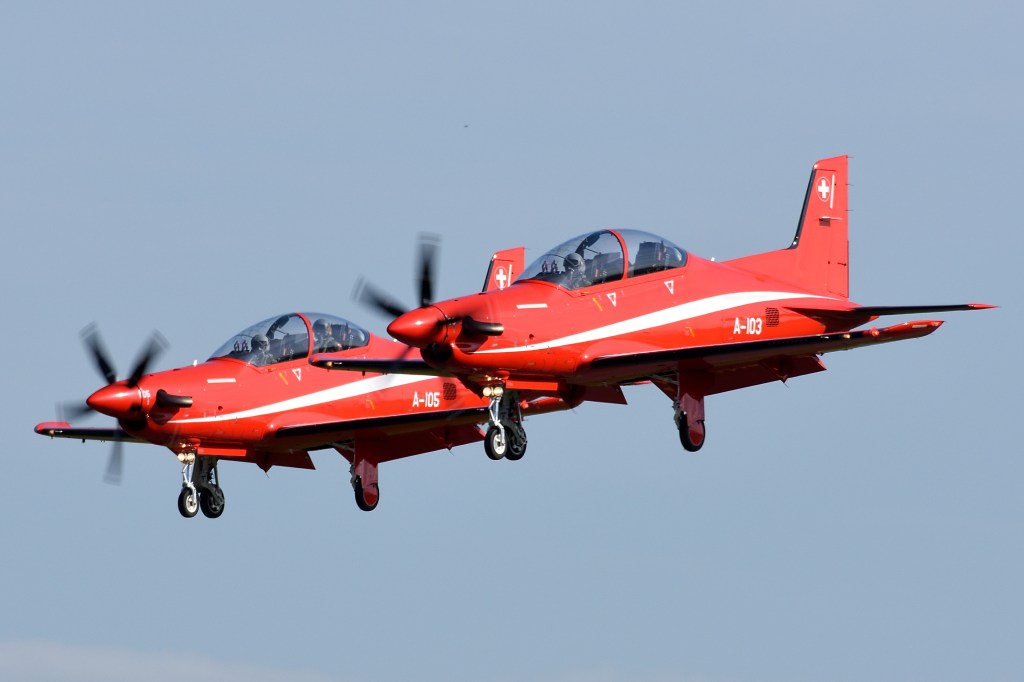
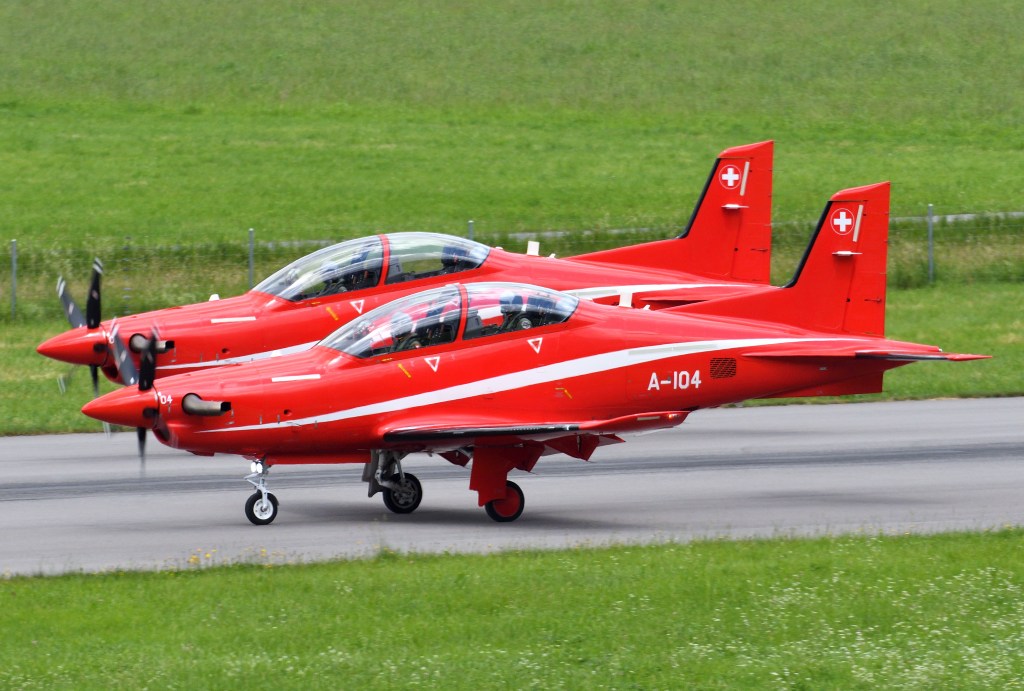
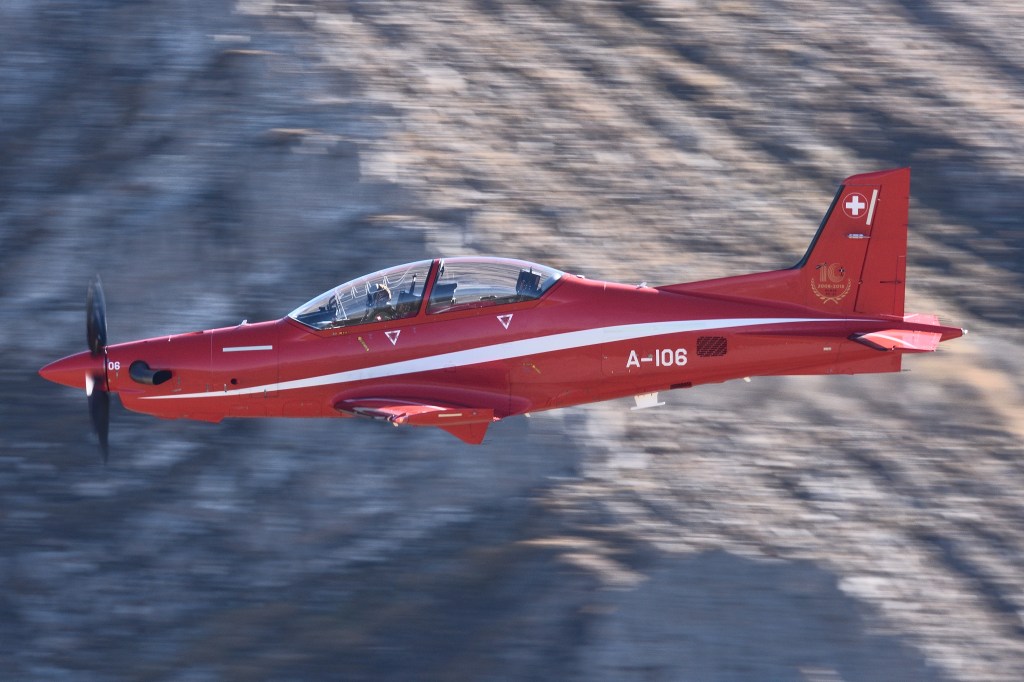
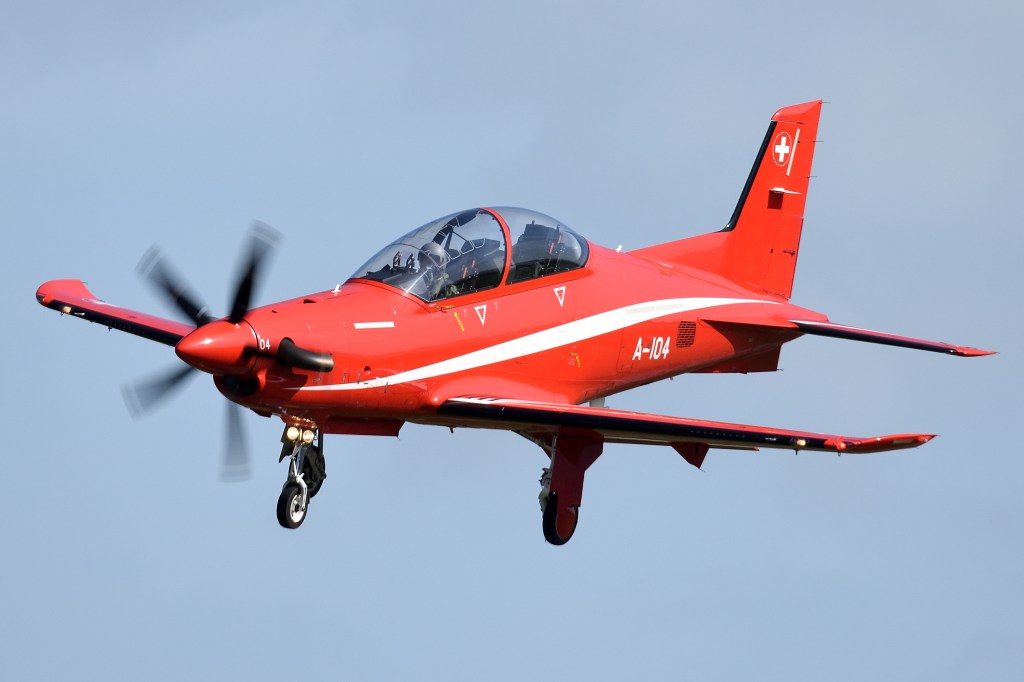
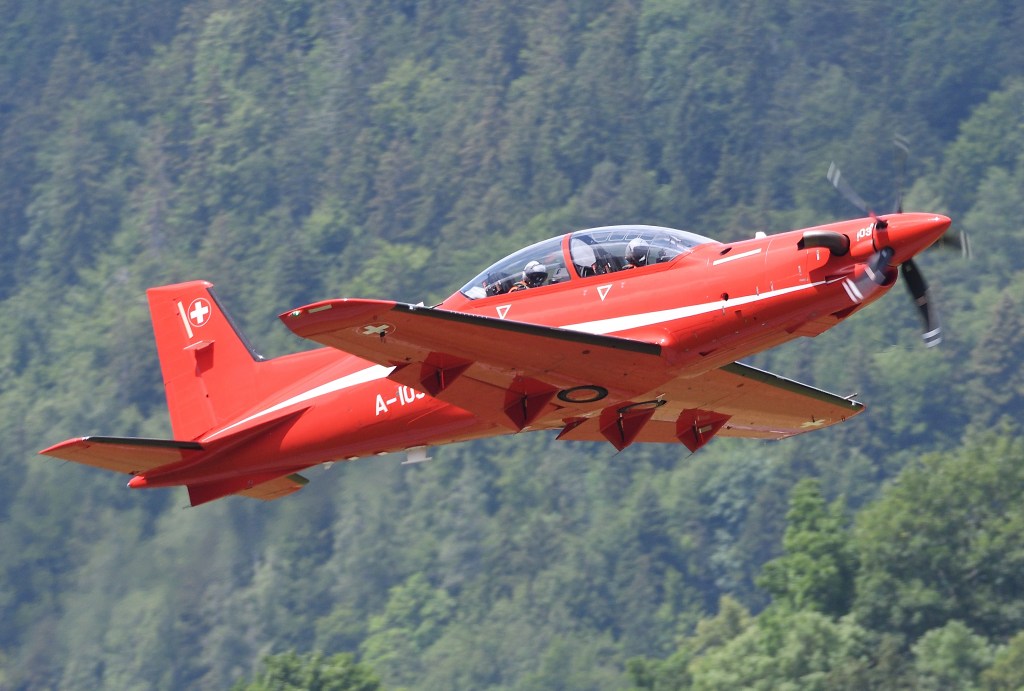
L’ampliamento della flotta ha reso possibile estendere al PC-21 ulteriori aree di istruzione — tra cui il volo notturno — che in precedenza venivano condotte su altri sistemi. Gli otto esemplari in servizio portano matricole militari della serie A-101 / A-108. La livrea è quella caratteristica: rosso uniforme con strisce bianche longitudinali per la massima visibilità in volo.
I PC-21 svizzeri operano primariamente dalla base di Emmen (LSME), dove ha sede la Pilotenschule. Ogni anno una parte dell’addestramento si svolge a Sion per circa tre mesi estivi, e almeno una settimana viene condotta fuori dai confini nazionali: un’opportunità per esporre gli allievi a spazi aerei, procedure e regolamenti diversi da quelli familiari. Rischieramenti addestrativi si sono svolti in Galles, in Italia (base di Lecce-Galatina con il 61° Stormo) e in altre nazioni partner.
Risultati e proiezione verso l’F-35
Il giudizio sul JEPAS PC-21 è oggi, a quasi vent’anni dall’introduzione in servizio, sostanzialmente positivo. Il costo per pilota formato è sensibilmente inferiore a quello delle pipeline tradizionali con jet trainer intermedio. L’impronta ecologica è ridotta rispetto all’alternativa con turboreattori. La disponibilità tecnica degli aeromobili è garantita dal modello di supporto integrato Pilatus, con il vantaggio della vicinanza dello stabilimento produttore.
Sul piano operativo, il dato più significativo è quello della transizione: i piloti formati sul PC-21 hanno dimostrato di essere in grado di completare la conversione sull’F/A-18 nei tempi previsti e con livelli di profitto compatibili con le aspettative operative. Il sistema funziona.
Ora si apre un interrogativo nuovo. L’F/A-18 svizzero è prossimo al ritiro, con il trasferimento dei reparti verso Emmen previsto dal 2027 e le prime consegne dell’F-35A Lightning II in preparazione. Il PC-21 — che è stato progettato per formare piloti destinati all’Hornet — sarà in grado di preparare adeguatamente i futuri piloti del Lightning II?
La risposta, per ora, sembra positiva. La filosofia JEPAS è costruita sull’idea di formare piloti capaci di gestire la complessità avioniva e la gestione tattica del combattimento aereo moderno — non di replicare le caratteristiche fisiche specifiche di un singolo velivolo. L’F-35A è radicalmente diverso dall’F/A-18 in quasi tutto: è più veloce in quota, è stealth, è networked-centric, ha una gestione del sensore fusion che non ha precedenti. Ma la logica di base dell’addestramento — costruire professionisti del cockpit prima di dare loro il velivolo operativo — rimane valida indipendentemente dall’aereo finale.
Scheda tecnica — Pilatus PC-21 (variante Swiss Air Force)
| Parametro | Dato |
| Tipo | Addestratore turboprop avanzato — Fighter Lead-In Trainer |
| Motore | Pratt & Whitney Canada PT6A-68B — 1.200 kW (1.600 shp) |
| Elica | Hartzell E8991 KX — 5 pale, in grafite |
| Velocità massima | 370 KIAS (685 km/h) |
| Velocità di crociera | 318 kts (590 km/h) a bassa quota |
| Quota di servizio | 25.000 ft (7.620 m) |
| Velocità di salita | 4.000 ft/min (1.220 m/min) al livello del mare |
| Limiti g | +8 / –4 g |
| Autonomia | ~1.300 nm (2.408 km) con serbatoi interni |
| Sedili eiettabili | 2× Martin Baker Mk CH16C — zero-zero |
| Certificazione | VFR dic. 2004 · IFR dic. 2006 |
| Primo volo | 1° luglio 2002 |
| In servizio SAF | Maggio 2008 |
| Flotta svizzera | 8 esemplari (A-101 / A-108) |
| Base principale | Emmen (LSME) · distacchi: Sion, estero |
QRA Aviation — http://www.qraaviation.com Articolo e foto a cura di Fabio Radici, giugno 2026.
Fonti: Pilatus Aircraft Ltd, Air Forces Monthly, The Aviationist, Airforce Technology, Swiss Air Force / Luftwaffe.

The Pilatus PC-21 in the Swiss Air Force: history, technology and a training revolution
Some aircraft represent an evolutionary step within their category; others redefine the category altogether. The Pilatus PC-21 belongs to the second group. Not because it is the fastest, nor because it is the most sophisticated in absolute terms. But because it demonstrated something that, until the late 1990s, seemed technically impossible: that a turboprop could produce a complete fighter pilot, capable of transitioning directly to the F/A-18 Hornet without ever setting foot in an intermediate jet trainer.
The swiss Air Force, Luftwaffe (known internally as Schweizer Luftwaffe o Force Aérienne Suisse), was the first customer and the primary proving ground for this revolution. The story of the PC-21 in Swiss service is, in this sense, also the story of a winning gamble — with all its premises, uncertainties, and concrete results.
Origins: why Switzerland needed a new trainer
To understand the role of the PC-21, one must start from where Swiss pilot training stood at the end of the 1990s, and from the problems it was facing.
In 1987, seeking an aircraft to provide jet training for its pilots as a replacement for the Vampire T55, the Swiss Flugwaffe had evaluated the Franco-German Alpha Jet and the British BAe Hawk. At the time of our research, Swiss pilots underwent initial training on the Pilatus PC-7 at Magadino, in the Canton of Ticino, before moving on to advanced training on the Hawk at Sion, in the Canton of Valais, prior to squadron assignment.
The Hawk did enter service with the Pilotenschule, but the experience was not entirely satisfactory. The Swiss Air Force had retired its BAe Hawks and was using the Northrop F-5 two-seat variants for high-energy manoeuvres and for activities beyond the PC-7’s operating profile. The problem was structural: with the arrival of the F/A-18 Hornet in service from 1996, the traditional training pipeline — PC-7, jet trainer, then Hornet — was showing its limitations. The Tiger II was no longer adequate, and a radical decision was taken: the jet trainer could be replaced by a propeller-driven aircraft. The solution was the PC-21, which, thanks to its sophisticated avionics, enabled a higher level of instruction than was possible on the F-5.
With the introduction of the PC-21 at the Pilotenschule at Emmen, Fliegerstaffel 16 — which had temporarily filled the gap with F-5Fs following the Hawk’s retirement — was dissolved in 2007.
The programme: from private project to world standard
Pilatus Aircraft, headquartered in Stans in the Canton of Nidwalden, is no stranger to demanding challenges. The PC-7 and PC-9 had already established the company’s reputation in the military trainer segment. But the PC-21 was a leap of a different order.
The PC-21 programme was formally launched in January 1999 as a private Pilatus initiative, with the aim of creating a trainer capable of handling most of the instruction previously reserved for jet aircraft, while offering customers significant cost savings. The first prototype was unveiled at Stans on 30 April 2002 and made its maiden flight on 1 July 2002.
Development was not without difficulty: in January 2005, the second test aircraft was destroyed in an accident that cost the pilot’s life. The first prototype was briefly grounded before returning to flight without restrictions. The programme continued, with the first pre-series aircraft making its first flight in August 2005 and a second joining the test programme in 2006. VFR certification was obtained in December 2004, and full IFR certification followed in December 2006.
Switzerland procured the JEPAS system (Jet Pilot Training System) for CHF 115 million under the 2006 armament programme. Six PC-21s were initially delivered and introduced into service two years later.
The first deliveries took place in May 2008, and Pilot Class 04 — the first to train on the new aircraft — began instruction in July 2008. Switzerland thus became the world’s first military operator of the PC-21, paving the way for what would become a long list of international customers.
The aircraft: technical specifications
The PC-21 is a single-engine turboprop in a pressurised tandem two-seat configuration, designed to cover the entire training spectrum from technical conversion through to Fighter Lead-In Training (FLIT), the phase immediately preceding assignment to a frontline combat aircraft.
Propulsion. The aircraft is powered by a Pratt & Whitney Canada PT6A-68B turboprop delivering 1,200 kW (1,600 shp), driving a Hartzell E8991 KX five-blade graphite propeller. The powerplant is equipped with a digital power management system that delivers full power above 360 km/h, giving the aircraft a response similar to that of a jet engine. The practical effect is that above this threshold, the student perceives a correlation between power and aerodynamic response analogous to what they will find in a fighter. Below it, management is deliberately softer, in the interest of safety during low-speed phases.
Performance. Maximum speed is 370 KIAS (685 km/h), service ceiling is 25,000 ft (7,620 m), and the maximum rate of climb at sea level reaches 4,000 ft/min (approximately 1,220 m/min). The structural limit is +8/−4 g, faithfully replicating the manoeuvring envelope of modern fighters.
Wing and structure. The PC-21 features a high-efficiency three-spar wing with hydraulic ailerons supported by spoilers and automatic yaw compensation, enabling fighter-like roll rates.
Cockpit. The digital cockpit is equipped with a head-up display (HUD), front control panel, HOTAS system (Hands-On Throttle and Stick) and three multifunction displays. The two seats — instructor and student — can be fully decoupled, giving the instructor access to training modes and data not available to the student pilot.
Integrated simulation system. This is perhaps the PC-21’s most innovative feature. The avionics system can be reconfigured to suit the student’s current training phase. It simulates the mission systems of frontline aircraft, including weapon aiming and simulated weapons release even in the absence of live ordnance. In practice, the PC-21 can emulate the radar, weapon system and sensor behaviour of specific aircraft — allowing the student to become familiar with complex tactical procedures before ever climbing into a combat aircraft. Conversion training includes the use of night-vision goggles, basic radar intercept procedures and simulated precision weapons release.
Ejection seats. The PC-21 is fitted with Martin Baker Mk CH16C zero-zero ejection seats, operational from maximum operating speed down to zero speed and from any altitude down to ground level. Both seats are equipped with integrated emergency oxygen.
The JEPAS system: structure and philosophy of Swiss training
The Swiss programme is not limited to the physical aircraft. It is called JEPAS — Jet Pilot Training System — and encompasses the aircraft, a ground-based simulator, a mission planning and debriefing system (Mission Planning and Debriefing System) and a technical support package managed directly by Pilatus with a permanent team at Emmen.
A team of field service engineers and a technical representative look after the aircraft and accompany the academy on training missions both within Switzerland and abroad. Their scope of work covers scheduled and unscheduled maintenance, deadline monitoring, modification integration and spare parts logistics management. The geographical proximity of the Pilatus factory in Stans — less than twenty minutes’ flying time from Emmen — ensures rapid response times when required.
Selection and the complete training pipeline. Normally 350 candidates are assessed each year and approximately 250 participate in the SPHAIR programme. After several evaluation phases, an average of 12 candidates begin training with the Air Force.
The complete training pathway is structured as follows:
1. PC-7 — Selection and basic training phase (approximately 8 months). After eight months of basic training on the PC-7, students proceed to a 13-month course leading to the Airline Transport Pilot Licence (ATPL), delivered by Lufthansa Aviation Training but specifically adapted to military requirements. This is a deliberate choice: training military pilots to ATPL standard gives them a solid procedural foundation in IFR operations and CRM management before they even enter the specifically military phases of instruction.
2. Re-qualification on the PC-7 and entry into the military system. After the ATPL course, pilots requalify on the PC-7 and re-enter the military training system before accessing the PC-21 course.
3. PC-21 — Advanced phase (approximately 45 weeks, one year). This is the heart of the pipeline. During this phase, student pilots tackle technical conversion, IFR instrument training, formation flying, navigation, air-to-ground attack, air policing and air warfare. The complete training cycle requires 210 missions per student before the final qualification. Course subjects include night operations, and the combined disciplines account for approximately 620 study hours per student — excluding the 200 hours flown on civil aircraft during the ATPL phase. In total, around 100 weeks of flying on military types are accumulated before graduation.
4. F/A-18 conversion course (approximately 10 months). Pilots qualified on the PC-21 proceed directly to Hornet conversion. Helicopter pilots, by contrast, progress to the EC635 after requalifying on the PC-7.
The radical choice: eliminating the jet trainer
The most controversial — and intellectually most interesting — aspect of the JEPAS system is the decision to eliminate the jet trainer entirely from the training pipeline. Not reduce it, not supplement it: eliminate it.
With its JEPAS PC-21 jet pilot training system, the Swiss Air Force broke new ground by converting pilots directly from the PC-21 to the Boeing F/A-18 Hornet. This is a world-unique innovation. In the 1990s, the goal of training was conversion to the Hawker Hunter or the F-5 Tiger II; the progressive pipeline was PC-7, then F-5, then F/A-18. But the jet trainer had to meet the specifications of the aircraft that would subsequently be flown — a requirement the Tiger II could no longer satisfy.
The decision was not without scepticism. Some voices within the Pilotenschule felt the gap between the PC-21 and F/A-18 was excessive, and that student pilots were arriving at the Hornet conversion phase with insufficient preparation for high-energy manoeuvring. Over time, operational results answered these objections. Since adopting this programme, nearly 40 students have completed the direct conversion from PC-21 to F/A-18 — a figure the instructors themselves consider significant.
The technical reason the PC-21 makes this direct transition possible lies in the nature of its avionics system. The display and systems layout faithfully mirrors what pilots will find in the latest generation of fighters. This allows them to become familiar with a state-of-the-art cockpit environment from their very first day of training. A pilot who has completed the PC-21 course already knows how to manage a glass cockpit, understands basic tactical concepts, the geometry of formations and attack profiles. Raw speed and power come later — and the two-seat Hornet takes care of providing them.
The fleet and its evolution
The first six deliveries took place in May 2008. In September 2018, the Swiss Air Force celebrated the tenth anniversary of the JEPAS system at Emmen Air Base. In December 2010, Switzerland ordered two additional PC-21s for CHF 30 million, a contract that included logistical and engineering services and the supply of an additional debriefing system. These were delivered in 2012, bringing the fleet to a total of eight aircraft.
The fleet expansion made it possible to extend the PC-21 into further areas of instruction — including night flying — that had previously been conducted on other platforms. The eight aircraft in service carry military serials in the A-101/A-108 series. The livery is characteristic: solid red with longitudinal white stripes for maximum visibility in flight.
Swiss PC-21s operate primarily from Emmen Air Base (LSME), home of the Pilotenschule. Each year, part of the training takes place at Sion for approximately three summer months, and at least one week is conducted outside Swiss borders: an opportunity to expose students to unfamiliar airspace, procedures and regulations. Training deployments have been carried out in Wales, Italy (Lecce-Galatina Air Base with the 61° Stormo) and other partner nations.
Results and the outlook towards the F-35
The assessment of the JEPAS PC-21, now approaching twenty years in service, is broadly positive. The cost per trained pilot is significantly lower than that of traditional pipelines with an intermediate jet trainer. The environmental footprint is reduced compared to a turbine-powered alternative. Aircraft technical availability is guaranteed by the Pilatus integrated support model, with the added benefit of proximity to the manufacturing plant.
On the operational side, the most significant indicator is the transition rate: pilots trained on the PC-21 have consistently demonstrated the ability to complete F/A-18 conversion on schedule and with performance levels compatible with operational expectations. The system works.
A new question now arises. The Swiss F/A-18 is approaching retirement, with unit transfer to Emmen scheduled from 2027 and the first F-35A Lightning II deliveries in preparation. Will the PC-21 — designed to train pilots destined for the Hornet — prove equally effective in preparing future Lightning II pilots?
The answer, for now, appears positive. The JEPAS philosophy is built on the idea of producing pilots capable of managing the avionics complexity and tactical demands of modern aerial combat — not of replicating the physical characteristics of any specific aircraft. The F-35A is radically different from the F/A-18 in almost every respect: it is faster at altitude, it is stealth, it is network-centric, and its sensor fusion management is unprecedented. But the fundamental training logic — building cockpit professionals before handing them the operational aircraft — remains valid regardless of the final platform.
Technical specifications — Pilatus PC-21 (Swiss Air Force variant)
| Parameter | Value |
| Type | Advanced turboprop trainer — Fighter Lead-In Trainer |
| Engine | Pratt & Whitney Canada PT6A-68B — 1.200 kW (1.600 shp) |
| Propeller | Hartzell E8991 KX — 5 blades, graphite composite |
| Maximum speed | 370 KIAS (685 km/h) |
| Cruise speed | 318 kts (590 km/h) at low altitude |
| Service ceiling | 25.000 ft (7.620 m) |
| Rate of climb | 4,000 ft/min (1,220 m/min) at sea level |
| G limits | +8 / –4 g |
| Range | ~1,300 nm (2,408 km) with internal fuel |
| Sedili eiettabili | 2× Martin Baker Mk CH16C — zero-zero |
| Certification | VFR Dec. 2004 · IFR Dec. 2006 |
| First flight | 1 July 2002 |
| SAF entry into service | May 2008 |
| Swiss fleet | 8 aircraft (A-101 / A-108) |
| Primary base | Emmen (LSME) · detachments: Sion, abroad |
QRA Aviation — www.qraaviation.com Article and photographs by Fabio Radici, June 2026.
Sources: Pilatus Aircraft Ltd, Air Forces Monthly, The Aviationist, Airforce Technology, Swiss Air Force / Luftwaffe.
 QRA Aviation - Military Aviation Magazine
Lascia un commento