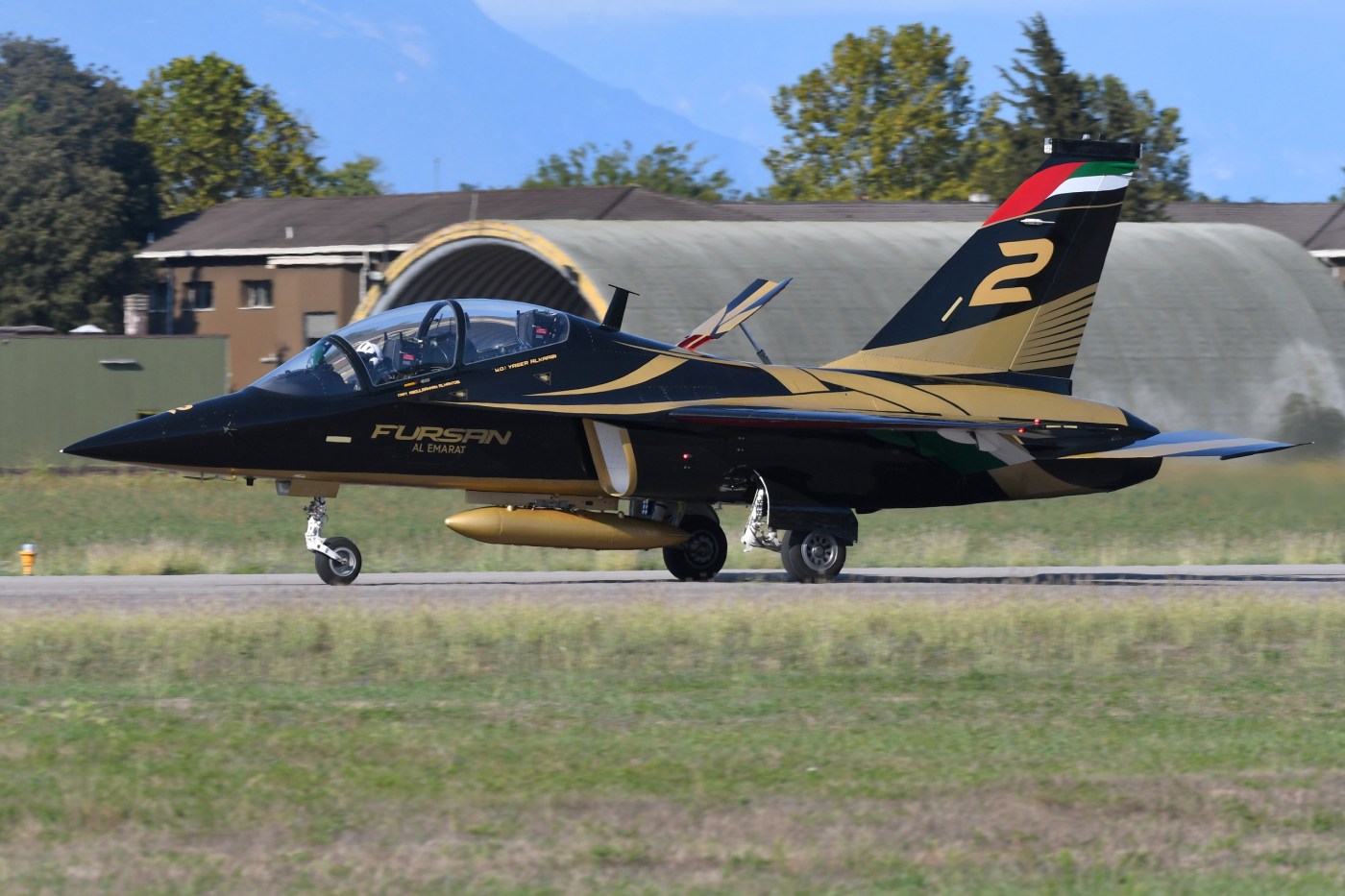
Il cielo di Jesolo ha accolto nuovamente i Fursan Al Emarat, la pattuglia acrobatica nazionale degli Emirati Arabi Uniti, protagonista del Jesolo Air Show 2026 con il nuovo Hongdu L-15, l’aereo che ha aperto una nuova fase nella storia della formazione emiratina. Il ritorno in Italia, a quattordici anni dall’ultima partecipazione del team a Jesolo nel 2012, ha avuto così un significato particolare: non si è trattato semplicemente di una nuova esibizione, ma della presentazione al pubblico italiano della macchina destinata a sostituire il precedente Aermacchi MB-339 e a diventare il nuovo strumento con cui i Fursan affrontano il volo acrobatico.
La storia dei Fursan Al Emarat è relativamente recente, ma è strettamente legata anche all’Italia. La formazione venne costituita il 29 ottobre 2008 presso la Khalifa Bin Zayed Air College di Al Ain, con l’obiettivo di creare una pattuglia acrobatica nazionale capace di rappresentare gli Emirati Arabi Uniti nelle manifestazioni internazionali. Per sviluppare le tecniche di volo in formazione, i piloti emiratini si trasferirono in Italia, dove a Rivolto iniziarono un programma di addestramento sotto la supervisione della Pattuglia Acrobatica Nazionale Frecce Tricolori. L’esperienza italiana fu fondamentale per trasformare piloti già esperti nel volo militare in specialisti del volo acrobatico di precisione. L’addestramento iniziò lavorando con formazioni ridotte, aumentando progressivamente il numero degli aeroplani fino alla configurazione completa. Nel 2011 la squadra raggiunse la piena operatività e nello stesso anno fece il proprio debutto ufficiale al Dubai Airshow. Un anno più tardi arrivò la prima partecipazione internazionale, al Bahrain Airshow, mentre nel 2012 i Fursan furono protagonisti anche a Jesolo.
Per oltre quindici anni il simbolo della formazione è stato l’Aermacchi MB-339, un velivolo che aveva accompagnato la crescita della squadra e che, grazie alle sue caratteristiche di manovrabilità e alla grande esperienza maturata nel mondo delle pattuglie acrobatiche, si era rivelato particolarmente adatto alle esigenze dei Fursan. Con il passare degli anni, tuttavia, la necessità di disporre di una piattaforma più moderna ha portato gli Emirati a cercare un successore. La scelta è caduta sull’Hongdu L-15, un avanzato jet trainer di progettazione cinese sviluppato per l’addestramento dei piloti destinati ai moderni caccia da combattimento e, nelle sue versioni più evolute, capace di svolgere anche missioni operative leggere. Nel 2023 il Ministero della Difesa degli Emirati confermò l’acquisto di dodici L-15 destinati alla formazione acrobatica, una decisione alla quale i Fursan parteciparono direttamente durante la fase di valutazione.
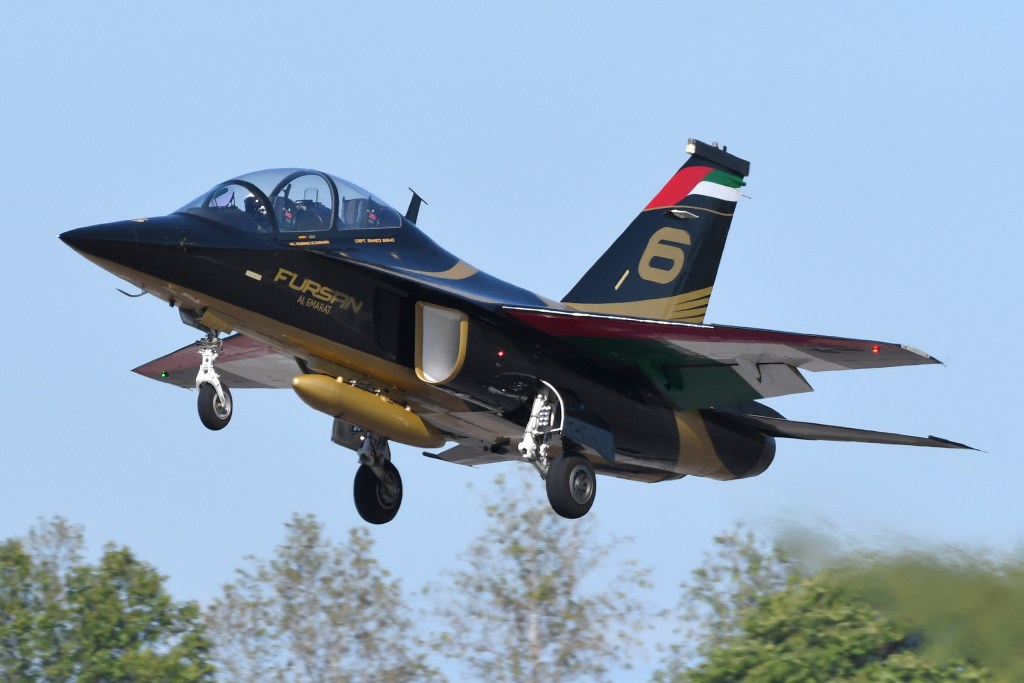
L’arrivo dell’L-15 rappresenta un cambiamento significativo non soltanto dal punto di vista estetico, ma soprattutto sotto il profilo tecnico. Rispetto all’MB-339, il nuovo velivolo appartiene a una generazione completamente diversa di addestratori avanzati, con una configurazione bimotore, avionica moderna, cockpit digitale e comandi di volo fly-by-wire. Le versioni più performanti dell’L-15 sono equipaggiate con due turbofan Ivchenko-Progress AI-222-25F dotati di postbruciatore, capaci di sviluppare circa 4.200 kg di spinta ciascuno. Il risultato è un velivolo con prestazioni decisamente superiori rispetto a quelle del precedente MB-339 e con una riserva di potenza particolarmente importante durante le manovre acrobatiche. L’L-15 è lungo circa 12 metri, ha un’apertura alare di circa 8,7 metri e un peso massimo al decollo nell’ordine delle 9,5 tonnellate. Le versioni dotate di motori postbruciatori possono raggiungere velocità supersoniche, fino a circa Mach 1,4, anche se nelle esibizioni dei Fursan l’obiettivo non è naturalmente quello di sfruttare la velocità massima, bensì la precisione, la coordinazione e la gestione dell’energia durante la sequenza acrobatica.
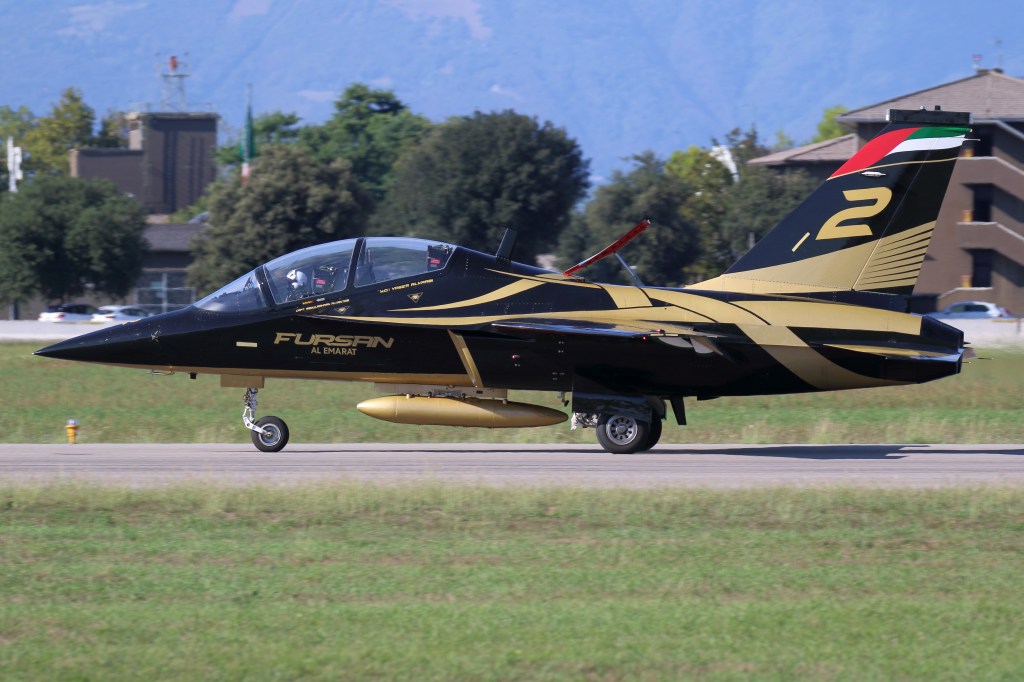
Proprio la gestione dell’energia costituisce uno degli aspetti più interessanti nel passaggio al nuovo velivolo. Un aeroplano più potente e più pesante richiede infatti un differente approccio da parte dei piloti, soprattutto nelle figure che prevedono rapide variazioni di assetto, velocità e quota. L’L-15 offre una maggiore disponibilità di potenza e una piattaforma progettata fin dall’origine per accompagnare l’addestramento avanzato, consentendo ai piloti di lavorare in un ambiente più vicino a quello dei moderni caccia. Per una pattuglia acrobatica questo significa avere a disposizione un margine prestazionale più ampio, ma anche dover costruire e affinare una nuova routine, studiando nuovamente tempi, separazioni, traiettorie e riferimenti visivi. Il passaggio da un tipo di aeroplano a un altro non è quindi soltanto una sostituzione materiale della macchina: comporta una vera e propria evoluzione del programma di volo.
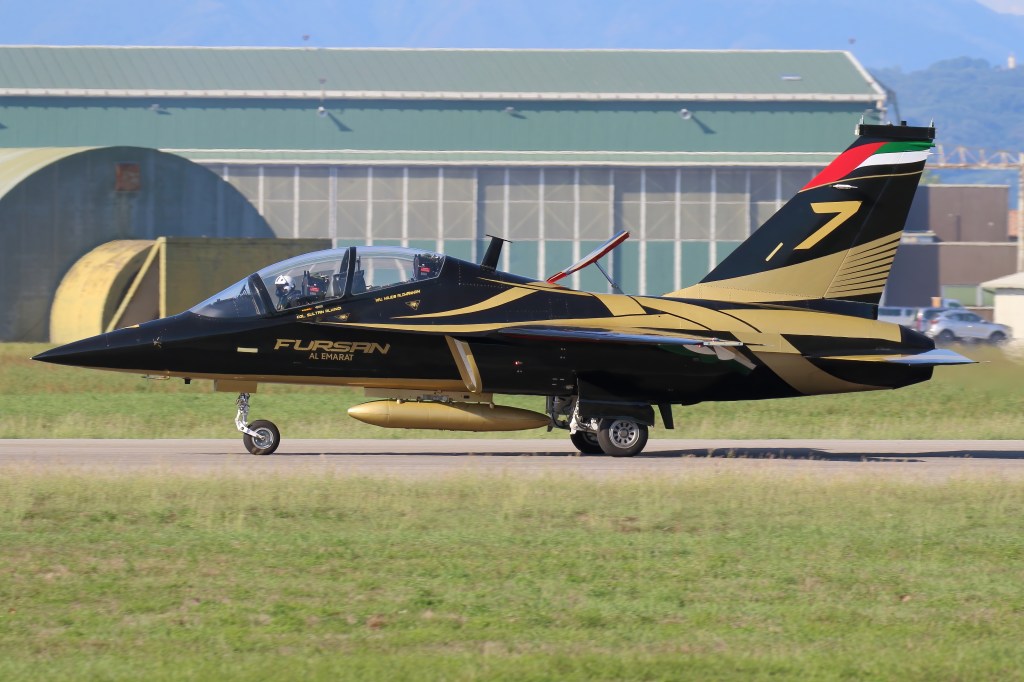
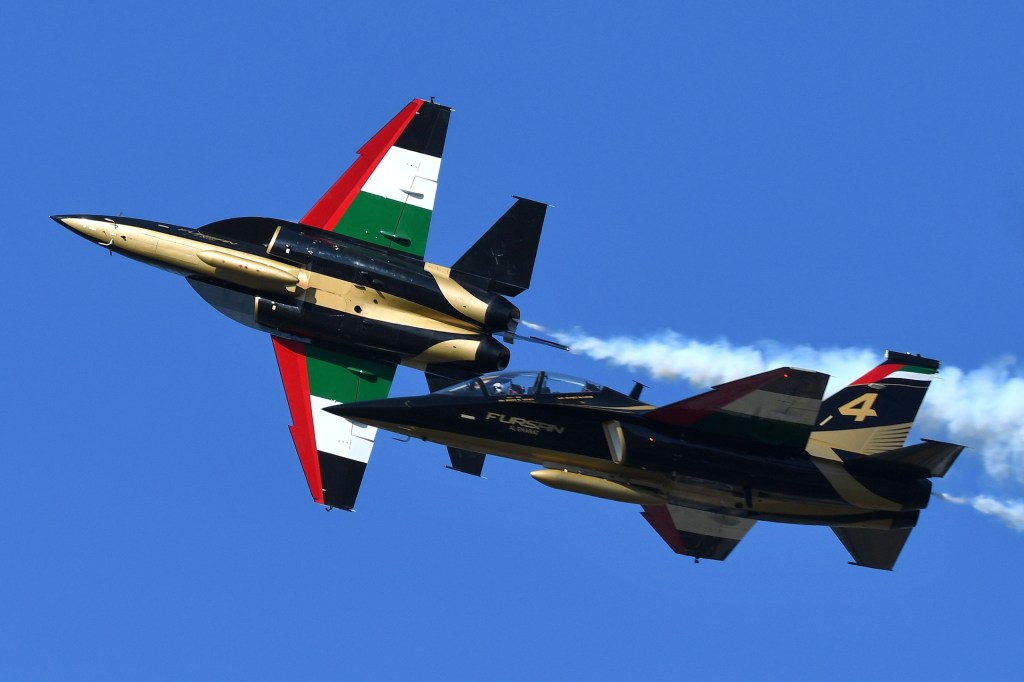
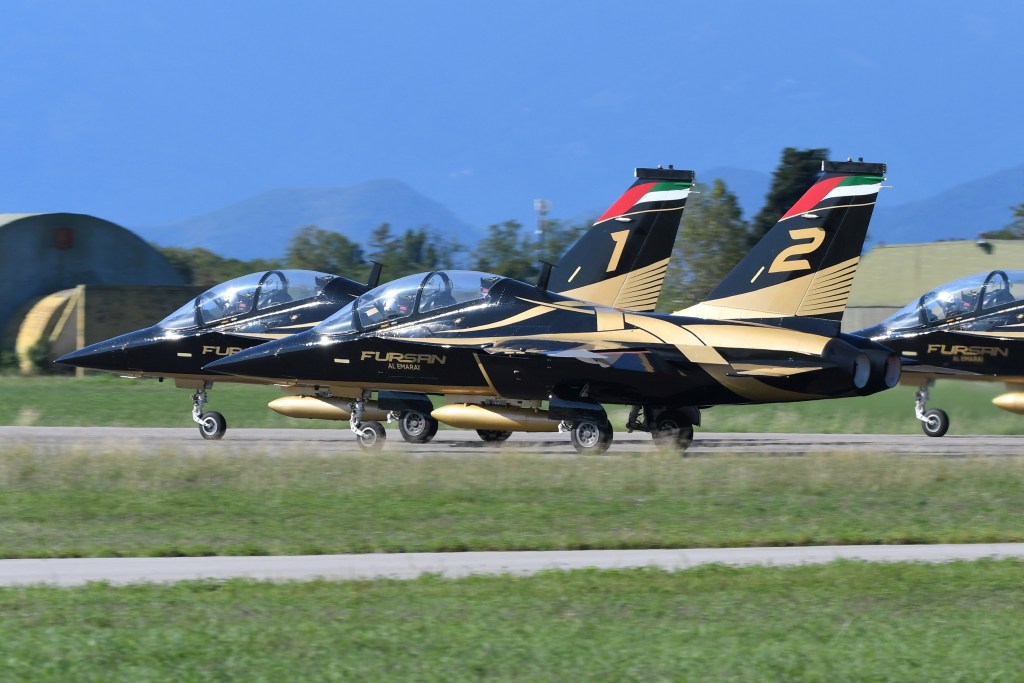
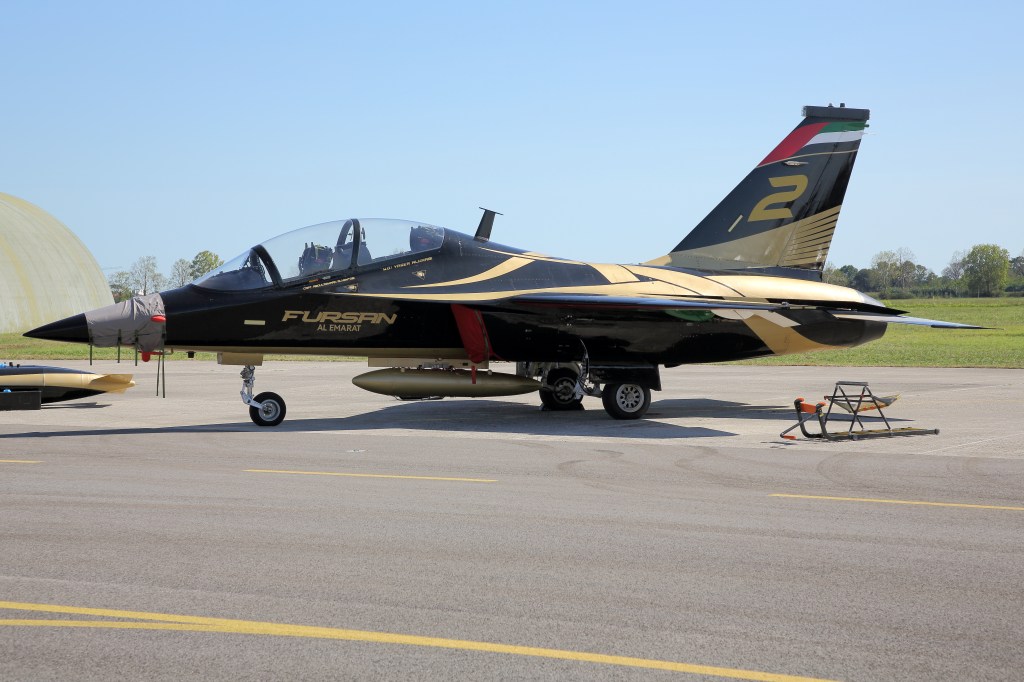
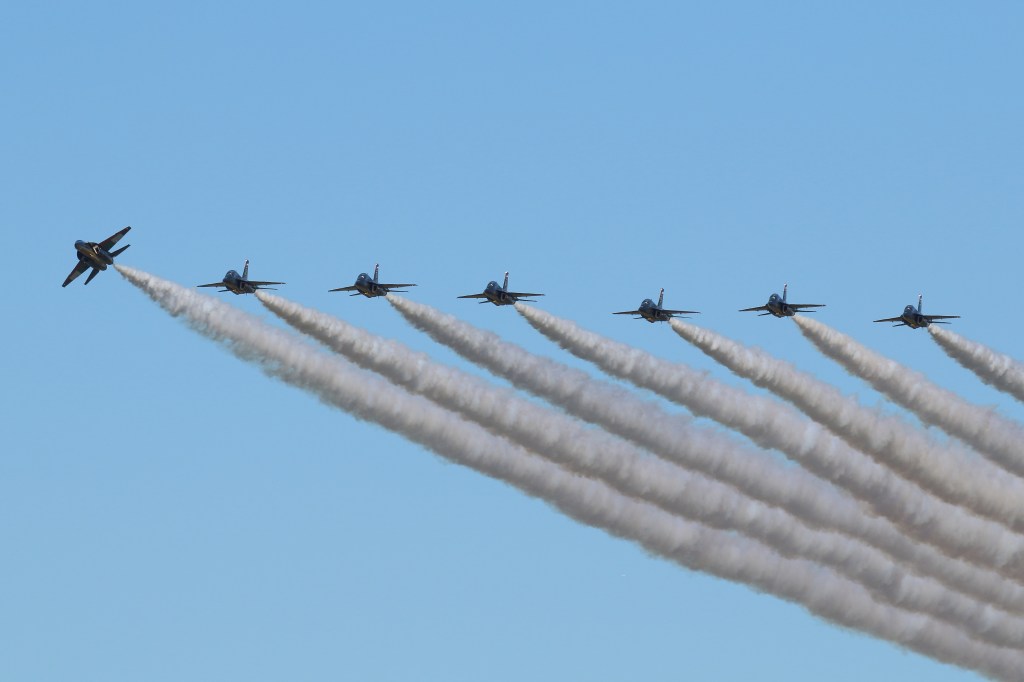
A Jesolo questo cambiamento è stato particolarmente evidente. La nuova formazione ha presentato al pubblico italiano una livrea che mantiene il caratteristico nero e oro dei Fursan, colori che richiamano simbolicamente due elementi fondamentali della storia degli Emirati, il petrolio e il deserto. La nuova macchina conserva così un’identità visiva immediatamente riconoscibile, pur segnando una netta discontinuità rispetto alla precedente generazione. Anche il sistema fumogeno e la geometria delle formazioni contribuiscono a rendere l’L-15 immediatamente identificabile durante il programma acrobatico, trasformando le prestazioni del velivolo in un elemento dello spettacolo.
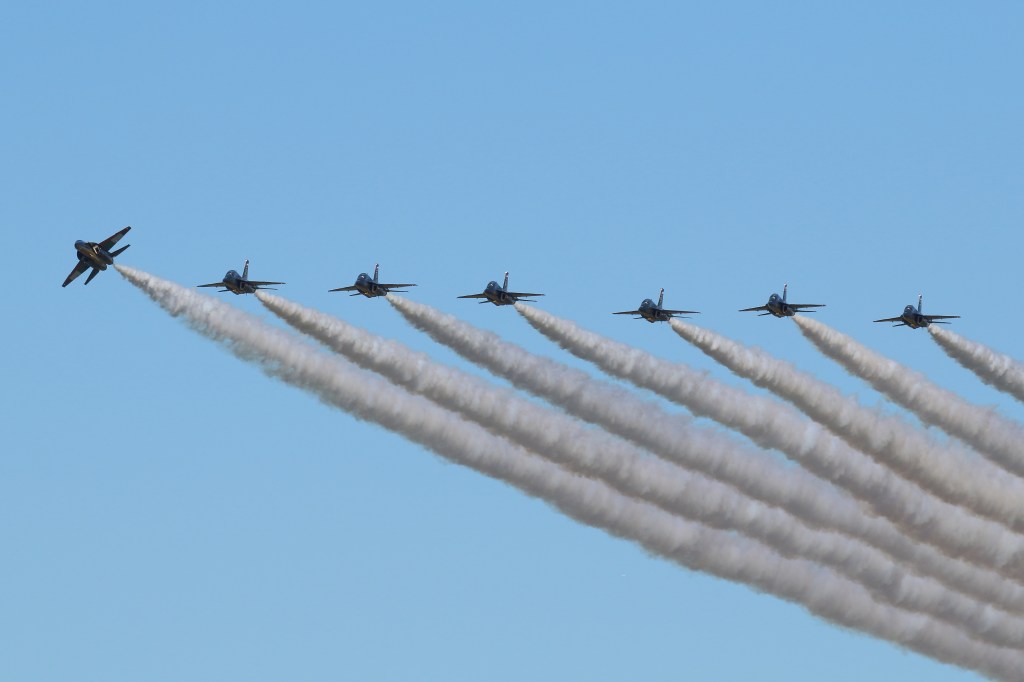
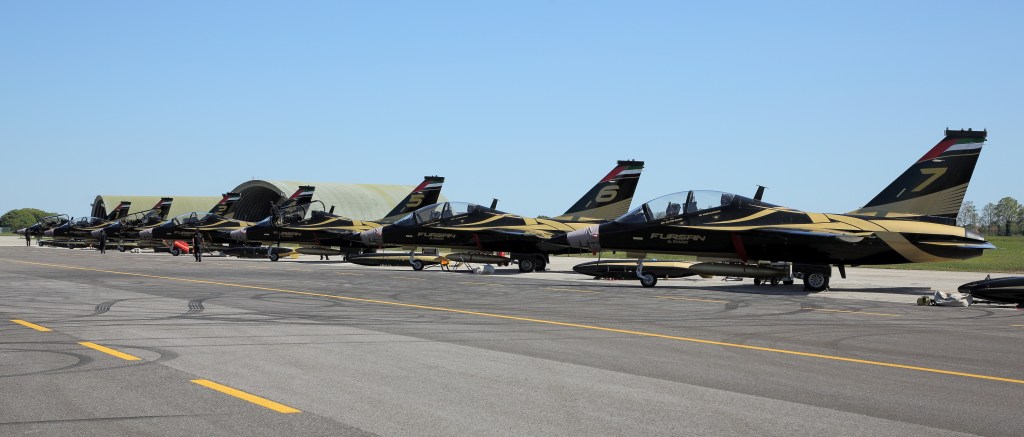
Dietro i sette aeroplani che compongono la formazione esiste inoltre una struttura organizzativa molto più ampia. La squadra comprende piloti, tecnici e personale di supporto incaricato della preparazione e della manutenzione dei velivoli, oltre alle figure che seguono gli aspetti operativi, logistici e di documentazione delle attività. La scelta di utilizzare sette aeroplani non è casuale: il numero rappresenta i sette Emirati che compongono la federazione. È un elemento che collega direttamente la dimensione acrobatica alla funzione istituzionale della formazione, che non è soltanto quella di offrire uno spettacolo aereo, ma anche di rappresentare il Paese e la sua forza aerea davanti al pubblico internazionale.
Il ritorno a Jesolo nel settembre 2026 ha quindi riunito diversi elementi della storia dei Fursan Al Emarat: l’origine della squadra, il forte legame con l’Italia nato durante l’addestramento a Rivolto, gli anni trascorsi con l’MB-339 e l’inizio di una nuova era con l’Hongdu L-15. Per il pubblico italiano, vedere i Fursan nuovamente sul litorale veneto con una macchina completamente nuova ha significato assistere a un momento di transizione importante nella storia della pattuglia. L’L-15 non cancella ciò che è venuto prima, ma rappresenta il passo successivo di un progetto nato meno di vent’anni fa e diventato rapidamente uno dei simboli internazionali dell’aviazione degli Emirati. A Jesolo, il nuovo “cavaliere” degli Emirati ha così incontrato nuovamente il pubblico italiano, questa volta con un aeroplano diverso, ma con la stessa identità e lo stesso obiettivo: trasformare precisione, disciplina e tecnologia in una dimostrazione spettacolare della cultura aeronautica del Paese.
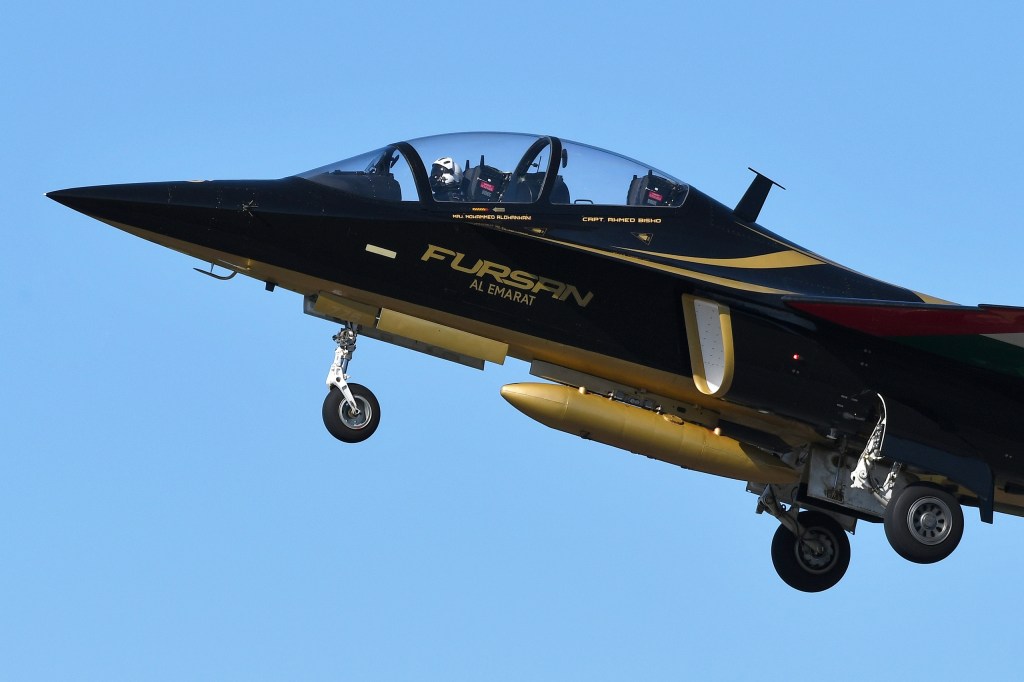
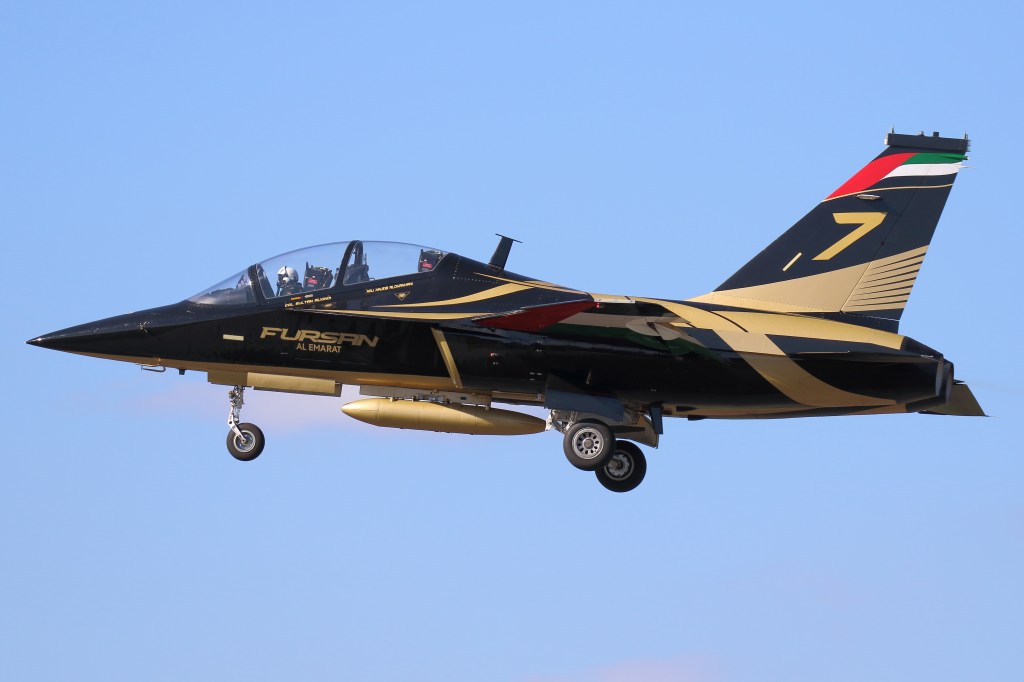
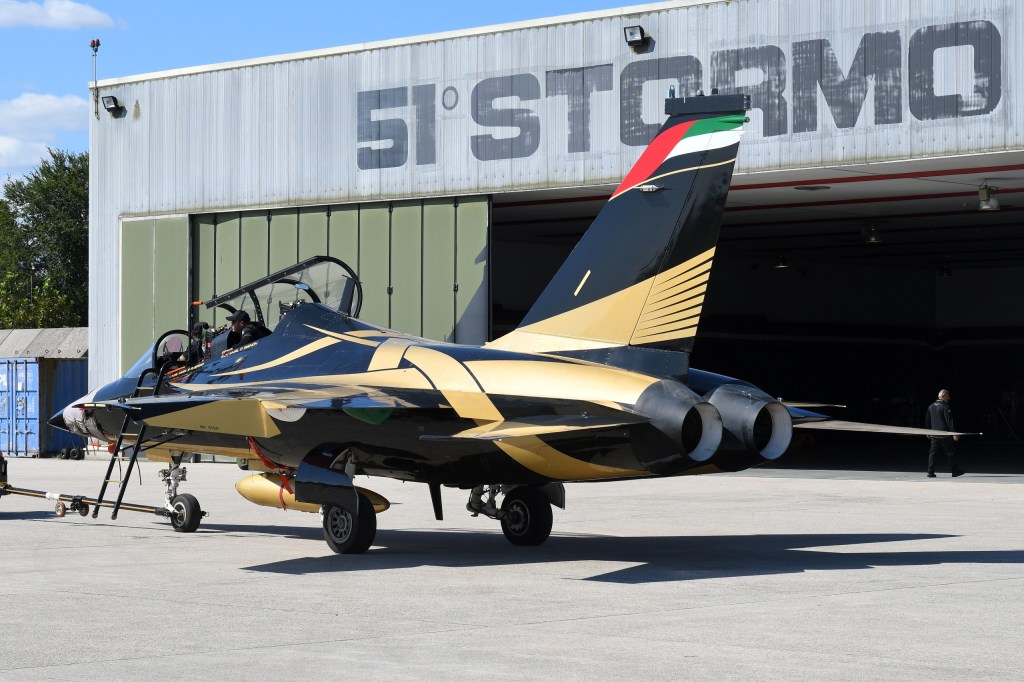
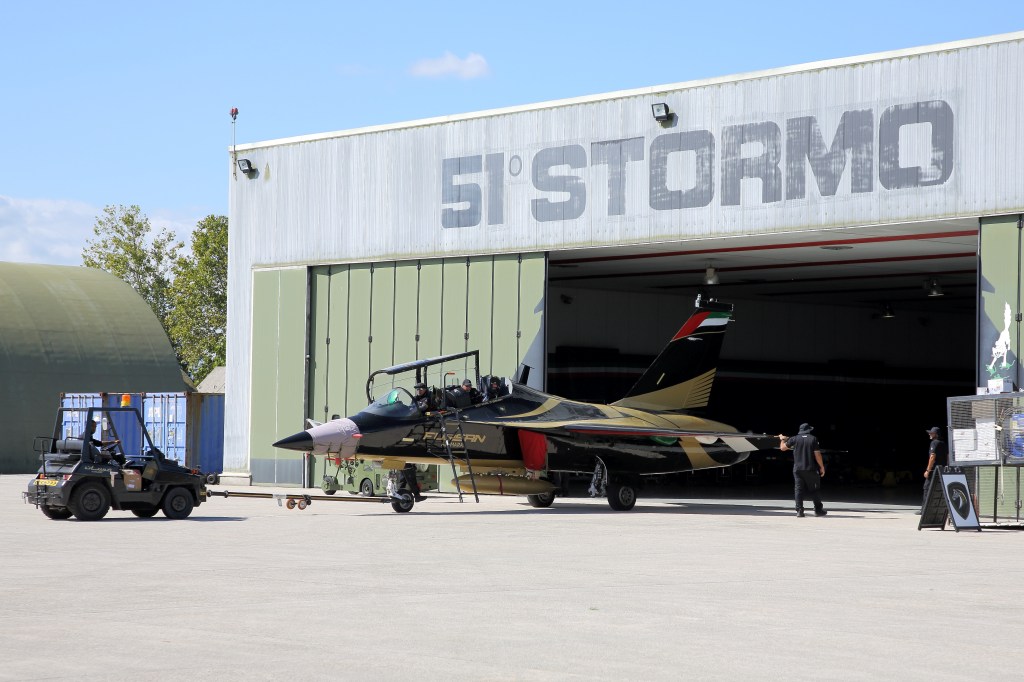
In occasione della partecipazione al Jesolo Air Show 2026, gli Al Fursan erano temporaneamente basati presso la base aerea di Istrana, sede del 51° Stormo dell’Aeronautica Militare Italiana. La presenza della pattuglia emiratina a Istrana ha rappresentato un’occasione particolarmente interessante per gli appassionati di aviazione e per i fotografi, che hanno potuto osservare da vicino i nuovi Hongdu L-15 e documentare la loro attività in Italia. Per l’occasione è stato organizzato uno speciale Spotter Day presso la base, permettendo agli spotter e ai media accreditati di avvicinarsi alla nuova macchina degli Al Fursan e di fotografarla nella caratteristica livrea nera e oro.
Anche noi di QRA AVIATION abbiamo avuto l’opportunità di essere presenti allo Spotter Day di Istrana, vivendo da vicino l’arrivo e le operazioni della formazione emiratina. È stata un’occasione particolarmente significativa, non soltanto per poter fotografare il nuovo L-15, ma anche per documentare un momento importante nella storia degli Al Fursan: il loro ritorno in Italia con una macchina completamente nuova rispetto all’epoca dell’Aermacchi MB-339. La presenza a Istrana ha inoltre aggiunto un ulteriore elemento al già forte legame tra gli Emirati Arabi Uniti e l’Italia, nato proprio negli anni della formazione della pattuglia e dell’addestramento dei suoi piloti insieme alla Frecce Tricolori.
Lo staff di QRA AVIATION desidera ringraziare il personale dell’Aeronautica Militare del 51° Stormo per l’opportunità concessa.
Foto e Testo di ©Omar Rigamonti & ©Massimo Filippini
ENGLISH VERSION
Al Fursan and the New Hongdu L-15: The Knights of the Emirates Conquer the Skies of Jesolo
The skies over Jesolo once again welcomed Fursan Al Emarat, the national aerobatic team of the United Arab Emirates, which took part in the Jesolo Air Show 2026 with its new Hongdu L-15. The aircraft marks the beginning of a new chapter in the history of the Emirati formation. Returning to Italy fourteen years after the team’s previous appearance at Jesolo in 2012 gave the event a particular significance: this was not simply another display, but an opportunity for the Italian public to see the aircraft that has replaced the Aermacchi MB-339 and has become the new platform for the Fursan’s aerobatic programme.
The history of Fursan Al Emarat is relatively recent, but it is closely connected with Italy. The team was established on 29 October 2008 at Khalifa Bin Zayed Air College in Al Ain, with the aim of creating a national aerobatic formation capable of representing the United Arab Emirates at international airshows. To develop the necessary formation-flying skills, Emirati pilots travelled to Italy, where they began a dedicated training programme at Rivolto under the supervision of the Frecce Tricolori, the Italian Air Force’s national aerobatic team. The Italian experience was fundamental in turning pilots who already had extensive military flying backgrounds into specialists in precision aerobatics. Training initially involved smaller formations before progressively increasing the number of aircraft until the full team configuration was achieved. The team reached operational capability in 2011 and made its official debut at the Dubai Airshow that same year. Its first international appearance followed at the Bahrain Airshow in 2012, while the Fursan also performed at Jesolo that year.
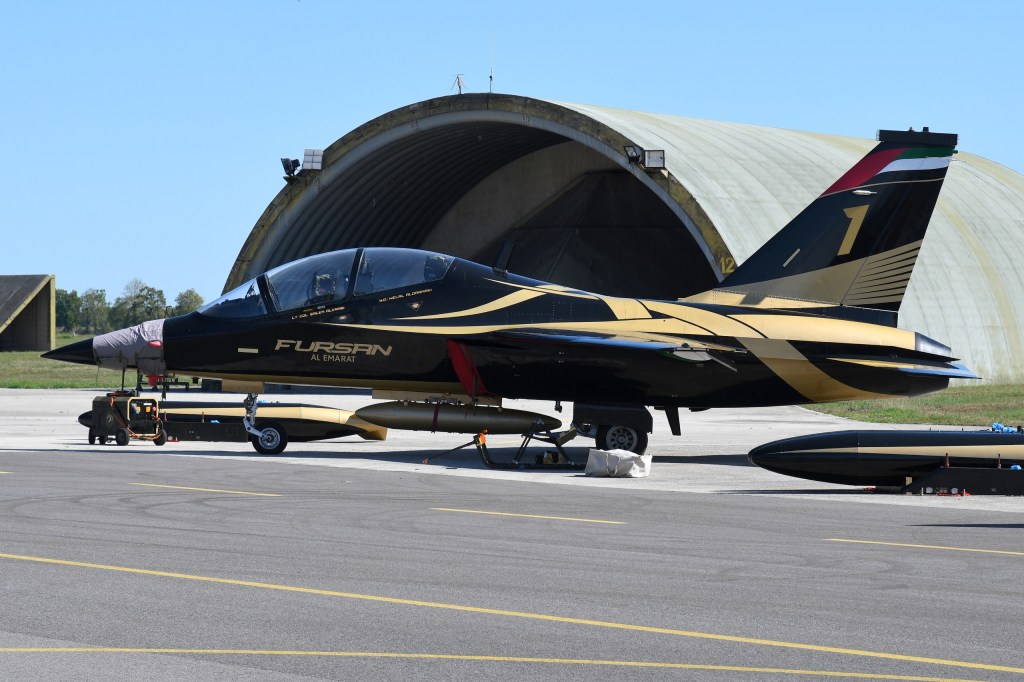
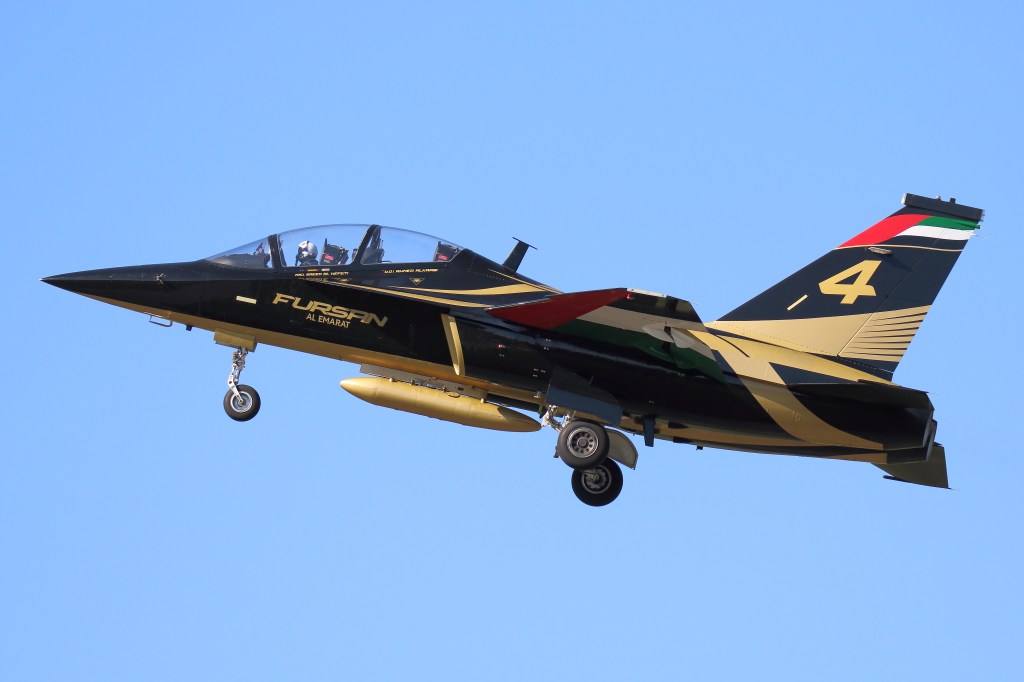
For more than fifteen years, the team’s signature aircraft was the Aermacchi MB-339. The Italian jet had accompanied the development of the formation and, thanks to its handling characteristics and long experience in the aerobatic world, proved particularly well suited to the Fursan’s requirements. Over time, however, the need for a more modern platform led the UAE to search for a successor. The choice fell on the Hongdu L-15, a Chinese-designed advanced jet trainer developed primarily for the training of pilots destined to fly modern combat aircraft and, in its more advanced versions, capable of performing light operational missions. In 2023, the UAE Ministry of Defence confirmed the purchase of twelve L-15 aircraft for the aerobatic team, with Fursan personnel directly involved in the evaluation process.
The introduction of the L-15 represents a significant change not only in appearance but, above all, in technical terms. Compared with the MB-339, the new aircraft belongs to a completely different generation of advanced trainers, featuring a twin-engine configuration, modern avionics, a digital cockpit and fly-by-wire flight controls. The higher-performance versions of the L-15 are powered by two Ivchenko-Progress AI-222-25F afterburning turbofans, each capable of producing approximately 4,200 kg of thrust. The result is an aircraft with substantially greater performance than the MB-339 and, importantly for aerobatics, a considerable power reserve. The L-15 is approximately 12 metres long, has a wingspan of around 8.7 metres and a maximum take-off weight in the region of 9.5 tonnes. Afterburner-equipped versions can reach supersonic speeds of up to approximately Mach 1.4, although the Fursan’s display is naturally not about exploiting maximum speed. Instead, the aircraft’s performance is used to achieve precision, coordination and controlled energy management throughout the aerobatic sequence.
Energy management is one of the most interesting aspects of the transition to the new aircraft. A more powerful and heavier platform requires a different approach from the pilots, particularly during manoeuvres involving rapid changes in attitude, speed and altitude. The L-15 provides greater available power and was designed from the outset as an advanced trainer, allowing pilots to operate in an environment closer to that of modern fighter aircraft. For an aerobatic team, this means a wider performance margin, but also the need to develop and refine a completely new display routine, recalculating timing, separation, trajectories and visual references. Changing aircraft is therefore not simply a matter of replacing one machine with another; it involves a genuine evolution of the flying programme.
This change was particularly evident at Jesolo. The new formation presented the Italian public with a livery that retains the distinctive black-and-gold identity of Fursan Al Emarat. The colours symbolically recall two fundamental elements of the UAE’s history: oil and the desert. The new aircraft therefore retains an immediately recognisable visual identity while clearly marking a break from the previous generation. The smoke system and formation geometry further enhance the visibility of the L-15 during the display, turning the aircraft’s performance into an integral part of the spectacle.
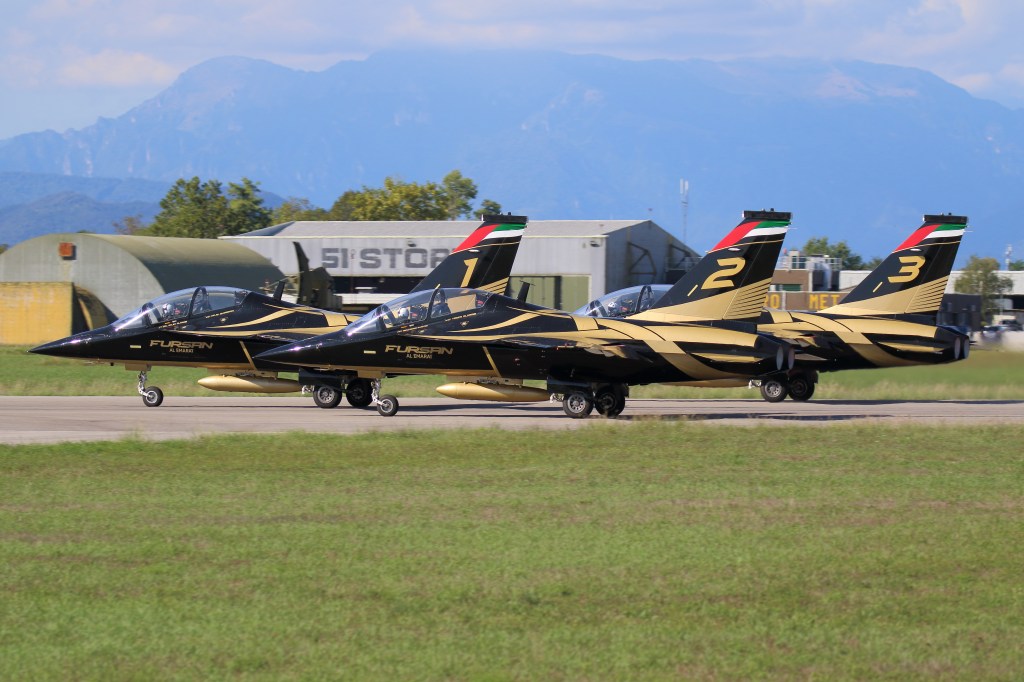
Behind the seven aircraft seen in formation is a much larger organisation. The team includes pilots, technicians and support personnel responsible for aircraft preparation and maintenance, together with staff handling operational, logistical and documentation activities. The choice of seven aircraft is not accidental: the number represents the seven emirates that make up the federation. It is an element that directly connects the aerobatic display with the team’s institutional role. Fursan Al Emarat is not simply an airshow attraction, but also represents the United Arab Emirates and its air force before an international audience.
The return to Jesolo in September 2026 therefore brought together several elements of Fursan Al Emarat’s history: the origins of the team, its strong connection with Italy established during training at Rivolto, the long MB-339 era and the beginning of a new period with the Hongdu L-15. For the Italian public, seeing the Fursan return to the Veneto coastline with a completely new aircraft meant witnessing an important moment of transition in the team’s history. The L-15 does not erase what came before; rather, it represents the next step in a project established less than twenty years ago and rapidly transformed into one of the international symbols of Emirati aviation. At Jesolo, the UAE’s new “knight” once again met the Italian public, this time with a different aircraft but the same identity and the same objective: turning precision, discipline and technology into a spectacular demonstration of the country’s aviation culture.
For their participation in the Jesolo Air Show 2026, the Al Fursan were temporarily based at Istrana Air Base, home of the Italian Air Force’s 51st Wing. The presence of the Emirati aerobatic team at Istrana provided a particularly interesting opportunity for aviation enthusiasts and photographers, who were able to see the new Hongdu L-15s at close range and document their operations in Italy. A dedicated Spotter Day was organised at the base for the occasion, allowing accredited spotters and media representatives to get closer to the new Al Fursan aircraft and photograph them in their distinctive black-and-gold livery.
QRA AVIATION was also present at the Istrana Spotter Day, giving us the opportunity to document the arrival and operations of the Emirati formation at close range. It was a particularly significant experience, not only because it allowed us to photograph the new L-15, but also because we were able to document an important moment in the history of Al Fursan: their return to Italy with a completely new aircraft compared with the Aermacchi MB-339 era. Their presence at Istrana also added another element to the already strong connection between the United Arab Emirates and Italy, which dates back to the early years of the team and the training of its pilots alongside the Frecce Tricolori.
The staff at QRA AVIATION would like to thank the personnel of the Italian Air Force’s 51st Stormo for this opportunity.
Photos and text by ©Omar Rigamonti & ©Massimo Filippini
 QRA Aviation - Military Aviation Magazine
Lascia un commento